1. Purpose
and Scope of Document
The purpose of this document is to provide users of MECA
Experiment Data Records (EDR) with a detailed description
of the products and how they are generated, including data
sources and destinations.
The document is intended to provide enough information to
enable users to read and understand the data products.
Intended users of this document are the scientists who will
analyze the mission and supporting data, both those
associated with the Phoenix Project and members of the
general planetary science community.
1.
Planetary Data System Standards Reference, JPL D-7669 part
2, version 3.7, March 20, 2006.
2. Phoenix
Project Archive Generation, Validation and Transfer Plan,
JPL D-29392, Rev. 1.0, December 20, 2004.
3. Planetary Data System Archive Preparation Guide,
version 0.050503, May 3, 2005.
4. Mars Exploration Program Data Management Plan,
Arvidson et al., Rev. 3.0, March 20, 2002.
5. Data Management and Computation, Volume 1: Issues
and Recommendations, Committee on Data Management and
Computation, Space Science Board, Assembly of Mathematical
and Physical Sciences, National Research Council, National
Academy Press, Washington D.C., 1982
6. Issues and Recommendations Associated with
Distributed Computation and Data Management Systems for
Space Sciences, Space Science Board, Assembly of
Mathematical and Physical Sciences, National Research
Council, National Academy Press, Washington D.C., 1986
This SIS document, and the products that it describes,
could be affected by changes to the MECA or Phoenix flight
software or PDS standards. Such changes may require updates
to this document as applicable. Major changes would
require re-approval of all listed individuals and teams per
the signature page.
The Microscopy, Electrochemistry, and Conductivity Analyzer
(MECA) is a suite of soil analysis instruments that
combines a wet chemistry laboratory (WCL), an optical
microscope (OM), an atomic-force microscope (AFM), and a
thermal and electrical-conductivity probe (TECP), with
common supporting structure, electronics, and software.
Data in this product represent the lowest level reduction
of packet data from the MECA instrument with the notable
exception of the images acquired by the OM, which are
described in the Phoenix Camera EDR/RDR SIS and archived on
the Imaging node of the Planetary Data System. However,
status information pertaining to those images and various
tabular data that determine how they are acquired are part
of this Non-Imaging product.
The MECA instrument suite is a component of the Mars '07
Phoenix investigation, which will also return data from a
Thermal and Evolved Gas Analyzer (TEGA), three cameras, and
a meteorology suite (MET). Phoenix is motivated by the
goals of (1) studying the history of water in all its
phases, and (2) searching for habitable zones. Samples of
surface and subsurface soil and ice will be delivered to
MECA and TEGA from a trench excavated by a Robot Arm, while
MECA's Thermal and Electrical Conductivity Probe (TECP)
will be deployed in soil and air by the Robot Arm. The
Robot Arm Camera will document the morphology of the trench
walls, while the Surface Stereo Imager (SSI) and the Mars
Descent Imager (MARDI) establish a geological context.
Throughout the mission, MET will monitor polar weather and
local water transport.
The Atomic Force Microscope (AFM) is part of the MECA
Microscopy Station, which comprises a Sample Wheel and
Translation Stage (SWTS), an optical microscope (OM), and
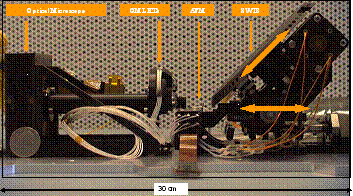
the AFM. As shown in Figure 1, the MECA AFM is located
between the OM and the SWTS inside the darkened MECA
enclosure on the spacecraft deck. It scans a small region
(from 1-65 µm square) on any of 69 substrates, each
3-mm in diameter, positioned along the rim of the SWTS. The
chief scientific objectives of the AFM are to analyze small
dust and soil particles in terms of their size, size
distribution, shape, and texture. The AFM is particularly
well suited to analyze particles carried by the wind, which
are believed to be in the size range 1-3 µm.
Prior to AFM scanning, OM images are acquired to document
the substrates and provide context for the AFM scans. OM
data is described in the Phoenix camera SIS, along with the
RAC and SSI, and is outside the scope of this document. The
reader is also referred to that document for more detailed
description of the SWTS and its substrates.
The AFM is contributed by a Swiss-led consortium
spearheaded by the University of Neuchatel. Run by a
dedicated microcontroller, the AFM uses one of an array of
eight micromachined cantilevers with sharp tips to obtain
topographs (sometimes called "scans" or "images") of up to
a 65×65-µm area of the sample. Within this
constraint the scan can be of any size, dimension, or
orientation, but the AFM can only address a narrow
horizontal stripe of each substrate. Since the sample wheel
can be rotated (but not elevated) prior to initiation of
scanning, the AFM can access a thin band approximately 1/3
of the way up from the bottom of the corresponding OM
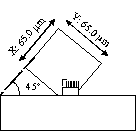
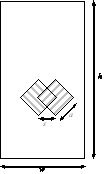
image. Note that the x and y axes of the MECA AFM image are
rotated by +45 degrees relative to the OM images (figure
2).
|
|

|
|
Figure 1. Left: The SWTS translates in and out to
collect samples, remove excess material, focus, and
approach the AFM. It rotates to select any of 69
substrates. Right: The sampling chute, viewed from
the top with 6 substrates exposed
|
The 69 substrates on the SWTS are divided into ten sets of
six (a weak and a strong magnet, two "microbuckets", a
textured substrate, and a sticky silicone pad) and nine
utility or calibration targets. Using the SWTS, these can
be coated with a thin layer of dust or soil, and then
rotated to the vertical scanning position where they can be
imaged by the optical microscope. Of the six substrates in
each set, two are specifically designed for AFM use in that
they resist the tendency for particles to become dislodged
and to adhere to the AFM tip. Such particle adhesion can
degrade the scans in question and the quality of the tip in
general. One of these substrates is a uniform piece of
silicone that remains pliant under martian conditions. The
second is a custom micro-machined silicon substrate with
pits and posts that hold particles of an appropriate scale
for AFM scanning. Two of the remaining four substrates are
magnets that may, under certain circumstances, be
appropriate for AFM scanning. The final two substrates are
deep "buckets" that would not normally be accessible to the
AFM.
To operate the microscopy station, soil samples are
deposited by the RA (or dust from the air) onto a segment
of the SWTS ring that has been extended such that exactly
one set of 6 substrates protrudes from a horizontal slot in
the MECA enclosure. Excess material is removed by passing
the substrates under a blade positioned 0.2 mm above the
surface, after which the samples are rotated for imaging by
the OM and AFM. The exposed substrates are then rotated
from their horizontal load positions into their vertical
imaging positions. The SWTS is also used for focusing and
AFM coarse positioning.
Attempting to scan excessively steep or ragged surfaces
with the AFM will result in scans that are largely out of
range, and could conceivably damage the tip. Further,
bandwidth and time constraints severely limit the number of
scans that can be acquired and returned to Earth. These
considerations dictate a two-day imaging strategy for each
set of microscopy samples. On the first day a sample is
delivered, then characterized by the optical microscope.
AFM calibration scans are also acquired. These images are
evaluated on the ground and targets for AFM scanning are
selected. On the second day the targeted areas are imaged
again with the optical microscope, and then scanned with
the AFM.
MECA's AFM comprises three major components, a
microfabricated probe-chip, an electro-magnetic
scanner-actuator and single board control electronics. The
probe-chip features 8 cantilevers, numbered 0-7. The chip
is mounted with two orthogonal tilt angles of 10 degrees
relative to the sample to ensure that only one tip contacts
the sample at a time. In case of contamination or
malfunction of this front-most tip, the defective
cantilever and its support beam can be cleaved off by a
special tool on the sample wheel, after which the next one
in the array becomes active. The force constant of the
levers varies between 9 and 13 N/m.
Each of the 8 MECA cantilevers features an integrated
piezo-electric stress sensor, which is used to measure its
pure deflection (static mode) or its vibration amplitude,
frequency and phase (dynamic mode). In static mode the
deflection signal is proportional to the force, while in
dynamic mode the shift of the resonance frequency is a
measure of the force gradient. Dynamic mode minimizes the
interactions between tip and surface and is less likely to
result in particles being moved around or dislodged during
the scan. In either mode, these signals are used to
regulate the distance between the tip and the sample in the
z-direction by means of a proportional-integral feedback
loop.
The z-axis servo signal represents the sample topography as
the tip is rastered across the surface in the x (fast) and
y (slow) directions. (Though the resulting topograph is
sometimes referred to as an image, it bears little
resemblance to an optical image until it is transformed and
processed.) Imperfect feedback or an out-of-range condition
can result in residual bending of the cantilever in static
mode, or a phase shift of the oscillation in dynamic mode.
This error signal may optionally be recorded in a second
data channel. Since each line in the raster scan begins at
the same point on the x-axis, both primary and error
signals may be recorded either on the forward or the
backward legs of the scan (or, typically, both). Thus a
single raster scan can produce up to four arrays of data:
Forward (signal), forward (error), backward (signal), and
backward (error), each of which can be displayed in image
format.
Several of the status values returned in MECA telemetry
refer to the configuration and status of the AFM digital
feedback loop. The piezoresistors on the cantilevers are
addressed by a multiplexer, which links them to a
temperature-compensated Wheatsone bridge. For static mode
imaging the value of the bridge is directly compared to a
setpoint. For dynamic mode imaging a frequency modulation
technique is applied that maintains the resonant frequency
of the cantilever at a setpoint while stabilizing the
amplitude. The measured parameters are the phase-shift
between the excitation of the cantilever and the measured
signal from the Wheatstone bridge, maintained by a phase
locked loop. The array geometry is designed to spread the
resonant frequencies of the levers between 30 and 40 kHz in
order to avoid cross-talk during dynamic operation (these
shift slightly with temperature).
|
|
|
|

|
|
|
|
|
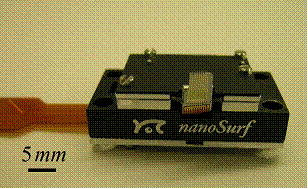
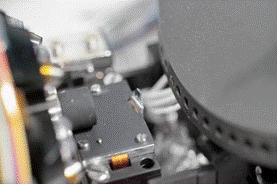
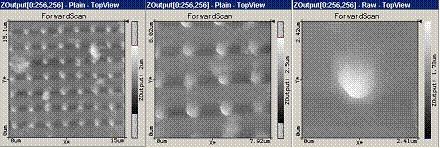
Figure 2. Upper Left: The AFM scanner viewed from the
perspective of the sample. Upper right: The scanner
positioned under the nose of the OM and in front of
the SWTS. Middle left: The AFM chip. (A) is a
close-up of one of the silicone tips, (B) points is
one of 8 cantilevers mounted on a cleavable
support-beam (C). D) is a reference piezoresistor
used for temperature compensation. Middle right:
Geometry of the AFM scan field relative to the OM
coordinate system. Cartoon on right exaggerates size
of AFM scan (OM image is 2 mm high by 1 mm wide) .
Bottom: topographs of pincushion array with
increasing magnification.
|
It must be emphasized that an AFM scan is acquired by
rastering a physical tool across a surface. As a result,
line-to-line noise and artifacts may be significantly
different than point-to-point artifacts along the scan
direction. Moreover, outside the range of authority of the
cantilever (approximately 65 x 65 micrometers laterally and
13 micrometers in height) the topograph does not go "out of
focus" but simply saturates, while anywhere within its
range of authority it is equally "in focus." The topograph
itself reflects the interaction between a tip of finite
size and a non-uniform surface, and therefore convolves
physical characteristics of both the probe and the target.
Thus, while an AFM topograph may look like an image
product, the processing required bears little in common
with the processing of an actual optical image.
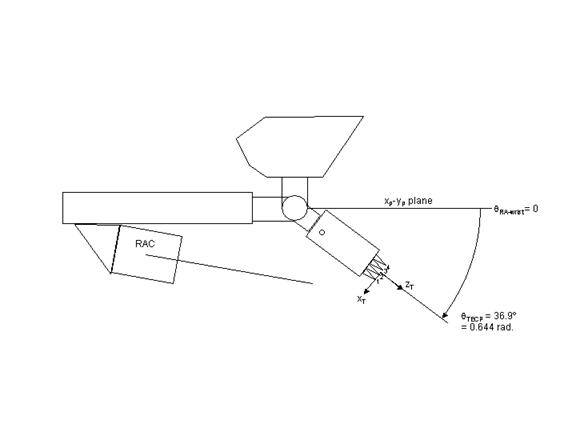
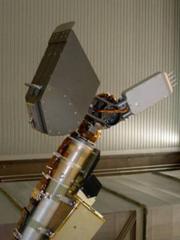
An end-effector on the Phoenix Robotic Arm (figure 3), the
TECP is a probe of soil physical properties including
temperature, thermal conductivity and diffusivity,
electrical conductivity and permittivity, as well as
atmospheric temperature, humidity, and wind speed. These
measurements are made with four conical needles, three of
which contain electrical heaters and thermometers, and a
hygrometer sensor mounted separately in the body of the
TECP.
Three of the four parallel needles contain a thermocouple
and a heater. The two needle pairs are used as electrodes
for regolith electrical properties measurements. The same
needles also serve as heating elements and thermometers for
regolith thermal properties and wind speed measurements.
The needles can be inserted into the soil for thermal and
electrical measurements or positioned above the surface for
atmospheric temperature, and wind speed measurements.
Regolith thermal properties (including temperature, thermal
conductivity, thermal diffusivity, volumetric heat
capacity, and thermal inertia) as well as wind speed are
derived from the heating and cooling behavior of the
needles before and after a known amount of heat is added.
Regolith electrical properties, including electrical
conductivity and dielectric permittivity, are measured with
capacitance and resistance sensors coupled to the regolith
through the sensing needles. Atmospheric water vapor
concentration is measured with a calibrated capacitance
hygrometer mounted near a temperature sensor on the TECP
printed circuit board, but exposed to the atmosphere
through a particulate filter.
The humidity sensor determines the capacitance of the thin
film hygrometer, which is a calibrated function of the
relative humidity at the film surface. By measuring the
film temperature with the adjacent temperature sensor, the
result can be converted to absolute humidity. Under the
assumption that gradients in vapor pressure are small,
external relative humidity can be determined by comparison
of the TECP result with the MET temperature sensors.
The scientific objectives of the TECP are:
- To provide ground-truth for orbital surface thermal
measurements and input parameters for thermal models by
directly measuring the thermal properties of Martian
regolith.
- To measure the concentration and nature of water in
martian regolith in solid, "non-frozen," liquid, and vapor
states.
- To determine changes in the reservoirs of water when
soil is freshly exposed.
- To characterize the movement of water in and out of the
soil by measuring atmospheric humidity, temperature, and
wind speed above the surface.
|
Figure 3: Top: Schematic of TECP position on the RA. See description of RA encoder joint angles in TECP_SAMPLE.FMT. Bottom: TECP (right) mounted on the robotic arm. The small white circle on the lower left is the humidity sensor. The four needles at right perform the other sensor measurements.
|
TECP thermal and electrical properties measurement quality
depends on proper needle placement by the RA. Non-linear
insertion, partial insertion, and lateral movement all
affect data quality negatively. Thermal properties
measurements can also be negatively impacted by non steady
state thermal conditions, and the TECP should therefore be
allowed to equilibrate to its thermal environment before
making thermal properties measurements.
Measurement electronics are contained in the body of the
TECP, and include a 12 bit A/D converter, two phase
detectors, three resistance bridges, and a digital shift
register. The A/D converter and shift register communicate
through a serial interface to an FPGA on the primary MECA
control and measurement electronics (CME) board.
MECA's wet chemistry laboratory (WCL) comprises four
single-use modules, each consisting of a beaker assembly
and an actuator assembly (figure 4). The modules mix soil
samples with a leaching solution in a pressure vessel for
electrochemical analysis. The scientific objective of the
WCL is to determine the total pH, redox properties, and
concentration of the principal aqueously solvated
components of the acquired soil samples.
Chemical data is returned by 26 distinct sensors, some
redundant, lining the walls of each beaker. These measure:
Temperature; pH (3); conductivity; oxidation-reduction
potential; the anions chloride (2), bromide, and iodide;
cations sodium, potassium, calcium, magnesium; and barium,
used in a sulfate titration. Also included are electrodes
for cyclic voltammetry, anodic stripping voltammetry, and
chronopotentiometry (3). Lithium electrodes (2) are used as
a reference relative to the known concentration of lithium
salts in the solution. Sensors for nitrate, ammonium,
dissolved oxygen and carbon dioxide, which for various
reasons do not provide a quantitative measure of soil
composition, are used only for context. A heater is
imbedded in the base of the beaker to maintain water
temperature during operation.
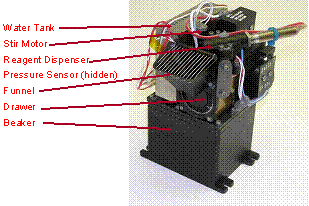
Each WCL actuator assembly includes a tank containing 25-30
ml of a calibration and leaching solution, a sample loading
drawer with a capacity of ~1.0 cm3, temperature
and pressure sensors, heaters, a stirring mechanism, and a
device to dispense up to five small crucibles into the
solution. The AA is responsible for soil, water, and
solid reagent addition as well as stirring and two-zone
internal heating (tank and drawer). Telemetry returned by
the AA includes internal cell pressure, water storage tank
and sampling drawer temperatures, and certain limit switch
positions.
|
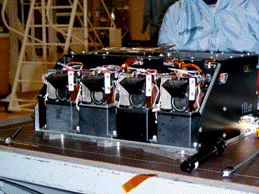
|
|
|
Figure 4: MECA Wet chemistry cells installed in
flight enclosure (left) and detail (right)
|
Each WCL experiment lasts two days, not necessarily
sequential. After an initial post-landing checkout,
preparation for a chemical experiment starts with melting
the frozen leaching/calibration solution in the storage
tank and delivering it to the beaker by actuating a
puncture mechanism. Sensors are calibrated in that
solution, and then calibrated again after addition of a
crucible containing small quantities of specific salts. The
combined ion concentration from the initial solution and
from the crucible, less than 10-4 molar for most ions,
establishes the detection floor. The final step is to open
the sampling drawer and receive a sample from the robotic
arm. The total sample volume is estimated with an accuracy
of 0.25 cc (maximum 1 cc) from images acquired by the robot
arm camera. For the remainder of the day, the concentration
of major anions and cations are monitored as well as key
indicators such as pH, redox potential, and cyclic
voltammetry, stirring when appropriate and maintaining a
constant temperature of 5C. At the end of the day the
solution is allowed to freeze in the beaker. A second day
of measurement begins with thawing of the solution in the
beaker, determining the sensor baseline, and adding an
acid-containing crucible to lower the pH. Monitoring
continues as on the first day. The final activity is the
sequential addition of three crucibles of barium chloride.
A sulfate titration is performed by monitoring the barium
and chloride levels as the crucible contents slowly
dissolve.
Most sensors will have three separate calibration steps
prior to their use on Mars. Each individual electrochemical
sensor was first calibrated prior to integration into the
beaker by laboratory measurement in several standard
solutions using commercial electronics. The second
calibration was performed with the same solutions after
beaker integration, using flight-like analog electronics
and a laboratory digital controller. The exceptions were
the bromide and iodide sensors, which could not be tested
after integration without contaminating the chloride
sensor. The final two-point calibration will occur on Mars.
In general, the ion selective electrodes exhibit classic
logarithmic Nernstian behavior over the specified
measurement range. While the two-point calibration will be
used to determine logarithmic slope and zero offset, the
laboratory data suggests that it is sufficient to assume
the ideal Nernstian slope and correct only the offset.
Pre-amplifier circuitry for the electrochemical sensors is
embedded in the beaker walls. Analog to digital conversion
(12-bit) is performed on a heavily-multiplexed "Analog
Board" which interfaces to an FPGA on the primary MECA
control and measurement electronics (CME) board. The FPGA
also generates waveforms for the voltammetric and
potentiometric sensors, performs temperature control, and
operates actuators. Also returned in telemetry is a reading
from an external temperature sensor located on the base of
the microscopy sample stage.
MECA flight software (FSW) runs on the primary spacecraft
computer and communicates to MECA hardware at 9600 baud via
a serial Payload and Attitude Control Interface(PACI)
interface. On the other side of that interface is an FPGA,
located on the Command and Measurement Electronics (CME)
board inside the MECA enclosure. The FPGA controls all
hardware functions in the MECA suite with the exception of
the Atomic Force Microscope (AFM), which has an embedded
processor, and discreet switches, controlled directly by
the spacecraft computer, for powering MECA and for
switching between AFM processor and FPGA. Data return
described here is generated by the FPGA.
The common MECA electronics return telemetry packets
indicative of the overall instrument configuration,
including parameter tables, the status of the command and
measurement electronics, and the products of a low-level
command parser that can be used to address any of the four
instruments.
Each MECA Non-Imaging EDR consists of a single file
containing binary data preceded by an ASCII PDS label. The
body of the file is a binary data set consisting of one of
sixteen format types as described in Appendix B. Types 0-3
contain data pertinent to an AFM measurement; the actual
scan data is a table in type 2. Types 4 (CME status), 5
(power monitoring), and 6 (tables) are data returned by
common electronics functions. Type 7 contains all the TECP
data. Types 8-15 pertain to the WCL: Type 8 contains data
from all the potentiometric WCL sensors such as pH and
ion-selective electrodes; type 9 contains conductivity
data; types 10-14 contains various voltammetries and
potentiometries, all in a common format; and type 15
contains pressure and temperature data.
Experiment Data Records (EDR), the Level 0 products, are
generated directly from the spacecraft telemetry stream but
also include results from calibration, characterization,
and cataloguing (CCC) activities on a variety of laboratory
instruments. Each MECA non-imaging EDR consists of a
cluster of uncalibrated data records, typically in a
time-series, grouped together by virtue of being acquired
on the same sol with the same token, product type, and
record length. Tokens are embedded in the file and are
assigned at the time of sequence generation specifically
for the purpose of dividing EDRs into logical segments and
helping to associate the data products with the original
command sequence. Product types reflect the flight software
command used to generate the data. Sixteen distinct
telemetry product types have been defined, and are
described in Appendix B. Within a particular telemetry
type, the record length may vary with commanded parameters,
and thus it is contingent on sequence engineers to apply
common parameters to data commands whose records should be
grouped together. As part of EDR generation, distinct
products that have been transmitted in multiple telemetry
packets (as indicated by a common time stamp) are
reassembled into single records within the EDR.
Discussion of Reduced Data Records (RDR) is outside the
scope of this document. In general, however, the objective
of the EDR is to ensure that all telemetry, regardless of
perceived importance, is retained in an unadulterated form,
while the RDRs will emphasize key data and will offer more
accessible forms such as ASCII tables and spreadsheets.
MECA non-imaging EDRs are equivalent to NASA Level 0
(CODMAC Level 2) data products as defined in Appendix-A.
Higher level products (RDR) may have the same general
format and structure as EDRs, although they are not
described by this document.
The MGSS-IOS element, supported by the Multi-mission Image
Processing Lab (MIPL) at JPL is responsible for generation
of the MECA non-imaging EDRs. Raw MECA data packets are
extracted from the telemetry stream and stored in EDRs, by
activity, product type and record length. The PDS product
label and its keywords are described in detail in
Appendix-C.
After generation, each EDR is saved locally on the MIPL
file server located at JPL and automatically delivered to
the Science Operation Center (SOC) at the University of
Arizona in real-time using the File Exchange Interface
(FEI),a tool developed by MIPL for automation of data/file
transfer using subscription and notification. Upon arrival
at the SOC, these files/products will be published into the
product catalog (ROMe) via another automated process. It
will subsequently be organized in time order and delivered
to the PDS in the form of an Archive Volume by the MECA
team.
FEI is a tool that is used for automation of data/file
transfer using subscription and notification. FEI is a
multi-mission tool developed by MIPL.
After the proprietary period has passed, all applicable
product such as EDRs, RDRs, etc. will be put into a PDS
archive volume and submitted to the PDS Geosciences Node by
the MECA team.
The EDR format described in this document will follow the
Phoenix product file naming conventions as described in
Appendix-D. All filenames will be PDS compliant and will
follow the Phoenix file naming convention described in
Appendix D. Additional identification information will be
contained in the PDS label as described in Appendix-C.
MECA non-imaging EDR products will comply with the
Planetary Data System's standards as specified in the PDS
Standards Reference (see Applicable Documents). All label
keywords are PDS compliant and registered in the PDS
dictionary.
The following time standards and conventions are used
throughout this document, as well as the Phoenix project
for planning activities and identification of events.
|
SCET
|
Spacecraft event time. This is the time when an
event occurred on-board the spacecraft, in UTC. It
is usually derived from SCLK.
|
|
SCLK
|
Spacecraft Clock. This is an on-board 64-bit counter,
in units of nano-seconds and increments once every
100 milliseconds. Time zero corresponds to midnight
on 1-Jan-1980.
|
|
ERT
|
Earth Received Time. This is the time (UTC) when the
first bit of the packet containing the current data
was received at the Deep Space (DSN) station.
|
|
Local Solar Time
|
Local Solar Time (LST). This is the local solar time
defined by the local solar days (sols) from the
landing date using a 24 "hour" clock within the
current local solar day (HR:MN:SC). Since the Mars
day is 24h 37m 22s long, each unit of LST is slightly
longer than the corresponding Earth unit. LST is
computed using positions of the Sun and the landing
site from SPICE kernels specified in the CHRONOS
setup file. If a landing date is unknown to the
program (e.g. for calibration data acquired on Earth)
then no sol number will be provided on output
LST examples:
SOL 12 12:00:01
SOL 132 01:22:32.498
SOL 2 9
|
|
True Local Solar Time
|
This is related to LST which is also known as the
mean solar time, is the time of day based on the
position of the sun, rather than measure of time
based on midnight to midnight "day". True local
solar time is used in all MIPL generated products.
|
|
SOL
|
Solar Day Number, also known as PLANET DAY NUMBER in
PDS label. This is the number of complete solar days
on Mars since landing. The landing day therefore is
SOL zero.
|
MECA non-imaging EDR products will be stored as binary
files, with the binary data preceded by a PDS label in
ASCII format, with each keyword definition terminated by
ASCII carriage-return and line-feed characters. EDR
products are defined as PDS spreadsheet objects (Applicable
Document 1).
All MECA non-imaging EDRs will contain fixed length
records, although the size of the records in each file
could differ between EDRs. When necessary, records will be
padded with extra bytes of 0x00.
The MECA non-imaging EDR product design, as described in
this SIS, is subject to PDS peer review. The peer review
will be completed well in advance of actual production, to
allow time for changes in the design as needed. This SIS
document will be updated to show any such changes.
Validation of MECA non-imaging EDR products during
production will be performed according to specifications in
the Phoenix Archive Plan and the MECA Team - Geosciences
Node ICD (Applicable Documents 2 and 10). The MECA Team
will validate the science content of the data products, and
the Geosciences Node will validate the products for
compliance with PDS standards and for conformance with the
design specified in this SIS.
The MECA non-imaging EDR contains time-ordered clusters of
raw sensor and status data as specified below. Details of
individual fields are described in Appendix B.
Notably absent from many of the EDR products are specific
indicators of the relationship between the data and the
command that produced it. Since Phoenix is a short mission
and there are limited MECA resources (e.g. only four WCL
cells and ten SWTS sets), the spacecraft clock tag on every
data packet is usually sufficient to allow comparison with,
for example, the uplink and downlink logs from the
operations team. More explicit linkage will be provided in
RDR products.
The philosophy of the MECA non-imaging data product is to
retain the full detail provided in the raw telemetry
packet, while clustering related time-sequences of data and
eliminating the segmentation of individual objects (e.g.
spectra) imposed by the telemetry process. This approach
places the emphasis for data analysis on tools provided by
the Phoenix Science Team for "ingesting" the binary data
into common analysis or spreadsheet platforms. Initially
tools will be provided for porting EDRs into the
Matlab© environment and into
comma-separated-value (CSV) files for use in spreadsheet
environments such as Excel©.
MECA non-imaging EDRs are generated from raw telemetry with
16 different data types anddata definitions. All instances
of MECA non-imaging EDRs will have the same PDS label
information, though some fields may be undefined
(designated "UNK") for some telemetry types. The binary
field definitions are dependent on the telemetry type,
which is defined both in the ASCII label information and in
the binary header. Definitions of the fields in the MECA
non-imaging products are provided in Appendix B.
To aidin distinguishing the ASCII label information from
the binary data, the location of the first binary data
record will be the final ASCII line which consists of the
word "END" followed by carriage return and line feed
characters.
MECA non-imaging data products are described by the same
information in the header of each product. A PDS label is
an ASCII text field consisting of a series of keyword=value
statements. The label carries the metadata necessary to
read and understand the data product. An example of a PDS
label is provided in Appendix E, and definitions of the
keywords used in the label are given in Appendix C.
MECA non-imaging EDRs can be read with any programming
language capable of interpreting binary data. As a courtesy
to the scientific community, tools will be made available
by the Phoenix science team for importing these EDRs into
the Matlab© environment and for producing
pure ASCII files consisting of a PDS header and tabulated
data. Please contact the MECA Instrument Co-Investigator at
michael.h.hecht@jpl.nasa.gov
for more information.
Appendix A.
PRODUCT LEVELS
Definitions of Data Processing
Levels
This table shows definitions of processing levels as
defined by NASA and by CODMAC, the Committee on Data
Management and Computation (Applicable Documents 8 and 9)
Table A.1
Data Processing Levels
|
NASA
|
CODMAC
|
Description
|
|
Packet data
|
Raw - Level 1
|
Telemetry data stream as received at the ground
station, with science and engineering data embedded.
|
|
Level-0
|
Edited - Level 2
|
Instrument science data (e.g., raw voltages, counts)
at full resolution, time ordered, with duplicates and
transmission errors removed.
|
|
Level 1A
|
Calibrated - Level 3
|
Level 0 data that have been located in space and may
have been transformed (e.g., calibrated, rearranged)
in a reversible manner and packaged with needed
ancillary and auxiliary data (e.g., radiances with
the calibration equations applied).
|
|
Level 1B
|
Resampled - Level 4
|
Irreversibly transformed (e.g., resampled, remapped,
calibrated) values of the instrument measurements
(e.g., radiances, magnetic field strength).
|
|
Level 1C
|
Derived - Level 5
|
Level 1A or 1B data that have been resampled and
mapped onto uniform space-time grids. The data are
calibrated (i.e., radiometrically corrected) and may
have additional corrections applied (e.g.,
terrain correction).
|
|
Level 2
|
Derived - Level 5
|
Geophysical parameters, generally derived from Level
1 data, and located in space and time commensurate
with instrument location, pointing, and sampling.
|
|
Level 3
|
Derived - Level 5
|
Geophysical parameters mapped onto uniform space-time
grids.
|
|
|
Ancillary - Level 6
|
Data needed to generate calibrated or resampled data
sets.
|
Appendix B.
RECORD STRUCTURE
Each EDR contains an ASCII header consisting of the PDS
label, followed by a series of binary data records, each of
which begins with a binary header. While certain fields in
the binary header are common, others are specific to an
individual data type. All records in any single EDR are of
the same length and format.
The PDS label is an ASCII text field consisting of a series
of keyword=value statements. The label carries the metadata
necessary to read and understand the data product. An
example of a PDS label is provided in Appendix E, and
definitions of the keywords used in the label are given in
Appendix C.
Note that all binary quantities are big-endian; that is,
the most significant byte of a multi-byte value comes
first. In general, PCs are little-endian while Macintosh
and UNIX systems are big-endian.
Note also that the word "packet" as used in the field name
descriptions is not strictly equivalent to a telemetry
packet. The packets referred to in the EDR should more
properly be thought of as records, which correspond to a
single packet of telemetry except when the data set length
forced the flight software to divide it among two or more
packets. In the EDR, such split records have been reunited
into a single record or "super-packet."
Following the PDS keywords, each EDR contains a series of
binary records of the same type, length, and ops_token (see
below) each of which is preceded by a 36-byte binary
header.
|
Table B.2.1. Binary Header format
|
|
|
Offset (bytes)
|
Field name
|
Type
|
Size
(bits)
|
Description
|
Eng Units
|
|
Header
|
0
|
CMD_secs
|
Unsigned
|
32
|
Instrument command receipt time (seconds)
|
Secs
|
|
4
|
CMD_frac
|
Unsigned
|
32
|
Instrument command receipt time (remainder)
|
Secs/ 232
|
|
8
|
read_secs
|
Unsigned
|
32
|
Command complete time (seconds)*
|
N/A
|
|
12
|
read_frac
|
Unsigned
|
32
|
Command complete time (remainder)*
|
N/A
|
|
16
|
Datalength
|
Unsigned
|
32
|
Record length (minus headers)
|
Bytes
|
|
20
|
Records
|
Unsigned
|
16
|
Records in this product
|
Records
|
|
22
|
record_num
|
Unsigned
|
16
|
# of this record, within the product (starting with
1)
|
N/A
|
|
24
|
Datatype
|
Unsigned
|
16
|
Telemetry type (AFM: FRQTEST = 0)
|
N/A
|
|
26
|
TypeSpecific
|
Unsigned
|
48
|
[See individual type descriptions]
|
N/A
|
|
32
|
ops_token
|
Unsigned
|
32
|
Ops token
|
N/A
|
* Not present in some data types
The generic format of the Binary Header is described in
Table B.2.1, where the fields may be interpreted as
follows:
CMD_secs: This is the time that the command was issued
from the spacecraft computer to the MECA subsystem across
the serial interface. Units are seconds of Spacecraft Clock
(SCLK).
CMD_frac: The remainder, where 232 is a full
second.
read_secs: This is the time that the data was returned to
the spacecraft computer across the serial interface from
the MECA subsystem (not used for some telemetry types).
Units are seconds of Spacecraft Clock (SCLK).
read_frac: The remainder, where 232 is a full
second.
datalength: The length of the following record (and all
records in this product), not including this header.
records: The number of records in this EDR.
record_num: The number of this record, from 1 to records.
These should be in chronological order, but preliminary
data products may not have these fields properly populated
and the records may be out of order or have data gaps..
datatype: The telemetry type, 0-15, as described in
following sections.
TypeSpecific: See individual descriptions in the following
sections
ops_token: The ops token consists of 8 hexadecimal digits
that help link the data record to the issuing command. It
serves to separate groups of products into distinct EDRs in
a logical manner and may also be coded for information that
is not present elsewhere, such as the command type that
produced the data, the WCL beaker number, or TECP gain
settings. The first four hexadecimal characters of the ops
token are an "activity id" that will be common to all the
records in one EDR. The remaining four hexadecimal
characters are assigned for various purposes at command
time. This document will be updated as protocols for these
definitions are established.
Record descriptions for the various telemetry types are
presented in the following sections.
Type 0: AFM:
FRQTEST
Description:
Each of the eight AFM cantilevers is tuned to a unique
resonant frequency that is used in the "dynamic" or
frequency-modulated mode of operation. In dynamic mode a
piezoelectric vibrator, which shakes the entire chip, is
tuned to a particular cantilever. This is the preferred
mode of operation (as compared to "static" mode) because it
results in less interaction between the tip and the
surface, but it is more complicated and prone to failure.
FRQTEST scans through the frequency spectrum to find the
resonant frequency and phase as well as the strength of the
resonance for the "current" cantilever, which may be
temporarily changed by the sequence to allow backup
cantilevers to be tested. The quality of the resonance is
captured in the applied voltage,
Vap, which is the input
voltage required to keep the Phase Locked Loop (PLL) output
amplitude at 10V. A good Vap is around 2.3V,
while values above 6V typically indicate that the
cantilever cannot be used in dynamic mode.
The test consists of two passes, each of which scans the
designated frequency range using each of nine phase
settings (0°,20°,40°, etc.). The best
frequency and phase, as indicated by the lowest value of
Vap, is selected from these 18 scans.
Generated by:
MECA_AFM_FRQTEST
Format:
|
|
Offset (bytes)
|
Field name
|
Type
|
Size (bits)
|
Description
|
Eng Units
|
|
Header
|
0
|
CMD_secs
|
Unsigned
|
32
|
Spacecraft command receipt time (whole seconds)
|
Secs
|
|
4
|
CMD_frac
|
Unsigned
|
32
|
Spacecraft command receipt time (remainder)
|
Secs/ 232
|
|
8
|
read_secs
|
Unsigned
|
32
|
Unused
|
N/A
|
|
12
|
read_frac
|
Unsigned
|
32
|
Unused
|
N/A
|
|
16
|
datalength
|
Unsigned
|
32
|
Record length (minus headers)
|
Bytes
|
|
20
|
records
|
Unsigned
|
16
|
Records in this product
|
Records
|
|
22
|
record_num
|
Unsigned
|
16
|
# of this record, within the product (starting with
1)
|
N/A
|
|
24
|
datatype
|
Unsigned
|
16
|
Telemetry type (AFM: FRQTEST = 0)
|
N/A
|
|
26
|
unused
|
Unsigned
|
48
|
Unused (zero)
|
N/A
|
|
32
|
ops_token
|
Unsigned
|
32
|
Ops token
|
N/A
|
|
Frequency
Test
Data
(112 bytes)
|
36
|
Tip
|
Unsigned
|
8
|
Current tip (0-7)
|
N/A
|
|
37
|
Vap_initial
|
Unsigned
|
8
|
Initial Vap (Vap<4 indicates good test)
|
V x 25.5
|
|
38
|
unused
|
Unsigned
|
16
|
Unused
|
N/A
|
|
40
|
freq0
|
Unsigned
|
32
|
Initial frequency
|
Hz
|
|
44
|
Vap_pass1
|
Unsigned
|
9*8
|
Vap values for pass 1, phases 0, 20, …,
160° deg
|
V x 25.5
|
|
53
|
Vap_pass2
|
Unsigned
|
9*8
|
Vap values for pass 2, phases 180, 200, …,
340°
|
V x 25.5
|
|
62
|
unused
|
Unsigned
|
16
|
Unused
|
N/A
|
|
64
|
freq_pass1
|
Unsigned
|
9*32
|
Center frequencies for pass 1, phase 0, 20,
…, 160°
|
Hz
|
|
100
|
freq_pass2
|
Unsigned
|
9*32
|
Center frequencies for pass 2, phase 180, 200,
…, 340°
|
Hz
|
|
136
|
Vap_min
|
Unsigned
|
8
|
Lowest Vap found in this test
|
V x 25.5
|
|
137
|
Vap_min_phase
|
Unsigned
|
8
|
Phase where lowest Vap found (0=0°, 1 =
20°, …)
|
V x 25.5
|
|
138
|
Vap_new
|
Unsigned
|
8
|
Vap to be used from here on
|
V x 25.5
|
|
139
|
unused
|
Unsigned
|
8
|
Unused
|
N/A
|
|
140
|
amplitude
|
Signed
|
32
|
New amplitude (signed - if negative, add 180°
to phase)
|
mV
|
|
144
|
frequency
|
Unsigned
|
32
|
New center frequency
|
Hz
|
Field descriptions:
Tip: This refers to the current beam/cantilever/tip
assembly, numbered 0-7. The AFM has eight silicon beams,
each topped by a short, flexible cantilever. Protruding
from each cantilever is a fine silicon tip. Here and
elsewhere, tip is shorthand used to designate the entire
assembly. Upon landing, Tip 0 is employed until it is no
longer usable.
Vap_initial: This is the value of Vap at the
start of the test (see above).
freq0: The starting frequency for the test
Vap_pass1: The lowest value of Vap for each of 9
sweeps with different phases
Vap_pass2: Same as above, second pass
freq_pass1: Frequencies corresponding to Vap_pass1
freq_pass2: Frequencies corresponding to Vap_pass1
Vap_min: Best (lowest) value of Vap from all 18
scans
Vap_min_phase: Phase corresponding to Vap_min
Vap_new: Final value of Vap (should be Vap_min)
amplitude: Amplitude of oscillation corresponding to
Vap_min
frequency: Resonant frequency corresponding to Vap_min
Usage notes:
· Voltages are coded as integer data numbers
(DN) such that V=DN/25.5
Type 1: AFM:
RESPONSE
Description:
The AFM is operated by a custom microprocessor using
proprietary code similar to that used by the commercial
NanoSurf instrument. Phoenix FSW communicates with the AFM
over a serial line. The low-level commands listed below
have little or no associated telemetry other than return
status codes from the microprocessor. These status codes,
a string of ASCII bytes, are returned in Telemetry Type 1.
A glossary of these codes is beyond the scope of this
document, but the MECA Science Team can advise on the
meaning of specific returns. Product length may vary with
AFM command, in which case records under a common activity
code may be separated into multiple EDRs.
Generated by:
MECA_AFM_ATTRGET (Returns AFM attributes with any of 43
IDs)
MECA_AFM_INITPLN (Prepares to scan)
MECA_AFM_INITBRG (Bridge initialization)
MECA_AFM_MVSTART (Moves to starting point for scan)
MECA_AFM_RAW (Issues raw, low-level command)
MECA_AFM_RDADCS (Reads Analog/Digital Converter)
Format:
|
|
Offset (bytes)
|
Field name
|
Type
|
Size (bits)
|
Description
|
Eng Units
|
|
Header
|
0
|
CMD_secs
|
Unsigned
|
32
|
Spacecraft command receipt time (whole seconds)
|
Secs
|
|
4
|
CMD_frac
|
Unsigned
|
32
|
Spacecraft command receipt time (remainder)
|
Secs/ 232
|
|
8
|
read_secs
|
Unsigned
|
32
|
Unused
|
N/A
|
|
12
|
read_frac
|
Unsigned
|
32
|
Unused
|
N/A
|
|
16
|
datalength
|
Unsigned
|
32
|
Record length (minus headers)
|
Bytes
|
|
20
|
records
|
Unsigned
|
16
|
Records in this EDR
|
Records
|
|
22
|
record_num
|
Unsigned
|
16
|
# of this record within the EDR (starting with 1)
|
N/A
|
|
24
|
datatype
|
Unsigned
|
16
|
Telemetry type (AFM: RESPONSE = 1)
|
N/A
|
|
26
|
unused
|
Unsigned
|
48
|
Unused (zero)
|
N/A
|
|
32
|
ops_token
|
Unsigned
|
32
|
Ops token
|
N/A
|
|
AFM response
|
36
|
AFM_response
|
Unsigned
|
Varies
|
Response from the AFM controller
|
N/A
|
Field descriptions:
AFM_response: This is the raw response from the AFM
microcontroller to the issued command. the response should
be 256 bits (32 bytes) long unless the raw command
performed a scan (unlikely).
The format of the response is: <STX> <StatID> [
<StatStr> ] <SUM> <ETX> , where:
- <STX> is a start byte (0x02)
- <StatID> is an identification byte
- [<StatStr>] is the optional return data
- <SUM> is a checksum
- <ETX> is an end-of-transmission byte (0x03)
Type 2: AFM:
SCAN
Description:
The AFM acquires topographic information by scanning the
image in a raster pattern. Typically the scan is performed
both forwards and backwards, and both the nominal height
and the error signal are recorded. Thus each physical scan
typically results in four data products, typically in the
order Forward/Error, Forward/Height, Backwards/Error,
Backwards/Height.
Image dimensions along the x and y axes vary to 512x512
bytes, or 266240 bytes per image including line headers.
The physical dimensions corresponding to the data grid are
not specificied in the telemetry and must be recovered from
the command sequence. Subsequent reduced data products will
include the conversion to physical units.
The AFM achieves a wide range of vertical (Z-axis)
resolution in 8-bit data by offering a choice of gain
settings, termed Channel Gain (CG), which is reported in
every line header. When CG=0 the 8 bits of data span the
entire ~13.6µm range of authority of the z-axis. The
exact scan range is somewhat dependent on temperature and
will require calibration in situ. Each step increase in CG
decreases the range by a factor of two. For example, CG=2
nominally spans 3.4 µm. After every scan line the
mean value of z is determined and that becomes the
reference position, termed z-offset, for the subsequent
line. In this way, even with a high CG, the scan can report
some variations of topography in 8-bit data over the entire
range of authority of the scanner.
Regardless of the gain setting for the height signal, the
error signal range is always 20 V, centered on the setpoint
(not reported in telemetry). For example, if the setpoint
is 2 V, the range is from -8 to +12 V. The relation between
the 20V and the deflection at the end (in microns) depends
on the calibration and the mode. In dynamic mode the
setpoint, and therefore the error signal is based on a
frequency shift.
Note that the AFM feedback loop is always operating over
the full range of authority of the cantilever, even if the
resulting data is outside the reportable range designated
by CG. Height data at the rails do not necessarily imply
that the scanner is out of lock - this must be determined
from the corresponding error signal. Correspondingly,
since the error signal reports the physical error in the
feedback loop, it will not reflect the "error" resulting
from data values falling outside the range determined by CG
and z-offset.
Generated by:
MECA_AFM_IMAGE
MECA_AFM_DOFRAME (low-level command)
MECA_AFM_DOLINE (low-level command)
Format:
|
|
Offset (bytes)
|
Field name
|
Type
|
Size (bits)
|
Description
|
Eng Units
|
|
Header
|
0
|
CMD_secs
|
Unsigned
|
32
|
Spacecraft command receipt time (whole seconds)
|
Secs
|
|
4
|
CMD_frac
|
Unsigned
|
32
|
Spacecraft command receipt time (remainder)
|
Secs/ 232
|
|
8
|
read_secs
|
Unsigned
|
32
|
Time at which last scanline was received from the
instrument (whole seconds)
|
Secs
|
|
12
|
read_frac
|
Unsigned
|
32
|
Time at which last scanline was received from the
instrument (remainder)
|
Secs/ 232
|
|
16
|
datalength
|
Unsigned
|
32
|
Record length (minus headers)
|
Bytes
|
|
20
|
records
|
Unsigned
|
16
|
Records in this EDR
|
Records
|
|
22
|
record_num
|
Unsigned
|
16
|
# of this record, within the EDR (starting with 1)
|
N/A
|
|
24
|
datatype
|
Unsigned
|
16
|
Telemetry type (AFM: SCAN = 2)
|
N/A
|
|
26
|
width
|
Unsigned
|
16
|
Scan width
|
Points
|
|
28
|
height
|
Unsigned
|
16
|
Scan height
|
Lines
|
|
30
|
direction
|
Unsigned
|
4
|
Scan direction mask. 1 = forward, 2 = backward
|
N/A
|
|
channel
|
Unsigned
|
4
|
Channel represented. 1 = error, 2 = height.
|
N/A
|
|
31
|
zoomregion
|
Unsigned
|
8
|
Zoom region if requested (1 is upper-left, 4 is
upper-right, 16 is lower-right), 0 otherwise
|
N/A
|
|
32
|
ops_token
|
Unsigned
|
32
|
Ops token
|
N/A
|
|
AFM scan data
|
36
|
scan_data
|
Unsigned
|
Up to 15752 bits
|
AFM Scan data
|
N/A
|
Field descriptions:
- width (in header): The number of points per line in the
scan
- height (in header): The number of lines in the scan
- direction (in header): Forward or backward scan
(typically both are acquired, in that order)
- channel (in header): Error or height (typically both
are acquired)
- zoomregion (in header, not used): This was designated
for an autozoom function that was never implemented
satisfactorily
- AFM Scan Data: Scan data is returned line by line. Each
line contains an 8-byte line header followed by the 8-bit
scan data. Note that certain items in the line header are
inherited from the commercial system and contain redundant
information. All bytes are signed integers.
Byte 1: Scan direction (0 = forward, 1 = backward)
Byte 2: Channel mask (always set to 3)
Bytes 3-4: Line number
Bytes 5-6: Z-offset. The 0-255 range spans the full z-range
of the scanner.
Byte 7: Z channel gain (0 spans the full z-range, 1 spans
half the range, etc.)
Byte 8: Designated for Vap, not implemented (see Type 0)
Byte 9 - (8+width): 8-bit scan data
Usage notes:
· In nearly all cases, data results from a
call to MECA_AFM_IMAGE. In rare cases the low-level
commands AFM_DOFRAME and AFM_DOLINE may have been called,
in which case the scan data may include interleaved
directions and/or channels as well as status data (see Type
1).
· Product length may vary, in which case
records under a common activity code may be separated into
multiple EDRs.
Type 3:
AFM: TIPS
Description:
Data reported here result from initialization and test of
the Wheatstone Bridge used to monitor the deflection of the
AFM cantilevers. The result is an offset, an assessment of
the quality of the cantilever, and the error signal from a
"scan" in air which serves to evaluate noise on the
measurement circuit (only the error is returned because the
actual signal should be at the rail).
Generated by:
MECA_AFM_TSTTIPS
Format:
|
|
Offset (bytes)
|
Field name
|
Type
|
Size (bits)
|
Description
|
Eng Units
|
|
Header
|
0
|
CMD_secs
|
Unsigned
|
32
|
Spacecraft command receipt time (whole seconds)
|
Secs
|
|
4
|
CMD_frac
|
Unsigned
|
32
|
Spacecraft command receipt time (remainder)
|
Secs/ 232
|
|
8
|
read_secs
|
Unsigned
|
32
|
Unused
|
N/A
|
|
12
|
read_frac
|
Unsigned
|
32
|
Unused
|
N/A
|
|
16
|
datalength
|
Unsigned
|
32
|
Record length (minus headers)
|
Bytes
|
|
20
|
records
|
Unsigned
|
16
|
Records in this EDR
|
Records
|
|
22
|
record_num
|
Unsigned
|
16
|
# of this record within the EDR (starting with 1)
|
N/A
|
|
24
|
datatype
|
Unsigned
|
16
|
Telemetry type (AFM: TIPS = 3)
|
N/A
|
|
26
|
unused
|
Unsigned
|
48
|
Unused (zero)
|
N/A
|
|
32
|
ops_token
|
Unsigned
|
32
|
Ops token
|
N/A
|
|
Tip Test Data
(8324 bytes)
|
36
|
current_tip
|
Unsigned
|
8
|
Current tip (0-7)
|
N/A
|
|
37
|
unused
|
Unsigned
|
24
|
Unused
|
N/A
|
|
40
|
BridgeOffset1(1)
|
Unsigned
|
32
|
Bridge offset, pass 1, tip 0 (-32768 = -8V, 32767 =
-4V)
|
DN
|
|
44
|
BridgeOffset2(1)
|
Unsigned
|
32
|
Bridge offset, pass 2, tip 0 (Same as above)
|
DN
|
|
48
|
LeverState1(1)
|
Unsigned
|
32
|
Lever state, pass 1, tip 0
|
N/A
|
|
52
|
LeverState2(1)
|
Unsigned
|
32
|
Lever state, pass 2, tip 0 (Same as above)
|
N/A
|
|
56
|
ScanResults1(1)
|
Unsigned
|
512*8
|
Scan results, pass 1, tip 0
|
N/A
|
|
568
|
ScanResults2(1)
|
Unsigned
|
512*8
|
Scan results, pass 2, tip 0
|
N/A
|
|
… (repeat for tips 1-6)
|
|
7320
|
BridgeOffset1(8)
|
Unsigned
|
32
|
Bridge offset, pass 1, tip 7
|
DN
|
|
7324
|
BridgeOffset2(8)
|
Unsigned
|
32
|
Bridge offset, pass 2, tip 7
|
DN
|
|
7328
|
LeverState1(8)
|
Unsigned
|
32
|
Lever state, pass 1, tip 7
|
N/A
|
|
7332
|
LeverState2(8)
|
Unsigned
|
32
|
Lever state, pass 2, tip 7
|
N/A
|
|
7336
|
ScanResults1(8)
|
Unsigned
|
512*8
|
Scan results, pass 1, tip 7
|
N/A
|
|
7848
|
ScanResults2(8)
|
Unsigned
|
512*8
|
Scan results, pass 2, tip 7
|
N/A
|
Field descriptions:
· current-tip: The number 0-7 of the
cantilever that the software understands is currently being
used for scanning. This is for status only, and all 8
cantilevers are evaluated in order, regardless of this
value.
· BridgeOffset1: The offset required to
balance the Wheatstone bridge
· BridgeOffset2: Same thing, second pass
· LeverState1: The evaluated condition of the
cantilever, pass 1 (0 = NOT_TESTED, 1 = DEAD, 2 =
NOT_CENTERED, 3 = OUT_OF_RANGE, 4 = NOISY, 5 = OK)
· LeverState2: Same as above, second pass
· ScanResults1: The error signal from a test
"scan" in air consisting of a single line, forwards and
backwards. Unlike the AFM_SCAN data type, the signal is not
preceded by header information.
· ScanResults2: The Same as above, second pass
Usage notes:
· Data starts with the tip 0 and goes through
tip 7, regardless of the value of current_tip. Broken off
tips should be marked as dead.
· Note that the first three bytes of the data
block (36-38) are not repeated.
· Note that tips 0-7 map into array elements
1-8 to accommodate array numbering conventions of analysis
software.
Type 4:
CME_STATUS
Description:
Type 4 is a direct response from the FPGA that controls all
aspects of MECA operations. It is preserved in EDR format
for completeness and because it is occasionally used as a
"workaround" for a primary science measurement, but it
would not normally be used directly by the general
community.
The most common usage of this telemetry type is as a reply
to routine requests including turning on LEDs for imaging,
moving the microscope sample stage, deploying a chemistry
actuator (sample drawer, water release, or stirring motor),
or simply a status inquiry. The data return provides not
only confirmation that the requested operation occurred,
but specific information useful for calibration, such as
the position of the stage when the atomic force microscope
is engaged.
A second usage of this telemetry type is in response to a
"raw" command, a direct instruction to the FPGA to execute
any of its allowed functions. While not recommended for
routine science measurements, this mode is often used for
operations that are not performed in the desired sequence
by the standard flight software commands. This method is
currently used, for example, to set up the waveform prior
to a WCL voltammetry or potentiometry scan.
Since all records in a single EDR must be of the same
length, the commands containing RAW fields will be in
separate EDRs from the routine requests.
Generated by:
MECA_CMD_NO_OP
MECA_CMD_RAW
MECA_OM_SETLEDS
MECA_STG_ABSROT
MECA_STG_ABSXLT
MECA_STG_RELROT
MECA_STG_RELXLT
MECA_WC_DRWRCLS
MECA_WC_DRWROPEN
MECA_WC_RLSRGT
MECA_WC_RLSWATER
MECA_WC_STIR
Format:
|
|
Offset (bytes)
|
Field name
|
Type
|
Size (bits)
|
Description
|
Eng Units
|
|
Header
|
0
|
CMD_secs
|
Unsigned
|
32
|
Spacecraft command receipt time (whole seconds)
|
Secs
|
|
4
|
CMD_frac
|
Unsigned
|
32
|
Spacecraft command receipt time (remainder)
|
Secs/ 232
|
|
8
|
read_secs
|
Unsigned
|
32
|
Time at which this data was received from the
instrument (whole seconds)
|
Secs
|
|
12
|
read_frac
|
Unsigned
|
32
|
Time at which this data was received from the
instrument (fractional seconds = value /
232)
|
See description
|
|
16
|
datalength
|
Unsigned
|
32
|
Product length (minus headers)
|
Bytes
|
|
20
|
records
|
Unsigned
|
16
|
Records in this product
|
Records
|
|
22
|
record_num
|
Unsigned
|
16
|
# of this record, within the product (starting with
1)
|
N/A
|
|
24
|
datatype
|
Unsigned
|
16
|
Telemetry type (CME_STATUS = 4)
|
N/A
|
|
26
|
unused
|
Unsigned
|
48
|
Unused (zero)
|
N/A
|
|
32
|
ops_token
|
Unsigned
|
32
|
Ops token
|
N/A
|
|
CME status
|
36
|
[RAW]
[CME_command]
CME_status
|
Unsigned
|
176, unless from CMD_RAW
|
The 22-byte CME status returned in the FPGA command
response. If output is from the CMD_RAW command,
science data and command echo will precede the
status.
|
N/A
|
Field descriptions:
· RAW: This field would normally be populated
only for WCL commands used to set up voltammetry and
potentiometry scans.
· CME_Command: Used only when RAW is present,
this is an echo of the 42-byte command to the FPGA. Details
are available from the MECA team.
· CME_status: This is a standard 22-byte coded
field returned by the FPGA. It indicates such things as
limit switch positions or which components are enabled or
disabled. Details are available from the MECA team.
Type 5:
POWER_DATA
Description:
Type 5 data returns a time series of voltage and current
values provided by the primary MECA 5V (load and logic) and
15V (load and AFM) power supplies. These results are
diagnostic of the functioning of all subsystems and should
be indicative of many anomalous conditions.
Generated by:
MECA_CMD_RDPOWER
Format:
|
|
Offset (bytes)
|
Field name
|
Type
|
Size
(bits)
|
Description
|
Eng Units
|
|
Header
|
0
|
CMD_secs
|
Unsigned
|
32
|
Spacecraft command receipt time (whole seconds)
|
Secs
|
|
4
|
CMD_frac
|
Unsigned
|
32
|
Spacecraft command receipt time (remainder)
|
Secs/ 232
|
|
8
|
read_secs
|
Unsigned
|
32
|
Time at which this data was received from the
instrument (whole seconds)
|
Secs
|
|
12
|
read_frac
|
Unsigned
|
32
|
Time at which this data was received from the
instrument (remainder)
|
Secs/ 232
|
|
16
|
datalength
|
Unsigned
|
32
|
Record length (minus headers)
|
Bytes
|
|
20
|
records
|
Unsigned
|
16
|
Records in this EDR
|
Records
|
|
22
|
record_num
|
Unsigned
|
16
|
# of this record within the EDR (starting with 1)
|
N/A
|
|
24
|
datatype
|
Unsigned
|
16
|
Telemetry type (POWER_DATA = 5)
|
N/A
|
|
26
|
nsamples
|
Unsigned
|
8
|
Number of samples in this product
|
Samples
|
|
27
|
samplesize
|
Unsigned
|
8
|
Sample size (should be 20)
|
Bytes
|
|
28
|
unused
|
Unsigned
|
32
|
Unused (zero)
|
N/A
|
|
32
|
ops_token
|
Unsigned
|
32
|
Ops token
|
N/A
|
|
Power Data (one sample)
|
36
|
response
|
Unsigned
|
12
|
5V-logic (voltage)
|
DN
|
|
Unsigned
|
12
|
5V-load (voltage)
|
|
39
|
Unsigned
|
12
|
15V-load (voltage)
|
|
Unsigned
|
12
|
15V-AFM (voltage)
|
|
42
|
Unsigned
|
12
|
5V-logic (current)
|
|
Unsigned
|
12
|
5V-load (current)
|
|
45
|
Unsigned
|
12
|
15V-load (current)
|
|
Unsigned
|
12
|
15V-AFM (current)
|
|
48
|
Unsigned
|
32
|
Time at which this data was received from the
instrument (whole seconds)
|
Secs
|
|
52
|
Unsigned
|
32
|
Time at which this data was received from the
instrument (remainder)
|
Secs/ 232
|
|
56
|
<Repeat response for remainder of data>
|
Field descriptions:
· nsamples: The number of times the power
lines were read.
· samplesize: Should always read 20 (bytes).
· response: The first 4 fields return voltage
readings for the 5V logic and load lines followed by the
15V load and the 15V dedicated AFM drive lines. The
following 4 fields contain the current signals for the same
line. These 12-bit signals are concatenated such that the
sequence of 8 requires 12 bytes. The final 8 bytes tag each
set of readings with the spacecraft clock time, using the
same convention as the header. To express voltages in mV,
multiply the data numbers to by 7.324. To express current
values in mA, multiply by 0.610.
Type 6:
TBL
Description:
Type 6 data returns, on request, the contents of any of six
tables that modify the operation of the MECA flight
software (FSW). These include a state table which is
autonomously maintained by FSW as well as several tables
that can only be set by explicit user command. These
user-maintained tables contain the values and allowed
ranges of parameters and attributes that define the
implementation of each experiment. For microscopy, for
example, they might define the different substrate
positions on the sample wheel as well as the optimal focus
position. Download of these latter tables is for the
purpose of confirmation that the actual parameters of an
experiment were set as intended.
Generated by:
MECA_TBL_DWNLD
Format:
|
|
Offset (bytes)
|
Field name
|
Type
|
Size
(bits)
|
Description
|
Eng Units
|
|
Header
|
0
|
CMD_secs
|
Unsigned
|
32
|
Spacecraft command receipt time (whole seconds)
|
Secs
|
|
4
|
CMD_frac
|
Unsigned
|
32
|
Spacecraft command receipt time (remainder)
|
Secs/ 232
|
|
8
|
read_secs
|
Unsigned
|
32
|
Time at which this data was received from the
instrument (whole seconds)
|
Secs
|
|
12
|
read_frac
|
Unsigned
|
32
|
Time at which this data was received from the
instrument (remainder)
|
Secs/ 232
|
|
16
|
datalength
|
Unsigned
|
32
|
Record length (minus header)
|
Bytes
|
|
20
|
records
|
Unsigned
|
16
|
Records in this EDR
|
Records
|
|
22
|
record_num
|
Unsigned
|
16
|
# of this record, within the EDR (starting with 1)
|
N/A
|
|
24
|
datatype
|
Unsigned
|
16
|
Telemetry type (TBL = 6)
|
N/A
|
|
26
|
tabletype
|
Unsigned
|
8
|
Table type
|
N/A
|
|
27
|
unused
|
Unsigned
|
40
|
Unused (zero)
|
N/A
|
|
32
|
ops_token
|
Unsigned
|
32
|
Ops token
|
N/A
|
|
Table Contents
|
36
|
response
|
Unsigned
|
Varies by table type:
|
The contents of the requested table.
|
N/A
|
Field descriptions:
· tabletype: The type of table requested:
(0=State, 1=Parameter Values, 2=Parameter Ranges, 3=AFM
Attribute ranges, 4=Coupons, 5=Tips).
· response: Depends on table type (see
Appendix F). Note that the header listed in Appendix F is
used on upload but is not returned with the data.
Table lengths are:
0. State Table: 136 bytes
1. Parameter Value Table: 1600 bytes
2. Parameter Range Table: 3200 bytes
3. AFM Attribute Table: 860 bytes
4. Coupons Table: 276 bytes
5. Tips Table: 192 bytes
Type 7:
TECP
Description:
Type 7 data contains results of TECP measurements in all
its modes, accompanied by indications of the robotic arm
position (hence the TECP position) at the time the data was
acquired. The mode itself is not indicated except by
reference to the original command sequence (this will be
corrected in the reduced data records). All eight channels
(3 thermocouples, humidity, electrical conductivity and
permittivity, electronics board temperature and the heater
current) are always returned, with data values set to zero
if the channel is inactive. Typically several channels are
active at a time. If the robotic arm is not powered on
during a TECP activity, the RA position will not be
properly reported in the EDR. RA position variables for
such observations will be added into the RDR, along with
comments about the records and observations.
The eight TECP channel values are converted from data
numbers (DN) to physical units as described below. The
calibration constants are nominal, and the user should
refer to the official calibration document for the most
up-to-date values.
· Thermocouples 1-3: The data are returned as
12-bit unsigned values that must first be converted to a
signed integer. This, if DN>2048, the signed
value is (DN/2048-2), while if DN<2048, the signed value
is DN/2048. The result is then multiplied by the opamp
gain, nominally 1277, to retrieve ΔV (µV) of the
thermocouple. This result is converted to temperature using
the formula
T(K) = Tb + ΔV/S
where Tb is the board temperature (see below)
and S is the corresponding Seebeck coefficient, derived
using the polynomial form:
S (µV/K) =
1.05x10⁻⁶∙Tb3 -
1.04x10⁻³∙Tb2 +
0.432∙Tb - 1.62
Note, however, that for electronic reasons, Tb
cannot be read simultaneously with the thermocouples, so
Tb will be zero for any EDRs that contain
nonzero values of thermocouples 1-3. Tb must
therefore be extracted from preceding or following EDRs.
· Board temperature: Temperature is retrieved
from the data in DN from:
Tb(K) = 0.0831∙DN - 4.76.
· Humidity: Relative humidity was calibrated
by measuring the DN reading of the TECP at various known
combinations of temperature and humidity. Thus DN can be
converted to RH by solving for the larger root of the
polynomial:
DN = -59.922∙RH2 + (-1742
+8.843∙Tb) ∙RH
+ (1860 - 8.2781∙Tb -
0.017443∙Tb2)
where Tb is the board temperature in Kelvin (see
above).
· Permittivity: The dielectric constant is
found from the polynomial:
εr =
1.172x10⁻⁹∙DN3 -
8.528x10⁻⁶∙DN28.504x10-6∙DN
2 + 0.02289∙DN0.02277∙DN - 10.5810.42
· Electrical conductivity: Conductivity data
is acquired at one of three gain settings. Unfortunately,
the gain setting is not returned with the telemetry and
must be recovered from the original command. This will be
corrected in the reduced data records. Note that at high
gain, conductivity is only defined for DN<3421; at
medium gain, 229<DN<3636; and at low gain, for
DN>211.
The resistance of the medium Rm is determined
from the data with the temperature-dependent polynomial:
Rm (Ω) =
exp[a∙DN4exp[a∙DN5 +
b∙DN3b∙DN4 +
c∙DN2c∙DN3 + d∙DN +
e]
Where for high gain, and DN < 3421:
|
T(K)
|
|
a
|
b
|
c
|
d
|
e
|
|
160
|
|
-8.341E-14
|
8.237E-10
|
-2.751E-6
|
4.743E-3
|
3.136
|
|
200
|
|
-7.892E-14
|
7.927E-10
|
-2.691E-6
|
4.718E-3
|
3.128
|
|
240
|
|
-7.809E-14
|
7.858E-10
|
-2.673E-6
|
4.699E-3
|
3.136
|
|
280
|
|
-7.742E-14
|
7.807E-10
|
-2.661E-6
|
4.690E-3
|
3.139
|
|
323
|
|
-7.769E-14
|
7.820E-10
|
-2.662E-6
|
4.689E-3
|
3.141
|
For medium gain, and 229 < DN < 3636 :
|
T(K)
|
|
a
|
b
|
c
|
d
|
e
|
|
160
|
|
-3.248E-14
|
4.654E-10
|
-1.922E-6
|
4.037E-3
|
7.918
|
|
200
|
|
-3.171E-14
|
4.536E-10
|
-1.885E-6
|
4.004E-3
|
7.910
|
|
240
|
|
-3.263E-14
|
4.605E-10
|
-1.903E-6
|
4.019E-3
|
7.905
|
|
280
|
|
-3.128E-14
|
4.498E-10
|
-1.877E-6
|
4.000E-3
|
7.901
|
|
323
|
|
-3.100E-14
|
4.478E-10
|
-1.873E-6
|
3.998E-3
|
7.901
|
For low gain, and 211< DN £ 2750:
|
T(K)
|
a
|
b
|
c
|
d
|
e
|
|
|
160
|
3.433E-13
|
-1.813E-9
|
2.535E-6
|
9.912E-4
|
11.85
|
|
|
200
|
3.451E-13
|
-1.826E-9
|
2.565E-6
|
9.698E-4
|
11.85
|
|
|
240
|
2.342E-13
|
-1.116E-9
|
1.133E-6
|
1.971E-3
|
11.66
|
|
|
280
|
1.111E-13
|
-1.938E-10
|
9.454E-7
|
3.561E-3
|
11.35
|
|
|
323
|
2.909E-13
|
-1.240E-9
|
9.917E-7
|
2.302E-3
|
11.57
|
|
For low gain and 2750 < DN £ 3400:
|
T(K)
|
a
|
b
|
c
|
d
|
e
|
|
200
|
0
|
1.3236E-8
|
-1.1648E-4
|
3.4362E-1
|
-3.2341E+2
|
|
240
|
0
|
1.2165E-8
|
-1.0593E-4
|
3.0932E-1
|
-2.8657E+2
|
|
280
|
0
|
1.9291E-8
|
-1.7078E-4
|
5.0553E-1
|
-4.8393E+2
|
To retrieve actual soil conductivity, DN are first
converted to resistance, which then yields conductivity
according to
EC (µS/cm) = 106 / (Rm∙
p):
where the probe constant p is a function of Rm
and gain according to:
p (cm) = a∙ [ln(Rm)] 2
+ b∙ln(Rm) + c
where:
|
Gain
|
a
|
b
|
c
|
|
high
|
-1.97E-2
|
0.540
|
0.0601
|
|
medium
|
-3.99E-3
|
8.90E-3
|
3.39
|
|
low
|
0
|
0
|
3.79
|
· Heater current: Heater current is retrieved
from the data in DN from:
I(mA) = 0.610∙DN
Generated by:
MECA_TECP_READ
Format:
|
|
Offset (bytes)
|
FSW field name
|
Type
|
Size (bits)
|
Description
|
Eng Units
|
|
Header
|
0
|
CMD_secs
|
Unsigned
|
32
|
Spacecraft command receipt time (whole seconds)
|
Secs
|
|
4
|
CMD_frac
|
Unsigned
|
32
|
Spacecraft command receipt time (remainder)
|
Secs/ 232
|
|
8
|
read_secs
|
Unsigned
|
32
|
Time at which this data was received from the
instrument (whole seconds)
|
Secs
|
|
12
|
read_frac
|
Unsigned
|
32
|
Time at which this data was received from the
instrument (fractional seconds = value /
232)
|
See description
|
|
16
|
datalength
|
Unsigned
|
32
|
Product length (minus headers)
|
Bytes
|
|
20
|
records
|
Unsigned
|
16
|
Records in this product
|
Records
|
|
22
|
record_num
|
Unsigned
|
16
|
# of this record, within the product (starting with
1)
|
N/A
|
|
24
|
datatype
|
Unsigned
|
16
|
Telemetry type (TECP = 7)
|
N/A
|
|
26
|
nsamples
|
Unsigned
|
8
|
Number of samples in this product
|
Samples
|
|
27
|
samplesize
|
Unsigned
|
8
|
Sample size
|
Bytes
|
|
28
|
unused
|
Unsigned
|
32
|
Unused (zero)
|
N/A
|
|
32
|
ops_token
|
Unsigned
|
32
|
Ops token
|
N/A
|
|
TECP Data (one sample)
|
36
|
response
|
Unsigned
|
12
|
Thermocouple 1
|
A-to-D counts
|
|
Unsigned
|
12
|
Thermocouple 2
|
|
39
|
Unsigned
|
12
|
Thermocouple 3
|
|
Unsigned
|
12
|
Humidity
|
|
42
|
Unsigned
|
12
|
Electrical conductivity
|
|
Unsigned
|
12
|
Board temperature
|
|
45
|
Unsigned
|
12
|
Permittivity
|
|
Unsigned
|
12
|
Heater current
|
|
48
|
Unsigned
|
32
|
Time at which this data was received from the
instrument (whole seconds)
|
Secs
|
|
52
|
Unsigned
|
32
|
Time at which this data was received from the
instrument (fractional seconds = value /
232)
|
See description
|
|
56
|
Float
|
4*32
|
Joint angles from RA encoders
|
Radians
|
|
72
|
Float
|
4*32
|
Joint angles from RA pots
|
Radians
|
|
88
|
Float
|
3*32
|
Position of TECP in RA frame
|
Meters
|
|
100
|
Float
|
4*32
|
Orientation of TECP in RA frame (quaternion)
|
N/A
|
|
116
|
Float
|
4*32
|
Temperature of each RA joint
|
Degrees C
|
|
132
|
Unsigned
|
32
|
RA tool referenced (fixed at ra_tool_value_RA_TECP
= 6)
|
N/A
|
|
136
|
…
|
Field descriptions:
· nsamples: The number of times the TECP was
read.
· samplesize: Should always read 100 (bytes).
· response: The first 8 fields are the actual
TECP 12-bit data channels, concatenated such that the
sequence of 8 requires 12 bytes. The next 8 bytes tag each
set of readings with the spacecraft clock time, using the
same convention as the header. The remaining values in each
iteration locate the TECP in the RA frame. If the robotic
arm is not powered on during a TECP activity, the RA
position will not be reported in the EDR. The fields
RA_encoders, RA_pots, Tjoint, and TECP_pos will be all
zero. TECP_orientation (the quaternion) elements will be
0, 1, 0, 0. The user is referred to Phoenix Camera EDR/RDR
SIS for further discussion of lander reference frames.
Type 8: WCL:
ISES
Description:
This data type contains a single set of readings from the
majority of the sensors in the WCL beakers. Conversion to
physical units begins with conversion of data numbers (DN)
to mV, a characteristic of the analog-to-digital converter
circuit common to most the ISEs. Nominal values for the
half-cell are:
V(mV) = -0.80579∙DN + 2057.8
The half-cell results are then converted to an absolute
potential by subtracting the potential measured on either
of the lithium reference sensors. Note that
oxidation-reduction potential (ORP) is not specifically
listed as a sensor because it serves as the ground for all
other sensors. Thus VORP = -VLi.
Conversion from mV to molar concentration is uses
calibration constants specific to the beaker. These will be
updated after in situ calibration. See the WCL calibration
report for additional details.
Generated by:
MECA_WC_READ (Mode 2)
Format:
|
|
Offset (bytes)
|
Field name
|
Type
|
Size (bits)
|
Description
|
Eng Units
|
|
Header
|
0
|
CMD_secs
|
Unsigned
|
32
|
Spacecraft command receipt time (whole seconds)
|
Secs
|
|
4
|
CMD_frac
|
Unsigned
|
32
|
Spacecraft command receipt time (remainder)
|
Secs/ 232
|
|
8
|
read_secs
|
Unsigned
|
32
|
Time at which this data was received from the
instrument (whole seconds)
|
Secs
|
|
12
|
read_frac
|
Unsigned
|
32
|
Time at which this data was received from the
instrument (fractional seconds = value /
232)
|
See description
|
|
16
|
datalength
|
Unsigned
|
32
|
Record length (minus headers)
|
Bytes
|
|
20
|
records
|
Unsigned
|
16
|
Records in this EDR
|
Records
|
|
22
|
record_num
|
Unsigned
|
16
|
# of this record, within the EDR (starting with 1)
|
N/A
|
|
24
|
datatype
|
Unsigned
|
16
|
Telemetry type (WCL: ISES = 8)
|
N/A
|
|
26
|
unused
|
Unsigned
|
48
|
Unused (zero)
|
N/A
|
|
32
|
ops_token
|
Unsigned
|
32
|
Ops token
|
N/A
|
|
WCL data
|
36
|
response
|
Unsigned
|
384
|
CME response: 48 bytes WCL data
|
N/A
|
|
Command echo
|
84
|
CME_Command
|
Unsigned
|
336
|
42-byte CME command
|
N/A
|
|
Command status
|
126
|
CME_status
|
Unsigned
|
176
|
22-byte CME status
|
N/A
|
Field descriptions:
· response: Data consists of 24 12-bit words
returned in two bytes with the most significant bits set to
zero. Data is returned in the following order:
|
Byte Offset
|
Description
|
|
0
|
one of 6 measurements per cycle of chloride reference
|
|
2
|
one of 6 measurements per cycle of chloride reference
|
|
4
|
polymer pH electrode (1 of 2)
|
|
6
|
polymer pH electrode (2 of 2)
|
|
8
|
sodium electrode
|
|
10
|
lithium electrode (1 of 2)
|
|
12
|
potassium electrode
|
|
14
|
dissolved oxygen reference electrode
|
|
16
|
calcium electrode
|
|
18
|
magnesium electrode
|
|
20
|
nitrate electrode
|
|
22
|
ammonium electrode
|
|
24
|
barium electrode
|
|
26
|
bromine electrode
|
|
28
|
lithium electrode (2 of 2)
|
|
30
|
one of 6 measurements per cycle of chloride reference
|
|
32
|
one of 6 measurements per cycle of chloride reference
|
|
34
|
one of 6 measurements per cycle of chloride reference
|
|
36
|
iridium pH electrode
|
|
38
|
iodide electrode
|
|
40
|
chloride electrode
|
|
42
|
carbon dioxide electrode
|
|
44
|
monitor for voltage supplied to beaker electronics
|
|
46
|
one of 6 measurements per cycle of chloride reference
|
· CME_Command: This is an echo of the 42-byte
command to the FPGA. Details are available from the MECA
team.
· CME_status: This is a standard 22-byte coded
field returned by the FPGA. It indicates such things as
limit switch positions or which components are enabled or
disabled. Details are available from the MECA team.
Type 9: WCL:
COND
Description:
This data type contains a single set of readings from the
WCL conductivity sensor, the current in each of two ranges
and the voltage (read twice). Conversion to physical units
begins with conversion of data numbers (DN) to resistance,
with the nominal gain given by.
Rlow(Ω) = 5715.3∙(V/Ilow)
Rhigh(Ω) =
5810.4∙(V/Ihigh)
where V = 2517.95-DN and I = 2570-DN.
Conductance is the reciprocal of the resistance.
Conductance is converted to conductivity by multiplying by
the cell constant, which varies from beaker to beaker and
is described in the WCL Calibration Report. The cell
constant will be updated after in situ calibration.
Generated by:
MECA_WC_READ (Mode 3)
Format:
|
|
Offset (bytes)
|
Field name
|
Type
|
Size (bits)
|
Description
|
Eng Units
|
|
Header
|
0
|
CMD_secs
|
Unsigned
|
32
|
Spacecraft command receipt time (whole seconds)
|
Secs
|
|
4
|
CMD_frac
|
Unsigned
|
32
|
Spacecraft command receipt time (remainder)
|
Secs/ 232
|
|
8
|
read_secs
|
Unsigned
|
32
|
Time at which this data was received from the
instrument (whole seconds)
|
Secs
|
|
12
|
read_frac
|
Unsigned
|
32
|
Time at which this data was received from the
instrument (fractional seconds = value /
232)
|
See description
|
|
16
|
datalength
|
Unsigned
|
32
|
Record length (minus headers)
|
Bytes
|
|
20
|
records
|
Unsigned
|
16
|
Records in this EDR
|
Records
|
|
22
|
record_num
|
Unsigned
|
16
|
# of this record within the EDR (starting with 1)
|
N/A
|
|
24
|
datatype
|
Unsigned
|
16
|
Telemetry type (WCL: COND = 9)
|
N/A
|
|
26
|
unused
|
Unsigned
|
48
|
Unused (zero)
|
N/A
|
|
32
|
ops_token
|
Unsigned
|
32
|
Ops token
|
N/A
|
|
WCL data
|
36
|
response
|
Unsigned
|
64
|
8 bytes WCL conductivity data
|
N/A
|
|
Command echo
|
44
|
CME_Command
|
Unsigned
|
336
|
42-byte CME command
|
N/A
|
|
Command status
|
86
|
CME_status
|
Unsigned
|
176
|
22-byte CME status
|
N/A
|
Field descriptions:
· response: Data consists of 4 12-bit,
unpacked data, each returned in two bytes with the most
significant bits set to zero. Data is returned in the
following order:
|
Byte Offset
|
Name
|
Description
|
|
0
|
I_HI
|
1st measure of electrical current in
conductivity sensor
|
|
2
|
V
|
measure of voltage in conductivity sensor
|
|
4
|
I_LO
|
2nd measure of electrical current in
conductivity sensor
|
|
6
|
V
|
measure of voltage in conductivity sensor
|
· CME_Command: This is an echo of the 42-byte
command to the FPGA. Details are available from the MECA
team.
· CME_status: This is a standard 22-byte coded
field returned by the FPGA. It indicates such things as
limit switch positions or which components are enabled or
disabled. Details are available from the MECA team.
Type 10:
WCL: DOX
Description:
The WCL Dissolved Oxygen sensor consists of an oxygen
permeable membrane encapsulating a gel with electrochemical
properties sensitive to the oxygen concentration. Behind
the gel is a cyclic voltammetry (CV) electrode, and the
form of the readout is thus identical to that of CV (Type
11).
To convert the data to physical units requires knowledge of
both the drive (voltage) waveform and the response
(current). Both require information that can be extracted
from the CME_Command echo (see Field Descriptions). This
information will be provided in an accessible form in
reduced data records.
With knowledge of the gain setting, the current response to
the waveform can be extracted according to the formula:
I(nA) = a∙DN + b
where the parameters a and b for each of the 8 gain
settings are nominally as follows (please see the WCL
Calibration Report for most recent values):
|
Gain
|
a
|
b
|
|
0
|
0
|
0
|
|
1
|
-0.743
|
1895
|
|
2
|
-0.0734
|
187.7
|
|
3
|
-8.534
|
21778
|
|
4
|
0
|
0
|
|
5
|
-2.568
|
6554
|
|
6
|
-0.245
|
626.5
|
|
7
|
n/a
|
n/a
|
Note that the gain settings are not monotonically
increasing due to a bit order reversal in the FPGA.
The voltage ramp is typically a triangle, repeated until
the specified number of points is exhausted (normally just
once). The step size, timing, upper and lower voltage
limits, and number of points can be extracted from
CME_Command in data numbers (DN), but not the starting
voltage and ramp, which depend on preceding RAW commands.
In most cases, however, the ramp will start at the lower
voltage limit.
The drive waveform can be converted from DN to voltage with
the following nominal formula:
V(mV) = -1.614∙DN + 3310
Generated by:
MECA_WC_READ (Mode 4)
Format:
|
|
Offset (bytes)
|
Field name
|
Type
|
Size (bits)
|
Description
|
Eng Units
|
|
Header
|
0
|
CMD_secs
|
Unsigned
|
32
|
Spacecraft command receipt time (whole seconds)
|
Secs
|
|
4
|
CMD_frac
|
Unsigned
|
32
|
Spacecraft command receipt time (remainder)
|
Secs/ 232
|
|
8
|
read_secs
|
Unsigned
|
32
|
Time at which this data was received from the
instrument (whole seconds)
|
Secs
|
|
12
|
read_frac
|
Unsigned
|
32
|
Time at which this data was received from the
instrument (fractional seconds )
|
Secs/ 232
|
|
16
|
datalength
|
Unsigned
|
32
|
Record length (minus headers)
|
Bytes
|
|
20
|
records
|
Unsigned
|
16
|
Records in this EDR
|
Records
|
|
22
|
record_num
|
Unsigned
|
16
|
# of this record within the EDR (starting with 1)
|
N/A
|
|
24
|
datatype
|
Unsigned
|
16
|
Telemetry type (WCL: DOX = 10)
|
N/A
|
|
26
|
unused
|
Unsigned
|
48
|
Unused (zero)
|
N/A
|
|
32
|
ops_token
|
Unsigned
|
32
|
Ops token
|
N/A
|
|
WCL data
|
36
|
response
|
Unsigned
|
<24180
|
Sensor readings
|
N/A
|
|
Command echo
|
|
CME_Command
|
Unsigned
|
336
|
42-byte CME command
|
N/A
|
|
Command status
|
|
CME_status
|
Unsigned
|
176
|
22-byte CME status
|
N/A
|
Field descriptions:
· response: Data consists of a series of
12-bit samples padded and returned in two-byte words. Up to
2015 samples can be requested.
· CME_Command: This is an echo of the 42-byte
command to the FPGA. Selected fields are described below
and will be explicitly specified in future reduced data
records. Contact the MECA team for additional information.
For each byte # specified in the table, the top line refers
to the four MSBs and the second line to the four LSBs.
12-bit values cross byte boundaries.
|
Byte #
|
Description
|
|
3
|
MODE (4 for DOx, 5 ASV, 6 CV)
|
|
|
Beaker select (lower two bits indicate beaker 0-3)
|
|
30
|
|
|
|
# of samples (maximum 2015)
|
|
31
|
|
|
|
32
|
DAC_inc, the DAC increment in DN (~1.6 mV/DN)
|
|
|
Clock ticks per step (6.51 µsec/tick, max
allowed ~870)
|
|
33
|
|
|
|
34
|
Square wave step size in DN (only for ASV, 0
otherwise)
|
|
|
adcReadCount (specifies phasing between drive step
and sensor read, typically 0)
|
|
35
|
|
|
|
36
|
DAC_A (DN). Due to an FPGA idiosyncrasy, the minimum
value of the ramp is DAC_min =DAC_A - 2*DAC_inc. Most
ramps start at DAC_min.
|
|
|
|
37
|
|
|
DAC_B (DN). Due to an FPGA idiosyncrasy, the maximum
value of the ramp is DAC_max =DAC_B + 2*DAC_inc.
|
|
38
|
|
|
|
39
|
RampMode (1 for DOx, typically 2 for all others, 3
for inverted CV or ASV)
|
|
|
Gain (top 3 bits; divide by 2 to get actual gain
setting)
|
· CME_status: This is a standard 22-byte coded
field returned by the FPGA. It indicates such things as
limit switch positions or which components are enabled or
disabled. Details are available from the MECA team.
Type 11: WCL:
CV
Description:
Type 11 returns data from a cyclic voltammetry experiment.
To convert the data to physical units requires knowledge of
both the drive (voltage) waveform and the response
(current). Both require information that can be extracted
from the CME_Command echo (see Field Descriptions). This
information will be provided in an accessible form in
reduced data records.
With knowledge of the gain setting, the current response to
the waveform can be extracted according to the formula:
I(nA) = a∙DN + b
where the parameters a and b for each of the 8 gain
settings are nominally as follows (please see the WCL
Calibration Report for most recent values):
|
Gain
|
a
|
b
|
|
0
|
0
|
0
|
|
1
|
-0.734
|
1873
|
|
2
|
-0.0725
|
184.7
|
|
3
|
-8.433
|
21523
|
|
4
|
0
|
0
|
|
5
|
-2.537
|
6476
|
|
6
|
-0.243
|
618.4
|
|
7
|
-49.68
|
126816
|
Note that the gain settings are not monotonically
increasing due to a bit order reversal in the FPGA.
The voltage ramp is typically a triangle, repeated until
the specified number of points is exhausted (normally just
once). The step size, timing, upper and lower voltage
limits, and number of points can be extracted from
CME_Command in data numbers (DN), but not the starting
voltage and ramp, which depend on preceding RAW commands.
In most cases, however, the ramp will start at the lower
voltage limit.
The drive waveform can be converted from DN to voltage with
the following nominal formula:
V(mV) = 1.612∙DN - 3296
Generated by:
MECA_WC_READ (Mode 6)
Format:
|
|
Offset (bytes)
|
Field name
|
Type
|
Size (bits)
|
Description
|
Eng Units
|
|
Header
|
0
|
CMD_secs
|
Unsigned
|
32
|
Spacecraft command receipt time (whole seconds)
|
Secs
|
|
4
|
CMD_frac
|
Unsigned
|
32
|
Spacecraft command receipt time (remainder)
|
Secs/ 232
|
|
8
|
read_secs
|
Unsigned
|
32
|
Time at which this data was received from the
instrument (whole seconds)
|
Secs
|
|
12
|
read_frac
|
Unsigned
|
32
|
Time at which this data was received from the
instrument (fractional seconds )
|
Secs/ 232
|
|
16
|
datalength
|
Unsigned
|
32
|
Record length (minus headers)
|
Bytes
|
|
20
|
records
|
Unsigned
|
16
|
Records in this EDR
|
Records
|
|
22
|
record_num
|
Unsigned
|
16
|
# of this record within the EDR (starting with 1)
|
N/A
|
|
24
|
datatype
|
Unsigned
|
16
|
Telemetry type (WCL: DOX = 10)
|
N/A
|
|
26
|
unused
|
Unsigned
|
48
|
Unused (zero)
|
N/A
|
|
32
|
ops_token
|
Unsigned
|
32
|
Ops token
|
N/A
|
|
WCL data
|
36
|
response
|
Unsigned
|
<24180
|
Sensor readings
|
N/A
|
|
Command echo
|
|
CME_Command
|
Unsigned
|
336
|
42-byte CME command
|
N/A
|
|
Command status
|
|
CME_status
|
Unsigned
|
176
|
22-byte CME status
|
N/A
|
Field descriptions:
· response: Data consists of a series of
12-bit samples padded and returned in two-byte words. Up to
2015 samples can be requested.
· CME_Command: This is an echo of the 42-byte
command to the FPGA. Selected fields are described below
and will be explicitly specified in future reduced data
records. Contact the MECA team for additional information.
For each byte # specified in the table, the top line refers
to the four MSBs and the second line to the four LSBs.
12-bit values cross byte boundaries.
|
Byte #
|
Description
|
|
3
|
MODE (4 for DOx, 5 ASV, 6 CV)
|
|
|
Beaker select (lower two bits indicate beaker 0-3)
|
|
30
|
|
|
|
# of samples (maximum 2015)
|
|
31
|
|
|
|
32
|
DAC_inc, the DAC increment in DN (~1.6 mV/DN)
|
|
|
Clock ticks per step (6.51 µsec/tick, max
allowed ~870)
|
|
33
|
|
|
|
34
|
Square wave step size in DN (only for ASV, 0
otherwise)
|
|
|
adcReadCount (specifies phasing between drive step
and sensor read, typically 0)
|
|
35
|
|
|
|
36
|
DAC_A (DN). Due to an FPGA idiosyncrasy, the minimum
value of the ramp is DAC_min =DAC_A - 2*DAC_inc. Most
ramps start at DAC_min.
|
|
|
|
37
|
|
|
DAC_B (DN). Due to an FPGA idiosyncrasy, the maximum
value of the ramp is DAC_max =DAC_B + 2*DAC_inc.
|
|
38
|
|
|
|
39
|
RampMode (1 for DOx, typically 2 for all others, 3
for inverted CV or ASV)
|
|
|
Gain (top 3 bits; divide by 2 to get actual gain
setting)
|
· CME_status: This is a standard 22-byte coded
field returned by the FPGA. It indicates such things as
limit switch positions or which components are enabled or
disabled. Details are available from the MECA team.
Type 12: WCL:
CP
Description:
Type 12 returns data from a chronopotentiometry (CP)
experiment, in which a current ramp is applied to one of
three electrodes and the corresponding potential is
measured. When either of the two Ag electrodes are selected
(CP1 or CP2), peaks in the derivative of the returned
waveform reflect the concentration of chloride, bromide, or
iodide in the solution. When the Pt electrode is used
(CP3), the same peaks may suggest the presence of iron.
CP was not part of the original FPGA configuration and
therefore masquerades as a CV experiment - a switch set in
a prior RAW command alerts the electronics boards to
respond in chronopotentiometry mode. In contrast to CV, the
user has a choice of six gain settings for the drive
current but only a single setting for the returned voltage.
To convert the data to physical units requires knowledge of
both the drive (current) waveform and the response
(voltage). Both require information that can be extracted
from the CME_Command echo (see Field Descriptions). This
information will be provided in an accessible form in
reduced data records.
With knowledge of the gain setting, the current
corresponding to the waveform can be extracted according to
the formula:
I(nA) = a∙DN + b
where the parameters a and b for each of the 8 gain
settings are nominally as follows (please see the WCL
Calibration Report for most recent values):
|
Gain
|
a
|
b
|
|
0
|
0
|
0
|
|
1
|
-6.454
|
13195
|
|
2
|
-62.83
|
128460
|
|
3
|
-0.6474
|
1322
|
|
4
|
-122.3
|
250061
|
|
5
|
-3.225
|
6592
|
|
6
|
-31.81
|
65046
|
|
7
|
-0.329
|
659
|
Note that the gain settings are not monotonically
increasing due to a bit order reversal in the FPGA.
The current ramp uses the same parameters as CV, but is
specified to either increase from a low value to a higher
value or to remains constant (Dac_inc=0). The step size,
timing, upper and lower current limits, and number of
points can be extracted from CME_Command in data numbers
(DN). The current ramp should always start at the lower
voltage limit.
The output can be converted from DN to voltage with the
following nominal formula:
V(mV) = -0.70∙DN + 1788
Generated by:
MECA_WC_READ (Mode 6)
Format:
|
|
Offset (bytes)
|
Field name
|
Type
|
Size (bits)
|
Description
|
Eng Units
|
|
Header
|
0
|
CMD_secs
|
Unsigned
|
32
|
Spacecraft command receipt time (whole seconds)
|
Secs
|
|
4
|
CMD_frac
|
Unsigned
|
32
|
Spacecraft command receipt time (remainder)
|
Secs/ 232
|
|
8
|
read_secs
|
Unsigned
|
32
|
Time at which this data was received from the
instrument (whole seconds)
|
Secs
|
|
12
|
read_frac
|
Unsigned
|
32
|
Time at which this data was received from the
instrument (fractional seconds )
|
Secs/ 232
|
|
16
|
datalength
|
Unsigned
|
32
|
Record length (minus headers)
|
Bytes
|
|
20
|
records
|
Unsigned
|
16
|
Records in this EDR
|
Records
|
|
22
|
record_num
|
Unsigned
|
16
|
# of this record within the EDR (starting with 1)
|
N/A
|
|
24
|
datatype
|
Unsigned
|
16
|
Telemetry type (WCL: DOX = 10)
|
N/A
|
|
26
|
unused
|
Unsigned
|
48
|
Unused (zero)
|
N/A
|
|
32
|
ops_token
|
Unsigned
|
32
|
Ops token
|
N/A
|
|
WCL data
|
36
|
response
|
Unsigned
|
<24180
|
Sensor readings
|
N/A
|
|
Command echo
|
|
CME_Command
|
Unsigned
|
336
|
42-byte CME command
|
N/A
|
|
Command status
|
|
CME_status
|
Unsigned
|
176
|
22-byte CME status
|
N/A
|
Field descriptions:
· response: Data consists of a series of
12-bit samples padded and returned in two-byte words. Up to
2015 samples can be requested.
· CME_Command: This is an echo of the 42-byte
command to the FPGA. Selected fields are described below
and will be explicitly specified in future reduced data
records. Contact the MECA team for additional information.
For each byte # specified in the table, the top line refers
to the four MSBs and the second line to the four LSBs.
12-bit values cross byte boundaries.
|
Byte #
|
Description
|
|
3
|
MODE (should be 5 for CP1/Ag electrode, 6 for CP2/Ag,
4 for CP3/Pt)
|
|
|
Beaker select (lower two bits indicate beaker 0-3)
|
|
30
|
|
|
|
# of samples (maximum 2015)
|
|
31
|
|
|
|
32
|
DAC_inc, the DAC increment in DN (~1.6 mV/DN). 0 for
constant current
|
|
|
Clock ticks per step (6.51 µsec/tick, max
allowed ~870)
|
|
33
|
|
|
|
34
|
Square wave step size in DN (only for ASV, 0
otherwise)
|
|
|
adcReadCount (specifies phasing between drive step
and sensor read, typically 0)
|
|
35
|
|
|
|
36
|
DAC_A (DN). Due to an FPGA idiosyncrasy, the minimum
value of the ramp is DAC_min =DAC_A - 2*DAC_inc. Most
ramps start at DAC_min.
|
|
|
|
37
|
|
|
DAC_B (DN). Due to an FPGA idiosyncrasy, the maximum
value of the ramp is DAC_max =DAC_B + 2*DAC_inc.
|
|
38
|
|
|
|
39
|
RampMode (2 for CP1 and CP2; 1 for CP3/Pt)
|
|
|
Gain (top 3 bits; divide by 2 to get actual gain
setting)
|
· CME_status: This is a standard 22-byte coded
field returned by the FPGA. It indicates such things as
limit switch positions or which components are enabled or
disabled. Details are available from the MECA team.
Type 13: WCL:
AS
Description:
Type 13 returns data
from an anodic stripping voltammetry (ASV) experiment. In
this mode, the applied waveform moves in a stairstep from a
low to a high voltage. At each step a squarewave is applied
and the resulting current is measured a fixed interval
above, then below the designated ramp voltage. Prior to
running this experiment, trace metals are plated onto the
electrode by application of a fixed potential. The ASV
waveform drives these metals from the electrode, resulting
in characteristic peaks.
To convert the data to physical units requires knowledge of
both the drive (voltage) waveform and the response
(current). Both require information that can be extracted
from the CME_Command echo (see Field Descriptions). This
information will be provided in an accessible form in
reduced data records.
With knowledge of the gain setting, the current response to
the waveform can be extracted according to the formula:
I(nA) = a∙DN + b
where the parameters a and b for each of the 8 gain
settings are nominally as follows (please see the WCL
Calibration Report for most recent values):
|
Gain
|
a
|
b
|
|
0
|
0
|
0
|
|
1
|
-0.743
|
1894
|
|
2
|
-0.0734
|
187.8
|
|
3
|
-8.538
|
21778
|
|
4
|
0
|
0
|
|
5
|
-2.568
|
6551
|
|
6
|
-0.245
|
625.2
|
|
7
|
-50.46
|
128735
|
Note that the gain settings are not monotonically
increasing due to a bit order reversal in the FPGA.
The voltage ramp is a squarewave superimposed on a ramp. It
is monotonically increasing and, if too many points are
specified, will simply flatten off at the maximum voltage.
The step size, timing, upper and lower voltage limits,
square wave amplitude, and number of points can be
extracted from CME_Command in data numbers (DN). The ramp
should always start at the lower voltage limit.
The drive waveform can be converted from DN to voltage with
the following nominal formula:
V(mV) = 1.612∙DN - 3296
Generated by:
MECA_WC_READ (Mode 6)
Format:
|
|
Offset (bytes)
|
Field name
|
Type
|
Size
(bits)
|
Description
|
Eng Units
|
|
Header
|
0
|
CMD_secs
|
Unsigned
|
32
|
Spacecraft command receipt time (whole seconds)
|
Secs
|
|
4
|
CMD_frac
|
Unsigned
|
32
|
Spacecraft command receipt time (remainder)
|
Secs/ 232
|
|
8
|
read_secs
|
Unsigned
|
32
|
Time at which this data was received from the
instrument (whole seconds)
|
Secs
|
|
12
|
read_frac
|
Unsigned
|
32
|
Time at which this data was received from the
instrument (fractional seconds )
|
Secs/ 232
|
|
16
|
datalength
|
Unsigned
|
32
|
Record length (minus headers)
|
Bytes
|
|
20
|
records
|
Unsigned
|
16
|
Records in this EDR
|
Records
|
|
22
|
record_num
|
Unsigned
|
16
|
# of this record within the EDR (starting with 1)
|
N/A
|
|
24
|
datatype
|
Unsigned
|
16
|
Telemetry type (WCL: DOX = 10)
|
N/A
|
|
26
|
unused
|
Unsigned
|
48
|
Unused (zero)
|
N/A
|
|
32
|
ops_token
|
Unsigned
|
32
|
Ops token
|
N/A
|
|
WCL data
|
36
|
response
|
Unsigned
|
<24180
|
Sensor readings
|
N/A
|
|
Command echo
|
|
CME_Command
|
Unsigned
|
336
|
42-byte CME command
|
N/A
|
|
Command status
|
|
CME_status
|
Unsigned
|
176
|
22-byte CME status
|
N/A
|
Field descriptions:
· response: Data consists of a series of
12-bit samples padded and returned in two-byte words. Up to
2015 samples can be requested.
· CME_Command: This is an echo of the 42-byte
command to the FPGA. Selected fields are described below
and will be explicitly specified in future reduced data
records. Contact the MECA team for additional information.
For each byte # specified in the table, the top line refers
to the four MSBs and the second line to the four LSBs.
12-bit values cross byte boundaries.
|
Byte #
|
Description
|
|
3
|
MODE (4 for DOx, 5 ASV, 6 CV)
|
|
|
Beaker select (lower two bits indicate beaker 0-3)
|
|
30
|
|
|
|
# of samples (maximum 2015)
|
|
31
|
|
|
|
32
|
DAC_inc, the DAC increment in DN (~1.6 mV/DN)
|
|
|
Clock ticks per step (6.51 µsec/tick, max
allowed ~870)
|
|
33
|
|
|
|
34
|
Square wave step size in DN (~1.6 mV/DN)
|
|
|
adcReadCount (specifies phasing between drive step
and sensor read, typically 0)
|
|
35
|
|
|
|
36
|
DAC_A (DN). Due to an FPGA idiosyncrasy, the minimum
value of the ramp is DAC_min =DAC_A - 2*DAC_inc. Most
ramps start at DAC_min.
|
|
|
|
37
|
|
|
DAC_B (DN). Due to an FPGA idiosyncrasy, the maximum
value of the ramp is DAC_max =DAC_B + 2*DAC_inc.
|
|
38
|
|
|
|
39
|
RampMode (1 for DOx, typically 2 for all others, 3
for inverted CV or ASV)
|
|
|
Gain (top 3 bits; divide by 2 to get actual gain
setting)
|
· CME_status: This is a standard 22-byte coded
field returned by the FPGA. It indicates such things as
limit switch positions or which components are enabled or
disabled. Details are available from the MECA team.
Type 14:
WCL: (Reserved)
Description:
Currently unused, reserved for special modes of voltammetry
or potentiometry.
Generated by:
MECA_WC_READ
Type 15: WCL:
PT
Description:
For the active WCL cell (known from the command history)
each record contains a measurement of the internal pressure
sensor as well as temperature data from each of three
sensors mounted on the water tank, the sample drawer, and
in the beaker wall. The tank is used to monitor and verify
thawing of the stored leaching solution, while the drawer
sensor monitors the operation of sample introduction and
reagent addition actuators. The beaker sensor is critical
for analysis of chemical data. Regardless of which cell is
active, each telemetry record includes a reading of the
microscopy sample stage temperature. Thus many of the
returned EDRs may be for the purpose of supporting
microscopy experiments.
Each datum is a 12-bit number stored in 2 bytes, with the
four most significant bits set to 0. Except for the stage
sensor, the conversion to physical units is specific to the
selected chemistry cell. The conversion follows the
appropriate formula below:
P(mbar) = a∙DN + b
T(°C) = a∙DN + b
Nominal values of a and b are specified in the table below:
|
|
a
|
b
|
|
T stage
|
0.0664
|
-154.15
|
|
Cell 0
|
|
|
|
P
|
0.338903
|
-124.002
|
|
T beaker
|
0.06290586
|
-143.267
|
|
T tank
|
0.0643204
|
-145.966
|
|
T drawer
|
0.06947986
|
-158.314
|
|
Cell 1
|
|
|
|
P
|
0.340479
|
-135.385
|
|
T beaker
|
0.06495649
|
-145.755
|
|
T tank
|
0.09388902
|
-208.137
|
|
T drawer
|
0.07991369
|
-182.836
|
|
Cell 2
|
|
|
|
P
|
0.344203
|
-150.138
|
|
T beaker
|
0.06726234
|
-151.284
|
|
T tank
|
0.06370578
|
-136.16
|
|
T drawer
|
0.06797629
|
-151.228
|
|
Cell 3
|
|
|
|
P
|
0.246445
|
-126.864
|
|
T beaker
|
0.05697277
|
-132.773
|
|
T tank
|
0.06379372
|
-135.449
|
|
T drawer
|
0.07836308
|
-179.763
|
Generated by:
MECA_WC_READ (Mode 7)
Format:
|
|
Offset (bytes)
|
Field name
|
Type
|
Size
(bits)
|
Description
|
Eng Units
|
|
Header
|
0
|
CMD_secs
|
Unsigned
|
32
|
Spacecraft command receipt time (whole seconds)
|
Secs
|
|
4
|
CMD_frac
|
Unsigned
|
32
|
Spacecraft command receipt time (remainder)
|
Secs/ 232
|
|
8
|
read_secs
|
Unsigned
|
32
|
Time at which this data was received from the
instrument (whole seconds)
|
Secs
|
|
12
|
read_frac
|
Unsigned
|
32
|
Time at which this data was received from the
instrument (fractional seconds
|
Secs/ 232
|
|
16
|
datalength
|
Unsigned
|
32
|
Record length (minus headers)
|
Bytes
|
|
20
|
records
|
Unsigned
|
16
|
Records in this EDR
|
Records
|
|
22
|
record_num
|
Unsigned
|
16
|
# of this record within the EDR (starting with 1)
|
N/A
|
|
24
|
datatype
|
Unsigned
|
16
|
Telemetry type (WCL: PT = 15)
|
N/A
|
|
26
|
unused
|
Unsigned
|
48
|
Unused (zero)
|
N/A
|
|
32
|
ops_token
|
Unsigned
|
32
|
Ops token
|
N/A
|
|
|
36
|
|
|
32
|
reserved
|
|
|
T stage
|
40
|
T stage
|
Unsigned
|
16
|
SWTS temperature sensor
|
DN
|
|
|
42
|
|
|
16
|
reserved
|
|
|
P
|
44
|
Pressure
|
Unsigned
|
16
|
pressure sensor output
|
DN
|
|
|
46
|
|
|
16
|
reserved
|
|
|
T drawer
|
48
|
T drawer
|
Unsigned
|
16
|
AA sample drawer temperature sensor
|
DN
|
|
|
50
|
|
|
48
|
reserved
|
|
|
T tank
|
56
|
T tank
|
Unsigned
|
16
|
AA water tank temperature sensor
|
DN
|
|
|
58
|
|
|
48
|
reserved
|
|
|
T beaker
|
64
|
T beaker
|
Unsigned
|
16
|
Beaker temperature sensor
|
DN
|
|
|
66
|
|
|
|
reserved
|
|
|
Command echo
|
68
|
CME_Command
|
Unsigned
|
336
|
42-byte CME command
|
N/A
|
|
Command status
|
110
|
CME_status
|
Unsigned
|
176
|
22-byte CME status
|
N/A
|
Field descriptions:
· T stage: Common reading of microscopy stage
temperature.
· Pressure: Pressure in the active WCL cell.
· T drawer: Temperature measured at the sample
drawer of the active cell.
· T tank: Temperature measured on the water
tank of the active cell.
· T beaker: Temperature measured in the wall
of the beaker of the active cell.
· CME_Command: This is an echo of the 42-byte
command to the FPGA. Details are available from the MECA
team.
· CME_status: This is a standard 22-byte coded
field returned by the FPGA. It indicates such things as
limit switch positions or which components are enabled or
disabled. Details are available from the MECA team.
Appendix E.
Examples of EDR PDS Labels
The following examples were taken from actual MECA EDRs.
Due to the large number of different EDR types, only one
example of each type is provided.
PDS_VERSION_ID = PDS3
LABEL_REVISION_NOTE = "2006-10-27, Initial"
/* File characteristics */
RECORD_TYPE = FIXED_LENGTH
RECORD_BYTES = 148
LABEL_RECORDS = 52
FILE_RECORDS = 54
/* Pointers to object in file */
^AFM_TABLE = 7253 <BYTES>
/* Identification */
DATA_SET_ID = "PHX-M-MECA-2-NIEDR-V1.0"
DESCRIPTION = "UNK"
PRODUCT_ID =
"FT___EM0_00_00070ABABABABM0"
PRODUCT_VERSION_ID = "V1.0 D-22850"
PRODUCT_TYPE = "MECA-EM0"
RELEASE_ID = "0001"
INSTRUMENT_HOST_NAME = "PHOENIX"
INSTRUMENT_HOST_ID = PHX
INSTRUMENT_NAME = "MECA ATOMIC FORCE
MICROSCOPE"
INSTRUMENT_ID = "MECA_AFM"
INSTRUMENT_MODE_ID = "FRQTEST"
MISSION_NAME = "PHOENIX"
OPS_TOKEN = "16#BABA#"
OPS_TOKEN_ACTIVITY = "16#BABA#"
OPS_TOKEN_PAYLOAD = "16#5#"
OPS_TOKEN_SEQUENCE = "16#BAB#"
TARGET_NAME = MARS
/* History */
PROCESSING_HISTORY_TEXT = "CODMAC LEVEL 1 to LEVEL 2
CONVERSION
VIA JPL/MIPL PHXTELEMPROC"
/* Telemetry */
TELEMETRY_SOURCE_TYPE = SFDU
/* Time information */
MISSION_PHASE_NAME = "TEST"
SPACECRAFT_CLOCK_START_COUNT = "849981735.032"
SPACECRAFT_CLOCK_STOP_COUNT = "850003332.077"
START_TIME = 2006-12-07T18:02:01.125
STOP_TIME = 2006-12-08T00:01:58.301
PLANET_DAY_NUMBER = UNK
EARTH_RECEIVED_START_TIME = 2006-01-12T00:00:00.000
EARTH_RECEIVED_STOP_TIME = 2006-12-08T00:07:51.550
LOCAL_TRUE_SOLAR_TIME = "12:03:50"
PRODUCT_CREATION_TIME = 2007-04-10T16:59:59.000
/* Processing information */
APPLICATION_PROCESS_ID = 50
APPLICATION_PROCESS_NAME = APID_MECA_AFM_KEY_STRAT
PRODUCER_FULL_NAME = "N/A"
PRODUCER_INSTITUTION_NAME = "MULTIMISSION IMAGE
PROCESSING SUBSYSTEM,
JET PROPULSION LAB"
SOFTWARE_NAME = PHXTELEMPROC
SOFTWARE_VERSION_ID = "V2.0 03-16-07"
SPICE_FILE_NAME = "phx.furn"
/* Data object definition */
OBJECT = AFM_TABLE
INTERCHANGE_FORMAT = BINARY
COLUMNS = 26
ROWS = 2
ROW_BYTES = 148
OBJECT = COLUMN
COLUMN_NUMBER = 1
NAME = "CMDTIME WHOLE SECONDS"
DATA_TYPE = MSB_UNSIGNED_INTEGER
START_BYTE = 1
BYTES = 4
UNIT = SECOND
DESCRIPTION = "Spacecraft command receipt
time,
whole seconds portion"
END_OBJECT = COLUMN
OBJECT = COLUMN
COLUMN_NUMBER = 2
NAME = "CMDTIME FRACTION"
DATA_TYPE = MSB_UNSIGNED_INTEGER
START_BYTE = 5
BYTES = 4
UNIT = "SECOND/2**32"
DESCRIPTION = "Spacecraft command receipt
time,
fractional seconds portion
(value / 2**32)"
END_OBJECT = COLUMN
OBJECT = COLUMN
COLUMN_NUMBER = 3
NAME = "READTIME WHOLE SECONDS"
DATA_TYPE = MSB_UNSIGNED_INTEGER
START_BYTE = 9
BYTES = 4
UNIT = SECOND
DESCRIPTION = "Time at which this data
was received
from the instrument, whole
seconds
portion"
END_OBJECT = COLUMN
OBJECT = COLUMN
COLUMN_NUMBER = 4
NAME = "READTIME FRACTION"
DATA_TYPE = MSB_UNSIGNED_INTEGER
START_BYTE = 13
BYTES = 4
UNIT = "SECOND/2**32"
DESCRIPTION = "Time at which this data
was received
from the instrument,
fractional seconds
portion (value / 2**32)"
END_OBJECT = COLUMN
OBJECT = COLUMN
COLUMN_NUMBER = 5
NAME = "DATA LENGTH"
DATA_TYPE = MSB_UNSIGNED_INTEGER
START_BYTE = 17
BYTES = 4
DESCRIPTION = "Product length in bytes,
minus headers"
END_OBJECT = COLUMN
OBJECT = COLUMN
COLUMN_NUMBER = 6
NAME = "OF TOTAL"
DATA_TYPE = MSB_UNSIGNED_INTEGER
START_BYTE = 21
BYTES = 2
DESCRIPTION = "Total number of records in
this
product"
END_OBJECT = COLUMN
OBJECT = COLUMN
COLUMN_NUMBER = 7
NAME = "PART NUM"
DATA_TYPE = MSB_UNSIGNED_INTEGER
START_BYTE = 23
BYTES = 2
DESCRIPTION = "Number of this record
within the
product (starting with 1)"
END_OBJECT = COLUMN
OBJECT = COLUMN
COLUMN_NUMBER = 8
NAME = "DATA TYPE"
DATA_TYPE = MSB_UNSIGNED_INTEGER
START_BYTE = 25
BYTES = 2
DESCRIPTION = "Telemetry type"
END_OBJECT = COLUMN
OBJECT = COLUMN
COLUMN_NUMBER = 9
NAME = "INST_PART_1"
DATA_TYPE = MSB_UNSIGNED_INTEGER
START_BYTE = 27
BYTES = 2
DESCRIPTION = "Unused (zero) TBR"
END_OBJECT = COLUMN
OBJECT = COLUMN
COLUMN_NUMBER = 10
NAME = "INST_PART_2"
DATA_TYPE = MSB_UNSIGNED_INTEGER
START_BYTE = 29
BYTES = 4
DESCRIPTION = "Unused (zero) TBR"
END_OBJECT = COLUMN
OBJECT = COLUMN
COLUMN_NUMBER = 11
NAME = "OPS TOKEN"
DATA_TYPE = MSB_UNSIGNED_INTEGER
START_BYTE = 33
BYTES = 4
DESCRIPTION = "Ops token"
END_OBJECT = COLUMN
OBJECT = CONTAINER
NAME = "AFM FREQUENCY SAMPLE"
BYTES = 112
START_BYTE = 37
REPETITIONS = 1
DESCRIPTION = "AMF Frequency test
results."
^STRUCTURE = "AFM_FREQUENCY_SAMPLE.FMT"
END_OBJECT = CONTAINER
END_OBJECT = AFM_TABLE
END
PDS_VERSION_ID = PDS3
LABEL_REVISION_NOTE = "2006-10-27, Initial"
/* File characteristics */
RECORD_TYPE = FIXED_LENGTH
RECORD_BYTES = 49
LABEL_RECORDS = 159
FILE_RECORDS = 170
/* Pointers to object in file */
^AFM_TABLE = 7204 <BYTES>
/* Identification */
DATA_SET_ID = "PHX-M-MECA-2-NIEDR-V1.0"
DESCRIPTION = "UNK"
PRODUCT_ID =
"FT___EM1_00_0000DABABABABM0"
PRODUCT_VERSION_ID = "V1.0 D-22850"
PRODUCT_TYPE = "MECA-EM1"
RELEASE_ID = "0001"
INSTRUMENT_HOST_NAME = "PHOENIX"
INSTRUMENT_HOST_ID = PHX
INSTRUMENT_NAME = "MECA ATOMIC FORCE
MICROSCOPE"
INSTRUMENT_ID = "MECA_AFM"
INSTRUMENT_MODE_ID = "RESPONSE"
MISSION_NAME = "PHOENIX"
OPS_TOKEN = "16#BABA#"
OPS_TOKEN_ACTIVITY = "16#BABA#"
OPS_TOKEN_PAYLOAD = "16#5#"
OPS_TOKEN_SEQUENCE = "16#BAB#"
TARGET_NAME = MARS
/* History */
PROCESSING_HISTORY_TEXT = "CODMAC LEVEL 1 to LEVEL 2
CONVERSION
VIA JPL/MIPL PHXTELEMPROC"
/* Telemetry */
TELEMETRY_SOURCE_TYPE = SFDU
/* Time information */
MISSION_PHASE_NAME = "TEST"
SPACECRAFT_CLOCK_START_COUNT = "849989007.044"
SPACECRAFT_CLOCK_STOP_COUNT = "850006300.088"
START_TIME = 2006-12-07T20:03:13.172
STOP_TIME = 2006-12-08T00:51:26.344
PLANET_DAY_NUMBER = UNK
EARTH_RECEIVED_START_TIME = 2006-01-01T00:00:00.000
EARTH_RECEIVED_STOP_TIME = 2006-12-08T00:51:52.488
LOCAL_TRUE_SOLAR_TIME = "14:01:48"
PRODUCT_CREATION_TIME = 2007-04-10T17:00:10.000
/* Processing information */
APPLICATION_PROCESS_ID = 50
APPLICATION_PROCESS_NAME = APID_MECA_AFM_KEY_STRAT
PRODUCER_FULL_NAME = "N/A"
PRODUCER_INSTITUTION_NAME = "MULTIMISSION IMAGE
PROCESSING SUBSYSTEM,
JET PROPULSION LAB"
SOFTWARE_NAME = PHXTELEMPROC
SOFTWARE_VERSION_ID = "V2.0 03-16-07"
SPICE_FILE_NAME = "phx.furn"
/* Data object definition */
OBJECT = AFM_TABLE
INTERCHANGE_FORMAT = BINARY
COLUMNS = 12
ROWS = 11
ROW_BYTES = 49
OBJECT = COLUMN
COLUMN_NUMBER = 1
NAME = "CMDTIME WHOLE SECONDS"
DATA_TYPE = MSB_UNSIGNED_INTEGER
START_BYTE = 1
BYTES = 4
UNIT = SECOND
DESCRIPTION = "Spacecraft command receipt
time,
whole seconds portion"
END_OBJECT = COLUMN
OBJECT = COLUMN
COLUMN_NUMBER = 2
NAME = "CMDTIME FRACTION"
DATA_TYPE = MSB_UNSIGNED_INTEGER
START_BYTE = 5
BYTES = 4
UNIT = "SECOND/2**32"
DESCRIPTION = "Spacecraft command receipt
time,
fractional seconds portion
(value / 2**32)"
END_OBJECT = COLUMN
OBJECT = COLUMN
COLUMN_NUMBER = 3
NAME = "READTIME WHOLE SECONDS"
DATA_TYPE = MSB_UNSIGNED_INTEGER
START_BYTE = 9
BYTES = 4
UNIT = SECOND
DESCRIPTION = "Time at which this data
was received
from the instrument, whole
seconds
portion"
END_OBJECT = COLUMN
OBJECT = COLUMN
COLUMN_NUMBER = 4
NAME = "READTIME FRACTION"
DATA_TYPE = MSB_UNSIGNED_INTEGER
START_BYTE = 13
BYTES = 4
UNIT = "SECOND/2**32"
DESCRIPTION = "Time at which this data
was received
from the instrument,
fractional seconds
portion (value / 2**32)"
END_OBJECT = COLUMN
OBJECT = COLUMN
COLUMN_NUMBER = 5
NAME = "DATA LENGTH"
DATA_TYPE = MSB_UNSIGNED_INTEGER
START_BYTE = 17
BYTES = 4
DESCRIPTION = "Product length in bytes,
minus headers"
END_OBJECT = COLUMN
OBJECT = COLUMN
COLUMN_NUMBER = 6
NAME = "OF TOTAL"
DATA_TYPE = MSB_UNSIGNED_INTEGER
START_BYTE = 21
BYTES = 2
DESCRIPTION = "Total number of records in
this
product"
END_OBJECT = COLUMN
OBJECT = COLUMN
COLUMN_NUMBER = 7
NAME = "PART NUM"
DATA_TYPE = MSB_UNSIGNED_INTEGER
START_BYTE = 23
BYTES = 2
DESCRIPTION = "Number of this record
within the
product (starting with 1)"
END_OBJECT = COLUMN
OBJECT = COLUMN
COLUMN_NUMBER = 8
NAME = "DATA TYPE"
DATA_TYPE = MSB_UNSIGNED_INTEGER
START_BYTE = 25
BYTES = 2
DESCRIPTION = "Telemetry type"
END_OBJECT = COLUMN
OBJECT = COLUMN
COLUMN_NUMBER = 9
NAME = "INST_PART_1"
DATA_TYPE = MSB_UNSIGNED_INTEGER
START_BYTE = 27
BYTES = 2
DESCRIPTION = "Unused (zero) TBR"
END_OBJECT = COLUMN
OBJECT = COLUMN
COLUMN_NUMBER = 10
NAME = "INST_PART_2"
DATA_TYPE = MSB_UNSIGNED_INTEGER
START_BYTE = 29
BYTES = 4
DESCRIPTION = "Unused (zero) TBR"
END_OBJECT = COLUMN
OBJECT = COLUMN
COLUMN_NUMBER = 11
NAME = "OPS TOKEN"
DATA_TYPE = MSB_UNSIGNED_INTEGER
START_BYTE = 33
BYTES = 4
DESCRIPTION = "Ops token"
END_OBJECT = COLUMN
OBJECT = COLUMN
COLUMN_NUMBER = 12
NAME = "AFM RESPONSE"
DATA_TYPE = MSB_UNSIGNED_INTEGER
START_BYTE = 37
BYTES = 13
ITEMS = 13
ITEM_BYTES = 1
ITEM_OFFSET = 1
DESCRIPTION = "The actual AFM response to
the command,
including the STX,
checksum and ETX protocol bytes."
END_OBJECT = COLUMN
END_OBJECT = AFM_TABLE
END
PDS_VERSION_ID = PDS3
LABEL_REVISION_NOTE = "2006-10-27, Initial"
/* File characteristics */
RECORD_TYPE = FIXED_LENGTH
RECORD_BYTES = 1316
LABEL_RECORDS = 10
FILE_RECORDS = 14
/* Pointers to object in file */
^AFM_TABLE = 11845 <BYTES>
/* Identification */
DATA_SET_ID = "PHX-M-MECA-2-NIEDR-V1.0"
DESCRIPTION = "UNK"
PRODUCT_ID =
"FT___EM2_00_00500ABABABABM0"
PRODUCT_VERSION_ID = "V1.0 D-22850"
PRODUCT_TYPE = "MECA-EM2"
RELEASE_ID = "0001"
INSTRUMENT_HOST_NAME = "PHOENIX"
INSTRUMENT_HOST_ID = PHX
INSTRUMENT_NAME = "MECA ATOMIC FORCE
MICROSCOPE"
INSTRUMENT_ID = "MECA_AFM"
INSTRUMENT_MODE_ID = "SCAN"
MISSION_NAME = "PHOENIX"
OPS_TOKEN = "16#BABA#"
OPS_TOKEN_ACTIVITY = "16#BABA#"
OPS_TOKEN_PAYLOAD = "16#5#"
OPS_TOKEN_SEQUENCE = "16#BAB#"
TARGET_NAME = MARS
/* History */
PROCESSING_HISTORY_TEXT = "CODMAC LEVEL 1 to LEVEL 2
CONVERSION
VIA JPL/MIPL PHXTELEMPROC"
/* Telemetry */
TELEMETRY_SOURCE_TYPE = SFDU
/* Time information */
MISSION_PHASE_NAME = "TEST"
SPACECRAFT_CLOCK_START_COUNT = "849993940.065"
SPACECRAFT_CLOCK_STOP_COUNT = "849993940.065"
START_TIME = 2006-12-07T21:25:26.254
STOP_TIME = 2006-12-07T21:25:26.254
PLANET_DAY_NUMBER = UNK
EARTH_RECEIVED_START_TIME = 2006-12-07T21:30:26.939
EARTH_RECEIVED_STOP_TIME = 2006-12-07T21:30:26.939
LOCAL_TRUE_SOLAR_TIME = "15:21:50"
PRODUCT_CREATION_TIME = 2007-04-10T16:59:43.000
/* Processing information */
APPLICATION_PROCESS_ID = 50
APPLICATION_PROCESS_NAME = APID_MECA_AFM_KEY_STRAT
PRODUCER_FULL_NAME = "N/A"
PRODUCER_INSTITUTION_NAME = "MULTIMISSION IMAGE
PROCESSING SUBSYSTEM,
JET PROPULSION LAB"
SOFTWARE_NAME = PHXTELEMPROC
SOFTWARE_VERSION_ID = "V2.0 03-16-07"
SPICE_FILE_NAME = "phx.furn"
/* Data object definition */
OBJECT = AFM_TABLE
INTERCHANGE_FORMAT = BINARY
COLUMNS = 20
ROWS = 4
ROW_BYTES = 1316
OBJECT = COLUMN
COLUMN_NUMBER = 1
NAME = "CMDTIME WHOLE SECONDS"
DATA_TYPE = MSB_UNSIGNED_INTEGER
START_BYTE = 1
BYTES = 4
UNIT = SECOND
DESCRIPTION = "Spacecraft command receipt
time,
whole seconds portion"
END_OBJECT = COLUMN
OBJECT = COLUMN
COLUMN_NUMBER = 2
NAME = "CMDTIME FRACTION"
DATA_TYPE = MSB_UNSIGNED_INTEGER
START_BYTE = 5
BYTES = 4
UNIT = "SECOND/2**32"
DESCRIPTION = "Spacecraft command receipt
time,
fractional seconds portion
(value / 2**32)"
END_OBJECT = COLUMN
OBJECT = COLUMN
COLUMN_NUMBER = 3
NAME = "READTIME WHOLE SECONDS"
DATA_TYPE = MSB_UNSIGNED_INTEGER
START_BYTE = 9
BYTES = 4
UNIT = SECOND
DESCRIPTION = "Time at which this data
was received
from the instrument, whole
seconds
portion"
END_OBJECT = COLUMN
OBJECT = COLUMN
COLUMN_NUMBER = 4
NAME = "READTIME FRACTION"
DATA_TYPE = MSB_UNSIGNED_INTEGER
START_BYTE = 13
BYTES = 4
UNIT = "SECOND/2**32"
DESCRIPTION = "Time at which this data
was received
from the instrument,
fractional seconds
portion (value / 2**32)"
END_OBJECT = COLUMN
OBJECT = COLUMN
COLUMN_NUMBER = 5
NAME = "DATA LENGTH"
DATA_TYPE = MSB_UNSIGNED_INTEGER
START_BYTE = 17
BYTES = 4
DESCRIPTION = "Product length in bytes,
minus headers"
END_OBJECT = COLUMN
OBJECT = COLUMN
COLUMN_NUMBER = 6
NAME = "OF TOTAL"
DATA_TYPE = MSB_UNSIGNED_INTEGER
START_BYTE = 21
BYTES = 2
DESCRIPTION = "Total number of records in
this
product"
END_OBJECT = COLUMN
OBJECT = COLUMN
COLUMN_NUMBER = 7
NAME = "PART NUM"
DATA_TYPE = MSB_UNSIGNED_INTEGER
START_BYTE = 23
BYTES = 2
DESCRIPTION = "Number of this record
within the
product (starting with 1)"
END_OBJECT = COLUMN
OBJECT = COLUMN
COLUMN_NUMBER = 8
NAME = "DATA TYPE"
DATA_TYPE = MSB_UNSIGNED_INTEGER
START_BYTE = 25
BYTES = 2
DESCRIPTION = "Telemetry type"
END_OBJECT = COLUMN
OBJECT = COLUMN
NAME = COLS
COLUMN_NUMBER = 9
DATA_TYPE = MSB_UNSIGNED_INTEGER
START_BYTE = 27
BYTES = 2
DESCRIPTION = "Image width."
END_OBJECT = COLUMN
OBJECT = COLUMN
NAME = LINES
COLUMN_NUMBER = 10
DATA_TYPE = MSB_UNSIGNED_INTEGER
START_BYTE = 29
BYTES = 2
DESCRIPTION = "Image height."
END_OBJECT = COLUMN
OBJECT = COLUMN
NAME = DIR_CHANNEL_MASKS
COLUMN_NUMBER = 11
DATA_TYPE = MSB_BIT_STRING
START_BYTE = 31
BYTES = 1
DESCRIPTION = "Direction and channel
masks."
OBJECT = BIT_COLUMN
NAME = "DIRECTION MASK"
BIT_DATA_TYPE = MSB_UNSIGNED_INTEGER
START_BIT = 1
BITS = 4
DESCRIPTION = "Direction mask indicating
scan
direction. 1=forward,
2=backward."
END_OBJECT = BIT_COLUMN
OBJECT = BIT_COLUMN
NAME = "CHANNEL MASK"
BIT_DATA_TYPE = MSB_UNSIGNED_INTEGER
START_BIT = 5
BITS = 4
DESCRIPTION = "Channel represented.
1=height,
2=error. Note that this is
the opposite
of the commanded channel
mask."
END_OBJECT = BIT_COLUMN
END_OBJECT = COLUMN
OBJECT = COLUMN
COLUMN_NUMBER = 12
NAME = "ZOOM REGION"
DATA_TYPE = MSB_UNSIGNED_INTEGER
START_BYTE = 32
BYTES = 1
DESCRIPTION = "Zoom region represented (1
is
upper-left corner, 4 is
upper-right
corner, 16 is lower-right
corner."
END_OBJECT = COLUMN
OBJECT = COLUMN
COLUMN_NUMBER = 13
NAME = "OPS TOKEN"
DATA_TYPE = MSB_UNSIGNED_INTEGER
START_BYTE = 33
BYTES = 4
DESCRIPTION = "Ops token"
END_OBJECT = COLUMN
OBJECT = CONTAINER
NAME = "AFM SCAN DATA."
BYTES = 64
START_BYTE = 37
REPETITIONS = 32
DESCRIPTION = "This container represents
one AFM
scan line, including the
8-byte line
header. The REPETITIONS
keyword
indicates the number of
scan lines
in this record. The size
of a scan line
and the number of scan
lines per record
may vary from one AFM_SCAN
product to another, but
they do not
vary within a single
product."
OBJECT = COLUMN
COLUMN_NUMBER = 14
NAME = "DIRECTION"
DATA_TYPE = MSB_UNSIGNED_INTEGER
START_BYTE = 1
BYTES = 1
DESCRIPTION = "Direction (0=forward,
1=backward)"
END_OBJECT = COLUMN
OBJECT = COLUMN
COLUMN_NUMBER = 15
NAME = "CHANNEL MASK"
DATA_TYPE = MSB_UNSIGNED_INTEGER
START_BYTE = 2
BYTES = 1
DESCRIPTION = "Channel mask (1=error,
2=height)"
END_OBJECT = COLUMN
OBJECT = COLUMN
COLUMN_NUMBER = 16
NAME = "Y VALUE"
DATA_TYPE = MSB_INTEGER
START_BYTE = 3
BYTES = 2
DESCRIPTION = "Line number."
END_OBJECT = COLUMN
OBJECT = COLUMN
COLUMN_NUMBER = 17
NAME = "Z OFFSET"
DATA_TYPE = MSB_INTEGER
START_BYTE = 5
BYTES = 2
DESCRIPTION = "Maps the range specified
by Z channel gain."
END_OBJECT = COLUMN
OBJECT = COLUMN
COLUMN_NUMBER = 18
NAME = "Z CHANNEL GAIN"
DATA_TYPE = MSB_UNSIGNED_INTEGER
START_BYTE = 7
BYTES = 1
DESCRIPTION = "(0=maps the entire
z-range,
1=maps half the range,
etc."
END_OBJECT = COLUMN
OBJECT = COLUMN
COLUMN_NUMBER = 19
NAME = "VAP"
DATA_TYPE = MSB_UNSIGNED_INTEGER
START_BYTE = 8
BYTES = 1
DESCRIPTION = "V x 25.5, currently not
implemented."
END_OBJECT = COLUMN
OBJECT = COLUMN
COLUMN_NUMBER = 20
NAME = "SCAN DATA"
DATA_TYPE = MSB_UNSIGNED_INTEGER
START_BYTE = 9
BYTES = 56
ITEMS = 56
ITEM_BYTES = 1
ITEM_OFFSET = 1
DESCRIPTION = "One AFM scan line"
END_OBJECT = COLUMN
END_OBJECT = CONTAINER
END_OBJECT = AFM_TABLE
END
PDS_VERSION_ID = PDS3
LABEL_REVISION_NOTE = "2006-10-27, Initial"
/* File characteristics */
RECORD_TYPE = FIXED_LENGTH
RECORD_BYTES = 8360
LABEL_RECORDS = 1
FILE_RECORDS = 3
/* Pointers to object in file */
^AFM_TABLE = 8361 <BYTES>
/* Identification */
DATA_SET_ID = "PHX-M-MECA-2-NIEDR-V1.0"
DESCRIPTION = "UNK"
PRODUCT_ID =
"FT___EM3_00_02084ABABABABM0"
PRODUCT_VERSION_ID = "V1.0 D-22850"
PRODUCT_TYPE = "MECA-EM3"
RELEASE_ID = "0001"
INSTRUMENT_HOST_NAME = "PHOENIX"
INSTRUMENT_HOST_ID = PHX
INSTRUMENT_NAME = "MECA ATOMIC FORCE
MICROSCOPE"
INSTRUMENT_ID = "MECA_AFM"
INSTRUMENT_MODE_ID = "TIPS_TABLE"
MISSION_NAME = "PHOENIX"
OPS_TOKEN = "16#BABA#"
OPS_TOKEN_ACTIVITY = "16#BABA#"
OPS_TOKEN_PAYLOAD = "16#5#"
OPS_TOKEN_SEQUENCE = "16#BAB#"
TARGET_NAME = MARS
/* History */
PROCESSING_HISTORY_TEXT = "CODMAC LEVEL 1 to LEVEL 2
CONVERSION
VIA JPL/MIPL PHXTELEMPROC"
/* Telemetry */
TELEMETRY_SOURCE_TYPE = SFDU
/* Time information */
MISSION_PHASE_NAME = "TEST"
SPACECRAFT_CLOCK_START_COUNT = "849981522.049"
SPACECRAFT_CLOCK_STOP_COUNT = "850003126.061"
START_TIME = 2006-12-07T17:58:28.191
STOP_TIME = 2006-12-07T23:58:32.238
PLANET_DAY_NUMBER = UNK
EARTH_RECEIVED_START_TIME = 2006-01-12T00:00:00.000
EARTH_RECEIVED_STOP_TIME = 2006-12-08T00:00:41.624
LOCAL_TRUE_SOLAR_TIME = "12:00:23"
PRODUCT_CREATION_TIME = 2007-04-10T16:59:58.000
/* Processing information */
APPLICATION_PROCESS_ID = 50
APPLICATION_PROCESS_NAME = APID_MECA_AFM_KEY_STRAT
PRODUCER_FULL_NAME = "N/A"
PRODUCER_INSTITUTION_NAME = "MULTIMISSION IMAGE
PROCESSING SUBSYSTEM,
JET PROPULSION LAB"
SOFTWARE_NAME = PHXTELEMPROC
SOFTWARE_VERSION_ID = "V2.0 03-16-07"
SPICE_FILE_NAME = "phx.furn"
/* Data object definition */
OBJECT = AFM_TABLE
INTERCHANGE_FORMAT = BINARY
COLUMNS = 20
ROWS = 2
ROW_BYTES = 8360
OBJECT = COLUMN
COLUMN_NUMBER = 1
NAME = "CMDTIME WHOLE SECONDS"
DATA_TYPE = MSB_UNSIGNED_INTEGER
START_BYTE = 1
BYTES = 4
UNIT = SECOND
DESCRIPTION = "Spacecraft command receipt
time,
whole seconds portion"
END_OBJECT = COLUMN
OBJECT = COLUMN
COLUMN_NUMBER = 2
NAME = "CMDTIME FRACTION"
DATA_TYPE = MSB_UNSIGNED_INTEGER
START_BYTE = 5
BYTES = 4
UNIT = "SECOND/2**32"
DESCRIPTION = "Spacecraft command receipt
time,
fractional seconds portion
(value / 2**32)"
END_OBJECT = COLUMN
OBJECT = COLUMN
COLUMN_NUMBER = 3
NAME = "READTIME WHOLE SECONDS"
DATA_TYPE = MSB_UNSIGNED_INTEGER
START_BYTE = 9
BYTES = 4
UNIT = SECOND
DESCRIPTION = "Time at which this data
was received
from the instrument, whole
seconds
portion"
END_OBJECT = COLUMN
OBJECT = COLUMN
COLUMN_NUMBER = 4
NAME = "READTIME FRACTION"
DATA_TYPE = MSB_UNSIGNED_INTEGER
START_BYTE = 13
BYTES = 4
UNIT = "SECOND/2**32"
DESCRIPTION = "Time at which this data
was received
from the instrument,
fractional seconds
portion (value / 2**32)"
END_OBJECT = COLUMN
OBJECT = COLUMN
COLUMN_NUMBER = 5
NAME = "DATA LENGTH"
DATA_TYPE = MSB_UNSIGNED_INTEGER
START_BYTE = 17
BYTES = 4
DESCRIPTION = "Product length in bytes,
minus headers"
END_OBJECT = COLUMN
OBJECT = COLUMN
COLUMN_NUMBER = 6
NAME = "OF TOTAL"
DATA_TYPE = MSB_UNSIGNED_INTEGER
START_BYTE = 21
BYTES = 2
DESCRIPTION = "Total number of records in
this
product"
END_OBJECT = COLUMN
OBJECT = COLUMN
COLUMN_NUMBER = 7
NAME = "PART NUM"
DATA_TYPE = MSB_UNSIGNED_INTEGER
START_BYTE = 23
BYTES = 2
DESCRIPTION = "Number of this record
within the
product (starting with 1)"
END_OBJECT = COLUMN
OBJECT = COLUMN
COLUMN_NUMBER = 8
NAME = "DATA TYPE"
DATA_TYPE = MSB_UNSIGNED_INTEGER
START_BYTE = 25
BYTES = 2
DESCRIPTION = "Telemetry type"
END_OBJECT = COLUMN
OBJECT = COLUMN
COLUMN_NUMBER = 9
NAME = "INST_PART_1"
DATA_TYPE = MSB_UNSIGNED_INTEGER
START_BYTE = 27
BYTES = 2
DESCRIPTION = "Unused (zero) TBR"
END_OBJECT = COLUMN
OBJECT = COLUMN
COLUMN_NUMBER = 10
NAME = "INST_PART_2"
DATA_TYPE = MSB_UNSIGNED_INTEGER
START_BYTE = 29
BYTES = 4
DESCRIPTION = "Unused (zero) TBR"
END_OBJECT = COLUMN
OBJECT = COLUMN
COLUMN_NUMBER = 11
NAME = "OPS TOKEN"
DATA_TYPE = MSB_UNSIGNED_INTEGER
START_BYTE = 33
BYTES = 4
DESCRIPTION = "Ops token"
END_OBJECT = COLUMN
OBJECT = CONTAINER
NAME = "AFM TIPS"
BYTES = 8324
START_BYTE = 37
REPETITIONS = 1
DESCRIPTION = "AFM tips test results."
^STRUCTURE = "AFM_TIPS.FMT"
END_OBJECT = CONTAINER
END_OBJECT = AFM_TABLE
END
PDS_VERSION_ID = PDS3
LABEL_REVISION_NOTE = "2006-10-27, Initial"
/* File characteristics */
RECORD_TYPE = FIXED_LENGTH
RECORD_BYTES = 58
LABEL_RECORDS = 132
FILE_RECORDS = 281
/* Pointers to object in file */
^CME_TABLE = 7135 <BYTES>
/* Identification */
DATA_SET_ID = "PHX-M-MECA-2-NIEDR-V1.0"
DESCRIPTION = "UNK"
PRODUCT_ID =
"XT___EM4_00_00016ABABABABM0"
PRODUCT_VERSION_ID = "V1.0 D-22850"
PRODUCT_TYPE = "MECA-EM4"
RELEASE_ID = "0001"
INSTRUMENT_HOST_NAME = "PHOENIX"
INSTRUMENT_HOST_ID = PHX
INSTRUMENT_NAME = "MECA COMMON ELECTRONICS"
INSTRUMENT_ID = "MECA_ELEC"
INSTRUMENT_MODE_ID = "CME"
MISSION_NAME = "PHOENIX"
OPS_TOKEN = "16#BABA#"
OPS_TOKEN_ACTIVITY = "16#BABA#"
OPS_TOKEN_PAYLOAD = "16#5#"
OPS_TOKEN_SEQUENCE = "16#BAB#"
TARGET_NAME = MARS
/* History */
PROCESSING_HISTORY_TEXT = "CODMAC LEVEL 1 to LEVEL 2
CONVERSION
VIA JPL/MIPL PHXTELEMPROC"
/* Telemetry */
TELEMETRY_SOURCE_TYPE = SFDU
/* Time information */
MISSION_PHASE_NAME = "TEST"
SPACECRAFT_CLOCK_START_COUNT = "849980535.053"
SPACECRAFT_CLOCK_STOP_COUNT = "870620446.056"
START_TIME = 2006-12-07T17:42:01.207
STOP_TIME = 2007-08-03T15:00:32.219
PLANET_DAY_NUMBER = UNK
EARTH_RECEIVED_START_TIME = 2006-01-01T00:00:00.000
EARTH_RECEIVED_STOP_TIME = 2006-01-01T00:00:00.000
LOCAL_TRUE_SOLAR_TIME = "11:44:22"
PRODUCT_CREATION_TIME = 2007-04-10T17:00:11.000
/* Processing information */
APPLICATION_PROCESS_ID = 52
APPLICATION_PROCESS_NAME = APID_MECA_ANCIL_KEY_STRAT
PRODUCER_FULL_NAME = "N/A"
PRODUCER_INSTITUTION_NAME = "MULTIMISSION IMAGE
PROCESSING SUBSYSTEM,
JET PROPULSION LAB"
SOFTWARE_NAME = PHXTELEMPROC
SOFTWARE_VERSION_ID = "V2.0 03-16-07"
SPICE_FILE_NAME = "phx.furn"
/* Data object definition */
OBJECT = CME_TABLE
INTERCHANGE_FORMAT = BINARY
COLUMNS = 11
ROWS = 149
ROW_BYTES = 58
OBJECT = COLUMN
COLUMN_NUMBER = 1
NAME = "CMDTIME WHOLE SECONDS"
DATA_TYPE = MSB_UNSIGNED_INTEGER
START_BYTE = 1
BYTES = 4
UNIT = SECOND
DESCRIPTION = "Spacecraft command receipt
time,
whole seconds portion"
END_OBJECT = COLUMN
OBJECT = COLUMN
COLUMN_NUMBER = 2
NAME = "CMDTIME FRACTION"
DATA_TYPE = MSB_UNSIGNED_INTEGER
START_BYTE = 5
BYTES = 4
UNIT = "SECOND/2**32"
DESCRIPTION = "Spacecraft command receipt
time,
fractional seconds portion
(value / 2**32)"
END_OBJECT = COLUMN
OBJECT = COLUMN
COLUMN_NUMBER = 3
NAME = "READTIME WHOLE SECONDS"
DATA_TYPE = MSB_UNSIGNED_INTEGER
START_BYTE = 9
BYTES = 4
UNIT = SECOND
DESCRIPTION = "Time at which this data
was received
from the instrument, whole
seconds
portion"
END_OBJECT = COLUMN
OBJECT = COLUMN
COLUMN_NUMBER = 4
NAME = "READTIME FRACTION"
DATA_TYPE = MSB_UNSIGNED_INTEGER
START_BYTE = 13
BYTES = 4
UNIT = "SECOND/2**32"
DESCRIPTION = "Time at which this data
was received
from the instrument,
fractional seconds
portion (value / 2**32)"
END_OBJECT = COLUMN
OBJECT = COLUMN
COLUMN_NUMBER = 5
NAME = "DATA LENGTH"
DATA_TYPE = MSB_UNSIGNED_INTEGER
START_BYTE = 17
BYTES = 4
DESCRIPTION = "Product length in bytes,
minus headers"
END_OBJECT = COLUMN
OBJECT = COLUMN
COLUMN_NUMBER = 6
NAME = "OF TOTAL"
DATA_TYPE = MSB_UNSIGNED_INTEGER
START_BYTE = 21
BYTES = 2
DESCRIPTION = "Total number of records in
this
product"
END_OBJECT = COLUMN
OBJECT = COLUMN
COLUMN_NUMBER = 7
NAME = "PART NUM"
DATA_TYPE = MSB_UNSIGNED_INTEGER
START_BYTE = 23
BYTES = 2
DESCRIPTION = "Number of this record
within the
product (starting with 1)"
END_OBJECT = COLUMN
OBJECT = COLUMN
COLUMN_NUMBER = 8
NAME = "DATA TYPE"
DATA_TYPE = MSB_UNSIGNED_INTEGER
START_BYTE = 25
BYTES = 2
DESCRIPTION = "Telemetry type"
END_OBJECT = COLUMN
OBJECT = COLUMN
COLUMN_NUMBER = 9
NAME = "INST_PART_1"
DATA_TYPE = MSB_UNSIGNED_INTEGER
START_BYTE = 27
BYTES = 2
DESCRIPTION = "Unused (zero) TBR"
END_OBJECT = COLUMN
OBJECT = COLUMN
COLUMN_NUMBER = 10
NAME = "INST_PART_2"
DATA_TYPE = MSB_UNSIGNED_INTEGER
START_BYTE = 29
BYTES = 4
DESCRIPTION = "Unused (zero) TBR"
END_OBJECT = COLUMN
OBJECT = COLUMN
COLUMN_NUMBER = 11
NAME = "OPS TOKEN"
DATA_TYPE = MSB_UNSIGNED_INTEGER
START_BYTE = 33
BYTES = 4
DESCRIPTION = "Ops token"
END_OBJECT = COLUMN
OBJECT = COLUMN
NAME = "CME STATUS"
DATA_TYPE = "MSB_UNSIGNED_INTEGER"
START_BYTE = 37
BYTES = 22
ITEMS = 22
ITEM_BYTES = 1
DESCRIPTION = "The CME status returned in
the FPGA command response."
END_OBJECT = COLUMN
END_OBJECT = CME_TABLE
END
PDS_VERSION_ID = PDS3
LABEL_REVISION_NOTE = "2006-10-27, Initial"
/* File characteristics */
RECORD_TYPE = FIXED_LENGTH
RECORD_BYTES = 56
LABEL_RECORDS = 210
FILE_RECORDS = 211
/* Pointers to object in file */
^PWR_TABLE = 11649 <BYTES>
/* Identification */
DATA_SET_ID = "PHX-M-MECA-2-NIEDR-V1.0"
DESCRIPTION = "UNK"
PRODUCT_ID =
"XT___EM5_00_00014ABABABABM0"
PRODUCT_VERSION_ID = "V1.0 D-22850"
PRODUCT_TYPE = "MECA-EM5"
RELEASE_ID = "0001"
INSTRUMENT_HOST_NAME = "PHOENIX"
INSTRUMENT_HOST_ID = PHX
INSTRUMENT_NAME = "MECA COMMON ELECTRONICS"
INSTRUMENT_ID = "MECA_ELEC"
INSTRUMENT_MODE_ID = "PWR"
MISSION_NAME = "PHOENIX"
OPS_TOKEN = "16#BABA#"
OPS_TOKEN_ACTIVITY = "16#BABA#"
OPS_TOKEN_PAYLOAD = "16#5#"
OPS_TOKEN_SEQUENCE = "16#BAB#"
TARGET_NAME = MARS
/* History */
PROCESSING_HISTORY_TEXT = "CODMAC LEVEL 1 to LEVEL 2
CONVERSION
VIA JPL/MIPL PHXTELEMPROC"
/* Telemetry */
TELEMETRY_SOURCE_TYPE = SFDU
/* Time information */
MISSION_PHASE_NAME = "TEST"
SPACECRAFT_CLOCK_START_COUNT = "870614837.068"
SPACECRAFT_CLOCK_STOP_COUNT = "870614837.068"
START_TIME = 2007-08-03T13:27:03.266
STOP_TIME = 2007-08-03T13:27:03.266
PLANET_DAY_NUMBER = UNK
EARTH_RECEIVED_START_TIME = 2006-12-08T17:22:42.229
EARTH_RECEIVED_STOP_TIME = 2006-12-08T17:22:42.229
LOCAL_TRUE_SOLAR_TIME = "21:04:08"
PRODUCT_CREATION_TIME = 2007-04-10T16:58:23.000
/* Processing information */
APPLICATION_PROCESS_ID = 52
APPLICATION_PROCESS_NAME = APID_MECA_ANCIL_KEY_STRAT
PRODUCER_FULL_NAME = "N/A"
PRODUCER_INSTITUTION_NAME = "MULTIMISSION IMAGE
PROCESSING SUBSYSTEM,
JET PROPULSION LAB"
SOFTWARE_NAME = PHXTELEMPROC
SOFTWARE_VERSION_ID = "V2.0 03-16-07"
SPICE_FILE_NAME = "phx.furn"
/* Data object definition */
OBJECT = PWR_TABLE
INTERCHANGE_FORMAT = BINARY
COLUMNS = 15
ROWS = 1
ROW_BYTES = 56
OBJECT = COLUMN
COLUMN_NUMBER = 1
NAME = "CMDTIME WHOLE SECONDS"
DATA_TYPE = MSB_UNSIGNED_INTEGER
START_BYTE = 1
BYTES = 4
UNIT = SECOND
DESCRIPTION = "Spacecraft command receipt
time,
whole seconds portion"
END_OBJECT = COLUMN
OBJECT = COLUMN
COLUMN_NUMBER = 2
NAME = "CMDTIME FRACTION"
DATA_TYPE = MSB_UNSIGNED_INTEGER
START_BYTE = 5
BYTES = 4
UNIT = "SECOND/2**32"
DESCRIPTION = "Spacecraft command receipt
time,
fractional seconds portion
(value / 2**32)"
END_OBJECT = COLUMN
OBJECT = COLUMN
COLUMN_NUMBER = 3
NAME = "READTIME WHOLE SECONDS"
DATA_TYPE = MSB_UNSIGNED_INTEGER
START_BYTE = 9
BYTES = 4
UNIT = SECOND
DESCRIPTION = "Time at which this data
was received
from the instrument, whole
seconds
portion"
END_OBJECT = COLUMN
OBJECT = COLUMN
COLUMN_NUMBER = 4
NAME = "READTIME FRACTION"
DATA_TYPE = MSB_UNSIGNED_INTEGER
START_BYTE = 13
BYTES = 4
UNIT = "SECOND/2**32"
DESCRIPTION = "Time at which this data
was received
from the instrument,
fractional seconds
portion (value / 2**32)"
END_OBJECT = COLUMN
OBJECT = COLUMN
COLUMN_NUMBER = 5
NAME = "DATA LENGTH"
DATA_TYPE = MSB_UNSIGNED_INTEGER
START_BYTE = 17
BYTES = 4
DESCRIPTION = "Product length in bytes,
minus headers"
END_OBJECT = COLUMN
OBJECT = COLUMN
COLUMN_NUMBER = 6
NAME = "OF TOTAL"
DATA_TYPE = MSB_UNSIGNED_INTEGER
START_BYTE = 21
BYTES = 2
DESCRIPTION = "Total number of records in
this
product"
END_OBJECT = COLUMN
OBJECT = COLUMN
COLUMN_NUMBER = 7
NAME = "PART NUM"
DATA_TYPE = MSB_UNSIGNED_INTEGER
START_BYTE = 23
BYTES = 2
DESCRIPTION = "Number of this record
within the
product (starting with 1)"
END_OBJECT = COLUMN
OBJECT = COLUMN
COLUMN_NUMBER = 8
NAME = "DATA TYPE"
DATA_TYPE = MSB_UNSIGNED_INTEGER
START_BYTE = 25
BYTES = 2
DESCRIPTION = "Telemetry type"
END_OBJECT = COLUMN
OBJECT = COLUMN
COLUMN_NUMBER = 9
NAME = "SAMPLES"
DATA_TYPE = MSB_UNSIGNED_INTEGER
START_BYTE = 27
BYTES = 1
DESCRIPTION = "Number of samples in each
record of
this product"
END_OBJECT = COLUMN
OBJECT = COLUMN
COLUMN_NUMBER = 10
NAME = "SAMPLE SIZE"
DATA_TYPE = MSB_UNSIGNED_INTEGER
START_BYTE = 28
BYTES = 1
DESCRIPTION = "Sample size in bytes"
END_OBJECT = COLUMN
OBJECT = COLUMN
COLUMN_NUMBER = 11
NAME = "INST"
DATA_TYPE = MSB_UNSIGNED_INTEGER
START_BYTE = 29
BYTES = 4
DESCRIPTION = "Unused (zero) TBR"
END_OBJECT = COLUMN
OBJECT = COLUMN
COLUMN_NUMBER = 12
NAME = "OPS TOKEN"
DATA_TYPE = MSB_UNSIGNED_INTEGER
START_BYTE = 33
BYTES = 4
DESCRIPTION = "Ops token"
END_OBJECT = COLUMN
OBJECT = CONTAINER
NAME = "POWER DATA"
BYTES = 20
START_BYTE = 37
REPETITIONS = 1
DESCRIPTION = "Power data for commanded
power measurements."
OBJECT = COLUMN
COLUMN_NUMBER = 1
NAME = "READING"
DATA_TYPE = MSB_BIT_STRING
START_BYTE = 1
BYTES = 20
DESCRIPTION = "Commanded power
measurement."
OBJECT = BIT_COLUMN
NAME = "5V LOGIC VOLTS"
BIT_DATA_TYPE = MSB_UNSIGNED_INTEGER
START_BIT = 1
BITS = 12
DESCRIPTION = "5V logic volts"
END_OBJECT = BIT_COLUMN
OBJECT = BIT_COLUMN
NAME = "5V LOAD VOLTS"
BIT_DATA_TYPE = MSB_UNSIGNED_INTEGER
START_BIT = 13
BITS = 12
DESCRIPTION = "5V load volts"
END_OBJECT = BIT_COLUMN
OBJECT = BIT_COLUMN
NAME = "15V LOAD VOLTS"
BIT_DATA_TYPE = MSB_UNSIGNED_INTEGER
START_BIT = 25
BITS = 12
DESCRIPTION = "15V load volts"
END_OBJECT = BIT_COLUMN
OBJECT = BIT_COLUMN
NAME = "15V AFM VOLTS"
BIT_DATA_TYPE = MSB_UNSIGNED_INTEGER
START_BIT = 37
BITS = 12
DESCRIPTION = "15V AFM volts"
END_OBJECT = BIT_COLUMN
OBJECT = BIT_COLUMN
NAME = "5V LOGIC CURRENT"
BIT_DATA_TYPE = MSB_UNSIGNED_INTEGER
START_BIT = 49
BITS = 12
DESCRIPTION = "5V logic current"
END_OBJECT = BIT_COLUMN
OBJECT = BIT_COLUMN
NAME = "5V LOAD CURRENT"
BIT_DATA_TYPE = MSB_UNSIGNED_INTEGER
START_BIT = 61
BITS = 12
DESCRIPTION = "5V load current"
END_OBJECT = BIT_COLUMN
OBJECT = BIT_COLUMN
NAME = "15V LOAD CURRENT"
BIT_DATA_TYPE = MSB_UNSIGNED_INTEGER
START_BIT = 73
BITS = 12
DESCRIPTION = "15V load current"
END_OBJECT = BIT_COLUMN
OBJECT = BIT_COLUMN
NAME = "15V AFM CURRENT"
BIT_DATA_TYPE = MSB_UNSIGNED_INTEGER
START_BIT = 85
BITS = 12
DESCRIPTION = "15V AFM current"
END_OBJECT = BIT_COLUMN
END_OBJECT = COLUMN
OBJECT = COLUMN
NAME = "SAMPLE TIME"
DATA_TYPE = MSB_UNSIGNED_INTEGER
START_BYTE = 13
BYTES = 4
UNIT = SECOND
DESCRIPTION = "Time at which data was
received from
instrument, whole seconds
portion"
END_OBJECT = COLUMN
OBJECT = COLUMN
NAME = "SAMPLE TIME FRACTION"
DATA_TYPE = MSB_UNSIGNED_INTEGER
START_BYTE = 17
BYTES = 4
UNIT = "SECOND/2**32"
DESCRIPTION = "Time at which data was
received from
instrument, fractional
seconds portion
(value / 2**32)"
END_OBJECT = COLUMN
END_OBJECT = CONTAINER
END_OBJECT = PWR_TABLE
END
This is an example label for one of several types of table
data. See Appendix F for an explanation of the different
types.
PDS_VERSION_ID = PDS3
LABEL_REVISION_NOTE = "2006-10-27, Initial"
/* File characteristics */
RECORD_TYPE = FIXED_LENGTH
RECORD_BYTES = 3056
LABEL_RECORDS = 3
FILE_RECORDS = 5
/* Pointers to object in file */
^TBL_TABLE = 9661 <BYTES>
/* Identification */
DATA_SET_ID = "PHX-M-MECA-2-NIEDR-V1.0"
DESCRIPTION = "UNK"
PRODUCT_ID =
"XT___EM6_00_00C70ABABABABM0"
PRODUCT_VERSION_ID = "V1.0 D-22850"
PRODUCT_TYPE = "MECA-EM6"
RELEASE_ID = "0001"
INSTRUMENT_HOST_NAME = "PHOENIX"
INSTRUMENT_HOST_ID = PHX
INSTRUMENT_NAME = "MECA COMMON ELECTRONICS"
INSTRUMENT_ID = "MECA_ELEC"
INSTRUMENT_MODE_ID = "PARAM_RANGE_TABLE"
MISSION_NAME = "PHOENIX"
OPS_TOKEN = "16#BABA#"
OPS_TOKEN_ACTIVITY = "16#BABA#"
OPS_TOKEN_PAYLOAD = "16#5#"
OPS_TOKEN_SEQUENCE = "16#BAB#"
TARGET_NAME = MARS
/* History */
PROCESSING_HISTORY_TEXT = "CODMAC LEVEL 1 to LEVEL 2
CONVERSION
VIA JPL/MIPL PHXTELEMPROC"
/* Telemetry */
TELEMETRY_SOURCE_TYPE = SFDU
/* Time information */
MISSION_PHASE_NAME = "TEST"
SPACECRAFT_CLOCK_START_COUNT = "849981132.029"
SPACECRAFT_CLOCK_STOP_COUNT = "850002836.081"
START_TIME = 2006-12-07T17:51:58.113
STOP_TIME = 2006-12-07T23:53:42.316
PLANET_DAY_NUMBER = UNK
EARTH_RECEIVED_START_TIME = 2006-01-12T00:00:00.000
EARTH_RECEIVED_STOP_TIME = 2006-12-07T23:54:15.956
LOCAL_TRUE_SOLAR_TIME = "11:54:03"
PRODUCT_CREATION_TIME = 2007-04-10T16:59:58.000
/* Processing information */
APPLICATION_PROCESS_ID = 52
APPLICATION_PROCESS_NAME = APID_MECA_ANCIL_KEY_STRAT
PRODUCER_FULL_NAME = "N/A"
PRODUCER_INSTITUTION_NAME = "MULTIMISSION IMAGE
PROCESSING SUBSYSTEM,
JET PROPULSION LAB"
SOFTWARE_NAME = PHXTELEMPROC
SOFTWARE_VERSION_ID = "V2.0 03-16-07"
SPICE_FILE_NAME = "phx.furn"
/* Data object definition */
OBJECT = TBL_TABLE
INTERCHANGE_FORMAT = BINARY
COLUMNS = 16
ROWS = 2
ROW_BYTES = 3056
OBJECT = COLUMN
COLUMN_NUMBER = 1
NAME = "CMDTIME WHOLE SECONDS"
DATA_TYPE = MSB_UNSIGNED_INTEGER
START_BYTE = 1
BYTES = 4
UNIT = SECOND
DESCRIPTION = "Spacecraft command receipt
time,
whole seconds portion"
END_OBJECT = COLUMN
OBJECT = COLUMN
COLUMN_NUMBER = 2
NAME = "CMDTIME FRACTION"
DATA_TYPE = MSB_UNSIGNED_INTEGER
START_BYTE = 5
BYTES = 4
UNIT = "SECOND/2**32"
DESCRIPTION = "Spacecraft command receipt
time,
fractional seconds portion
(value / 2**32)"
END_OBJECT = COLUMN
OBJECT = COLUMN
COLUMN_NUMBER = 3
NAME = "READTIME WHOLE SECONDS"
DATA_TYPE = MSB_UNSIGNED_INTEGER
START_BYTE = 9
BYTES = 4
UNIT = SECOND
DESCRIPTION = "Time at which this data
was received
from the instrument, whole
seconds
portion"
END_OBJECT = COLUMN
OBJECT = COLUMN
COLUMN_NUMBER = 4
NAME = "READTIME FRACTION"
DATA_TYPE = MSB_UNSIGNED_INTEGER
START_BYTE = 13
BYTES = 4
UNIT = "SECOND/2**32"
DESCRIPTION = "Time at which this data
was received
from the instrument,
fractional seconds
portion (value / 2**32)"
END_OBJECT = COLUMN
OBJECT = COLUMN
COLUMN_NUMBER = 5
NAME = "DATA LENGTH"
DATA_TYPE = MSB_UNSIGNED_INTEGER
START_BYTE = 17
BYTES = 4
DESCRIPTION = "Product length in bytes,
minus headers"
END_OBJECT = COLUMN
OBJECT = COLUMN
COLUMN_NUMBER = 6
NAME = "OF TOTAL"
DATA_TYPE = MSB_UNSIGNED_INTEGER
START_BYTE = 21
BYTES = 2
DESCRIPTION = "Total number of records in
this
product"
END_OBJECT = COLUMN
OBJECT = COLUMN
COLUMN_NUMBER = 7
NAME = "PART NUM"
DATA_TYPE = MSB_UNSIGNED_INTEGER
START_BYTE = 23
BYTES = 2
DESCRIPTION = "Number of this record
within the
product (starting with 1)"
END_OBJECT = COLUMN
OBJECT = COLUMN
COLUMN_NUMBER = 8
NAME = "DATA TYPE"
DATA_TYPE = MSB_UNSIGNED_INTEGER
START_BYTE = 25
BYTES = 2
DESCRIPTION = "Telemetry type"
END_OBJECT = COLUMN
OBJECT = COLUMN
COLUMN_NUMBER = 9
NAME = "TABLE ID"
DATA_TYPE = MSB_UNSIGNED_INTEGER
START_BYTE = 27
BYTES = 1
DESCRIPTION = "Table type (0=STATE,
1=PARAMVALUES,
2=PARAMRANGES,
3=AFMATTRIBUTES,
4=COUPONS, 5=TIPS)"
END_OBJECT = COLUMN
OBJECT = COLUMN
COLUMN_NUMBER = 10
NAME = "INST"
DATA_TYPE = MSB_UNSIGNED_INTEGER
START_BYTE = 28
BYTES = 4
DESCRIPTION = "Unused (zero) TBR"
END_OBJECT = COLUMN
OBJECT = COLUMN
COLUMN_NUMBER = 11
NAME = "INST1"
DATA_TYPE = MSB_UNSIGNED_INTEGER
START_BYTE = 32
BYTES = 1
DESCRIPTION = "Unused (zero) TBR"
END_OBJECT = COLUMN
OBJECT = COLUMN
COLUMN_NUMBER = 12
NAME = "OPS TOKEN"
DATA_TYPE = MSB_UNSIGNED_INTEGER
START_BYTE = 33
BYTES = 4
DESCRIPTION = "Ops token"
END_OBJECT = COLUMN
OBJECT = CONTAINER
NAME = "TBL2 DATA"
BYTES = 3024
START_BYTE = 37
REPETITIONS = 189
DESCRIPTION = "Table contents for
PARAMRANGES table downloads."
^STRUCTURE =
"TBL_2_PARAMETER_RANGE_DATA.FMT"
END_OBJECT = CONTAINER
END_OBJECT = TBL_TABLE
END
PDS_VERSION_ID = PDS3
LABEL_REVISION_NOTE = "2006-10-27, Initial"
/* File characteristics */
RECORD_TYPE = FIXED_LENGTH
RECORD_BYTES = 1936
LABEL_RECORDS = 5
FILE_RECORDS = 8
/* Pointers to object in file */
^TECP_TABLE = 9681 <BYTES>
/* Identification */
DATA_SET_ID = "PHX-M-MECA-2-NIEDR-V1.0"
DESCRIPTION = "UNK"
PRODUCT_ID =
"PT___EM7_00_0076CABABABABM0"
PRODUCT_VERSION_ID = "V1.0 D-22850"
PRODUCT_TYPE = "MECA-EM7"
RELEASE_ID = "0001"
INSTRUMENT_HOST_NAME = "PHOENIX"
INSTRUMENT_HOST_ID = PHX
INSTRUMENT_NAME = "MECA THERMAL AND
ELECTRICAL
CONDUCTIVITY PROBE"
INSTRUMENT_ID = "MECA_TECP"
INSTRUMENT_MODE_ID = "N/A"
MISSION_NAME = "PHOENIX"
OPS_TOKEN = "16#BABA#"
OPS_TOKEN_ACTIVITY = "16#BABA#"
OPS_TOKEN_PAYLOAD = "16#5#"
OPS_TOKEN_SEQUENCE = "16#BAB#"
TARGET_NAME = MARS
/* History */
PROCESSING_HISTORY_TEXT = "CODMAC LEVEL 1 to LEVEL 2
CONVERSION
VIA JPL/MIPL PHXTELEMPROC"
/* Telemetry */
TELEMETRY_SOURCE_TYPE = SFDU
/* Time information */
MISSION_PHASE_NAME = "TEST"
SPACECRAFT_CLOCK_START_COUNT = "870614869.051"
SPACECRAFT_CLOCK_STOP_COUNT = "870614869.051"
START_TIME = 2007-08-03T13:27:35.199
STOP_TIME = 2007-08-03T13:27:35.199
PLANET_DAY_NUMBER = UNK
EARTH_RECEIVED_START_TIME = 2006-12-08T17:27:51.895
EARTH_RECEIVED_STOP_TIME = 2006-12-08T17:27:51.895
LOCAL_TRUE_SOLAR_TIME = "21:04:39"
PRODUCT_CREATION_TIME = 2007-04-10T16:58:23.000
/* Processing information */
APPLICATION_PROCESS_ID = 60
APPLICATION_PROCESS_NAME = APID_MECA_TECP_KEY_STRAT
PRODUCER_FULL_NAME = "N/A"
PRODUCER_INSTITUTION_NAME = "MULTIMISSION IMAGE
PROCESSING SUBSYSTEM,
JET PROPULSION LAB"
SOFTWARE_NAME = PHXTELEMPROC
SOFTWARE_VERSION_ID = "V2.0 03-16-07"
SPICE_FILE_NAME = "phx.furn"
/* Data object definition */
OBJECT = TECP_TABLE
INTERCHANGE_FORMAT = BINARY
COLUMNS = 21
ROWS = 3
ROW_BYTES = 1936
OBJECT = COLUMN
COLUMN_NUMBER = 1
NAME = "CMDTIME WHOLE SECONDS"
DATA_TYPE = MSB_UNSIGNED_INTEGER
START_BYTE = 1
BYTES = 4
UNIT = SECOND
DESCRIPTION = "Spacecraft command receipt
time,
whole seconds portion"
END_OBJECT = COLUMN
OBJECT = COLUMN
COLUMN_NUMBER = 2
NAME = "CMDTIME FRACTION"
DATA_TYPE = MSB_UNSIGNED_INTEGER
START_BYTE = 5
BYTES = 4
UNIT = "SECOND/2**32"
DESCRIPTION = "Spacecraft command receipt
time,
fractional seconds portion
(value / 2**32)"
END_OBJECT = COLUMN
OBJECT = COLUMN
COLUMN_NUMBER = 3
NAME = "READTIME WHOLE SECONDS"
DATA_TYPE = MSB_UNSIGNED_INTEGER
START_BYTE = 9
BYTES = 4
UNIT = SECOND
DESCRIPTION = "Time at which this data
was received
from the instrument, whole
seconds
portion"
END_OBJECT = COLUMN
OBJECT = COLUMN
COLUMN_NUMBER = 4
NAME = "READTIME FRACTION"
DATA_TYPE = MSB_UNSIGNED_INTEGER
START_BYTE = 13
BYTES = 4
UNIT = "SECOND/2**32"
DESCRIPTION = "Time at which this data
was received
from the instrument,
fractional seconds
portion (value / 2**32)"
END_OBJECT = COLUMN
OBJECT = COLUMN
COLUMN_NUMBER = 5
NAME = "DATA LENGTH"
DATA_TYPE = MSB_UNSIGNED_INTEGER
START_BYTE = 17
BYTES = 4
DESCRIPTION = "Product length in bytes,
minus headers"
END_OBJECT = COLUMN
OBJECT = COLUMN
COLUMN_NUMBER = 6
NAME = "OF TOTAL"
DATA_TYPE = MSB_UNSIGNED_INTEGER
START_BYTE = 21
BYTES = 2
DESCRIPTION = "Total number of records in
this
product"
END_OBJECT = COLUMN
OBJECT = COLUMN
COLUMN_NUMBER = 7
NAME = "PART NUM"
DATA_TYPE = MSB_UNSIGNED_INTEGER
START_BYTE = 23
BYTES = 2
DESCRIPTION = "Number of this record
within the
product (starting with 1)"
END_OBJECT = COLUMN
OBJECT = COLUMN
COLUMN_NUMBER = 8
NAME = "DATA TYPE"
DATA_TYPE = MSB_UNSIGNED_INTEGER
START_BYTE = 25
BYTES = 2
DESCRIPTION = "Telemetry type"
END_OBJECT = COLUMN
OBJECT = COLUMN
COLUMN_NUMBER = 9
NAME = "SAMPLES"
DATA_TYPE = MSB_UNSIGNED_INTEGER
START_BYTE = 27
BYTES = 1
DESCRIPTION = "Number of samples in each
record of
this product"
END_OBJECT = COLUMN
OBJECT = COLUMN
COLUMN_NUMBER = 10
NAME = "SAMPLE SIZE"
DATA_TYPE = MSB_UNSIGNED_INTEGER
START_BYTE = 28
BYTES = 1
DESCRIPTION = "Sample size in bytes"
END_OBJECT = COLUMN
OBJECT = COLUMN
COLUMN_NUMBER = 11
NAME = "INST"
DATA_TYPE = MSB_UNSIGNED_INTEGER
START_BYTE = 29
BYTES = 4
DESCRIPTION = "Unused (zero) TBR"
END_OBJECT = COLUMN
OBJECT = COLUMN
COLUMN_NUMBER = 12
NAME = "OPS TOKEN"
DATA_TYPE = MSB_UNSIGNED_INTEGER
START_BYTE = 33
BYTES = 4
DESCRIPTION = "Ops token"
END_OBJECT = COLUMN
OBJECT = CONTAINER
NAME = "TECP SAMPLE"
BYTES = 100
START_BYTE = 37
REPETITIONS = 19
DESCRIPTION = "One TECP record may
contain up to 19
samples of 100 bytes each.
The number of
samples per record may
vary from one TECP
product to another, but it
is the same
within a single TECP
product. The keyword
REPETITIONS indicates the
number of samples
in each record in this
product."
^STRUCTURE = "TECP_SAMPLE.FMT"
END_OBJECT = CONTAINER
END_OBJECT = TECP_TABLE
END
WCHEM types 9 through 15 have labels similar to this one
for Type 8 and therefore are not given here.
PDS_VERSION_ID = PDS3
LABEL_REVISION_NOTE = "2006-10-27, Initial"
/* File characteristics */
RECORD_TYPE = FIXED_LENGTH
RECORD_BYTES = 212
LABEL_RECORDS = 61
FILE_RECORDS = 64
/* Pointers to object in file */
^WCHEM_TABLE = 8585 <BYTES>
/* Identification */
DATA_SET_ID = "PHX-M-MECA-2-NIEDR-V1.0"
DESCRIPTION = "UNK"
PRODUCT_ID =
"WT___EM8_00_00070ABABABABM0"
PRODUCT_VERSION_ID = "V1.0 D-22850"
PRODUCT_TYPE = "MECA-EM8"
RELEASE_ID = "0001"
INSTRUMENT_HOST_NAME = "PHOENIX"
INSTRUMENT_HOST_ID = PHX
INSTRUMENT_NAME = "MECA WET CHEMISTRY
LABORATORY"
INSTRUMENT_ID = "MECA_WCL"
INSTRUMENT_MODE_ID = "ISES"
MISSION_NAME = "PHOENIX"
OPS_TOKEN = "16#BABA#"
OPS_TOKEN_ACTIVITY = "16#BABA#"
OPS_TOKEN_PAYLOAD = "16#5#"
OPS_TOKEN_SEQUENCE = "16#BAB#"
TARGET_NAME = MARS
/* History */
PROCESSING_HISTORY_TEXT = "CODMAC LEVEL 1 to LEVEL 2
CONVERSION
VIA JPL/MIPL PHXTELEMPROC"
/* Telemetry */
TELEMETRY_SOURCE_TYPE = SFDU
/* Time information */
MISSION_PHASE_NAME = "TEST"
SPACECRAFT_CLOCK_START_COUNT = "870615466.027"
SPACECRAFT_CLOCK_STOP_COUNT = "870615466.027"
START_TIME = 2007-08-03T13:37:32.105
STOP_TIME = 2007-08-03T13:37:32.105
PLANET_DAY_NUMBER = UNK
EARTH_RECEIVED_START_TIME = 2006-12-08T17:34:29.169
EARTH_RECEIVED_STOP_TIME = 2006-12-08T17:34:29.169
LOCAL_TRUE_SOLAR_TIME = "21:14:20"
PRODUCT_CREATION_TIME = 2007-04-10T16:58:27.000
/* Processing information */
APPLICATION_PROCESS_ID = 63
APPLICATION_PROCESS_NAME = APID_MECA_WC_KEY_STRAT
PRODUCER_FULL_NAME = "N/A"
PRODUCER_INSTITUTION_NAME = "MULTIMISSION IMAGE
PROCESSING SUBSYSTEM,
JET PROPULSION LAB"
SOFTWARE_NAME = PHXTELEMPROC
SOFTWARE_VERSION_ID = "V2.0 03-16-07"
SPICE_FILE_NAME = "phx.furn"
/* Data object definition */
OBJECT = WCHEM_TABLE
INTERCHANGE_FORMAT = BINARY
COLUMNS = 14
ROWS = 3
ROW_BYTES = 212
OBJECT = COLUMN
COLUMN_NUMBER = 1
NAME = "CMDTIME WHOLE SECONDS"
DATA_TYPE = MSB_UNSIGNED_INTEGER
START_BYTE = 1
BYTES = 4
UNIT = SECOND
DESCRIPTION = "Spacecraft command receipt
time,
whole seconds portion"
END_OBJECT = COLUMN
OBJECT = COLUMN
COLUMN_NUMBER = 2
NAME = "CMDTIME FRACTION"
DATA_TYPE = MSB_UNSIGNED_INTEGER
START_BYTE = 5
BYTES = 4
UNIT = "SECOND/2**32"
DESCRIPTION = "Spacecraft command receipt
time,
fractional seconds portion
(value / 2**32)"
END_OBJECT = COLUMN
OBJECT = COLUMN
COLUMN_NUMBER = 3
NAME = "READTIME WHOLE SECONDS"
DATA_TYPE = MSB_UNSIGNED_INTEGER
START_BYTE = 9
BYTES = 4
UNIT = SECOND
DESCRIPTION = "Time at which this data
was received
from the instrument, whole
seconds
portion"
END_OBJECT = COLUMN
OBJECT = COLUMN
COLUMN_NUMBER = 4
NAME = "READTIME FRACTION"
DATA_TYPE = MSB_UNSIGNED_INTEGER
START_BYTE = 13
BYTES = 4
UNIT = "SECOND/2**32"
DESCRIPTION = "Time at which this data
was received
from the instrument,
fractional seconds
portion (value / 2**32)"
END_OBJECT = COLUMN
OBJECT = COLUMN
COLUMN_NUMBER = 5
NAME = "DATA LENGTH"
DATA_TYPE = MSB_UNSIGNED_INTEGER
START_BYTE = 17
BYTES = 4
DESCRIPTION = "Product length in bytes,
minus headers"
END_OBJECT = COLUMN
OBJECT = COLUMN
COLUMN_NUMBER = 6
NAME = "OF TOTAL"
DATA_TYPE = MSB_UNSIGNED_INTEGER
START_BYTE = 21
BYTES = 2
DESCRIPTION = "Total number of records in
this
product"
END_OBJECT = COLUMN
OBJECT = COLUMN
COLUMN_NUMBER = 7
NAME = "PART NUM"
DATA_TYPE = MSB_UNSIGNED_INTEGER
START_BYTE = 23
BYTES = 2
DESCRIPTION = "Number of this record
within the
product (starting with 1)"
END_OBJECT = COLUMN
OBJECT = COLUMN
COLUMN_NUMBER = 8
NAME = "DATA TYPE"
DATA_TYPE = MSB_UNSIGNED_INTEGER
START_BYTE = 25
BYTES = 2
DESCRIPTION = "Telemetry type"
END_OBJECT = COLUMN
OBJECT = COLUMN
COLUMN_NUMBER = 9
NAME = "INST_PART_1"
DATA_TYPE = MSB_UNSIGNED_INTEGER
START_BYTE = 27
BYTES = 2
DESCRIPTION = "Unused (zero) TBR"
END_OBJECT = COLUMN
OBJECT = COLUMN
COLUMN_NUMBER = 10
NAME = "INST_PART_2"
DATA_TYPE = MSB_UNSIGNED_INTEGER
START_BYTE = 29
BYTES = 4
DESCRIPTION = "Unused (zero) TBR"
END_OBJECT = COLUMN
OBJECT = COLUMN
COLUMN_NUMBER = 11
NAME = "OPS TOKEN"
DATA_TYPE = MSB_UNSIGNED_INTEGER
START_BYTE = 33
BYTES = 4
DESCRIPTION = "Ops token"
END_OBJECT = COLUMN
OBJECT = COLUMN
COLUMN_NUMBER = 12
NAME = "WCHEM DATA"
DATA_TYPE = MSB_UNSIGNED_INTEGER
START_BYTE = 37
BYTES = 112
ITEMS = 56
ITEM_BYTES = 2
ITEM_OFFSET = 2
BIT_MASK = 2#0000111111111111#
DESCRIPTION = "WCL data stream. Content
varies depending
on command. See
Microscopy, Electrochemistry
and Conductivity Analyzer
(MECA) - Non-Imaging
Experiment Data Record
(EDR). PHX-274-309.
Results from ISE
measurements."
END_OBJECT = COLUMN
OBJECT = COLUMN
COLUMN_NUMBER = 13
NAME = "CME COMMAND"
DATA_TYPE = MSB_UNSIGNED_INTEGER
START_BYTE = 149
BYTES = 42
ITEMS = 42
ITEM_BYTES = 1
ITEM_OFFSET = 1
DESCRIPTION = "CME command."
END_OBJECT = COLUMN
OBJECT = COLUMN
COLUMN_NUMBER = 14
NAME = "CME STATUS"
DATA_TYPE = MSB_UNSIGNED_INTEGER
START_BYTE = 191
BYTES = 22
ITEMS = 22
ITEM_BYTES = 1
ITEM_OFFSET = 1
DESCRIPTION = "CME status."
END_OBJECT = COLUMN
END_OBJECT = WCHEM_TABLE
END
Appendix F. EDR Type 6 Table Contents
MECA EDR data of Type 6, Table Data, consists of the
contents of any of six onboard tables that modify the
operation of the MECA flight software (see Appendix B,
section B.2.2). The six tables are the State Table,
Parameter Values Table, Parameter Ranges Table, AFM
Attributes Table, Coupons Table, and Tips Table. The
structures of the tables vary slightly and are given below.
Note that the headers (marked in gray) are not
included in the EDR.
The state table holds configuration items which may change
in flight without explicit commands, and is maintained
across reboots. The state table is uploaded by MECA flight
software internals only; it may not be changed explicitly
by command.
|
Section
|
Offset
|
Datatype
|
Description
|
Default (fixed if underlined)
|
|
Header
|
0
|
uint16
|
The table type (STATE, PARAMVALUES, PARAMRANGES,
AFMATTRIBUTES, COUPONS, TIPS)
|
0
|
|
2
|
uint16
|
Table identifier (currently unused)
|
0
|
|
4
|
uint32
|
Table size in bytes, not including the header
|
88
|
|
Entries
|
8
|
uint32
|
State index 0 (AFM_STATUS)
|
0
|
|
12
|
uint32
|
Level of AFM initialization:
0 = Not booted
1 = Booted
2 = Tip tested (static mode)
3 = Frequency tested (dynamic mode)
Not saved across reboots. Zeroed on bootup.
|
0
|
|
16
|
uint32
|
State index 1 (CME_POWER)
|
1
|
|
20
|
uint32
|
A bitmask showing which MECA instrument circuits are
powered:
00000001 LED breaker
00000002 Reagent actuator/stirrer breaker
00000004 Always 0
00000008 CME power
00000010 CME power
00000020 TECP breaker
00000040 TECP power
00000080 Beaker actuator/htr breaker
00000100 Beaker actuator/htr breaker
00000200 Beaker actuator/htr breaker
00000400 Beaker actuator/htr breaker
00000800 AFM breaker
00001000 AFM power
00002000 WCL breaker
00004000 WCL power
00008000 Always 0
00010000 Stirrer #1 power
00020000 Stirrer #2 power
00040000 Stirrer #3 power
00080000 Stirrer #4 power
00100000 Stage motor breaker
Not saved across reboots. Zeroed on bootup.
|
0
|
|
Entries
|
24
|
uint32
|
State index 2 (CURRENT_HW_OP)
|
2
|
|
28
|
uint32
|
The last operation started by the hardware task. Not
saved across reboots. Zeroed at bootup.
|
0
|
|
32
|
uint32
|
State index 3 (CURRENT_TELEM_OP)
|
3
|
|
36
|
uint32
|
The last operation started by the telemetry task.
Not saved across reboots. Zeroed at bootup.
|
0
|
|
40
|
uint32
|
State index 4 (ENABLED)
|
4
|
|
44
|
uint32
|
A bitmask showing which MECA components are enabled:
00000001 AFM
00000002 OM
00000004 Stage
00000008 TECP
00000010 Wet-chem
Not saved across reboots. Zeroed on bootup.
|
0
|
|
48
|
uint32
|
State index 5 (LEDS_ON)
|
5
|
|
52
|
uint32
|
Bitmask showing which LEDs are on:
00000001 Green #3
00000002 Blue #3
00000004 Blue #2
00000008 Green #2
00000010 Green #1
00000020 Blue #1
00000040 UV #3
00000080 Red #3
00000100 UV #2
00000200 UV #1
00000400 Red #2
00000800 Red #1
Not saved across reboots. Zeroed on bootup.
|
0
|
|
56
|
uint32
|
State index 6 (AFM_TIP)
|
6
|
|
60
|
uint32
|
Which AFM tip is currently in use. Saved across
reboots.
|
0
|
|
64
|
uint32
|
State index 7 (POS_ROTATE)
|
7
|
|
68
|
uint32
|
The current stage rotation position in steps CW from
the zero position. Saved across reboots.
|
0
|
|
72
|
uint32
|
State index 8 (POS_XLATE)
|
8
|
|
76
|
uint32
|
The current stage translation position in steps IN
from the OUT limit switch, plus 10000. Saved across
reboots.
|
0
|
|
80
|
uint32
|
State index 9 (MOTOR_INIT_MASK)
|
9
|
|
84
|
uint32
|
A bitmask showing which stage motors have been
initialized:
00000001 Translation
00000002 Rotation
Saved across reboots.
|
0
|
|
Entries
|
88
|
uint32
|
State index 10 (TANKS_PUNCTURED_MASK)
|
10
|
|
92
|
uint32
|
A bitmask indicating which tanks have been punctured:
00000001 Cell 1
00000002 Cell 2
00000004 Cell 3
00000008 Cell 4
Saved across reboots.
|
0
|
|
96
|
uint32
|
State index 11 (REAGENTS_USED_WORD)
|
11
|
|
100
|
uint32
|
A nibblemask indicating how many reagents have been
used for each cell:
000000xx Cell 1
0000xx00 Cell 2
00xx0000 Cell 3
xx000000 Cell 4
Saved across reboots.
|
0
|
|
104
|
uint32
|
State index 12 (OPS_TOKEN)
|
12
|
|
108
|
uint32
|
The current ops token, used by operations to indicate
context. Saved across reboots.
|
0
|
|
112
|
uint32
|
State index 13 (LAST_CMD_NUM)
|
13
|
|
116
|
uint32
|
The number of commands dequeued by the main task,
including pings and other system commands, as well as
instrument commands. Saved across reboots.
|
0
|
|
|
120
|
uint32
|
State index 14 (CMDS_STARTED)
|
14
|
|
|
124
|
uint32
|
The number of instrument commands started; count
doesn't include system commands. Saved across
reboots.
|
0
|
|
|
128
|
uint32
|
State index 15 (CMDS_COMPLETED)
|
15
|
|
|
132
|
uint32
|
The number of instrument commands completed; count
doesn't include system commands. May include
commands which terminated early but which could not
be identified as rejects. Saved across reboots.
|
0
|
|
|
136
|
uint32
|
State index 16 (CMDS_REJECTED)
|
16
|
|
|
140
|
uint32
|
The number of instrument commands rejected; count
doesn't include system commands. Rejection may be
for any reason, and count may include commands which
generated some partial results before failing. Saved
across reboots.
|
0
|
The parameter value table gives the current value of 200
different configuration parameters.
|
Section
|
Offset
|
Datatype
|
Description
|
Default (fixed if underlined)
|
|
Header
|
0
|
uint16
|
The table type (STATE, PARAMVALUES, PARAMRANGES,
AFMATTRIBUTES, COUPONS, TIPS)
|
1
|
|
2
|
uint16
|
Table identifier (currently unused)
|
0
|
|
4
|
uint32
|
Table size in bytes, not including the header
|
1512
|
|
Entries
|
8
|
uint32
|
Identifier for parameter #0
|
0
|
|
12
|
uint32
|
Value for parameter #0
|
10
|
|
…
|
…
|
…
|
…
|
|
1592
|
uint32
|
Identifier for parameter #199
|
188
|
|
1596
|
uint32
|
Value for parameter #199
|
60
|
The actual parameters and their default values are:
|
#
|
Name
|
Default Value
|
Notes
|
|
|
0
|
AFMBRK_COUPON
|
16
|
The coupon index of the coupon to use for
breaking tips, where the first coupon is numbered
0
|
|
|
1
|
AFMBRK_STEPS
|
17
|
The number of steps past AFM-near assertion
required to break the tip (legacy value)
|
|
|
2
|
AFM_DYNAMIC_I_GAIN
|
6
|
I-gain to use for dynamic mode
|
|
|
3
|
AFM_DYNAMIC_P_GAIN
|
7
|
P-gain to use for dynamic mode
|
|
|
4
|
AFM_DYNAMIC_SETPOINT_HIVAP_IN_MV
|
10000
|
Setpoint used when Vap is high but not unusable
|
|
|
5
|
AFM_DYNAMIC_SETPOINT_LOVAP_IN_MV
|
2000
|
Setpoint used for nominal Vaps
|
|
|
6
|
AFM_GAP_VOLTAGE_IN_MV
|
-4000
|
Usage described in the AFM protocol manual
|
|
|
7
|
AFM_HEXFILE_LENGTH
|
31612
|
Length of the file in bytes
|
|
|
8
|
AFM_MAX_IMAGING_RESTARTS
|
10
|
The maximum number of times MECA FSW will restart
imaging in dynamic mode after stopping for a bad
Vap
|
|
|
9
|
AFM_MAX_RANGE
|
66
|
The max range in microns for both axes
|
|
|
10
|
AFM_MAX_TIP_NOISE
|
10
|
The maximum acceptable range of values during a
tip test. Because the tip isn't in contact with
a sample, the variation in values represents
noise about the 0 point.
|
|
|
11
|
AFM_MAX_X
|
255
|
Unused. Duplicate
of AFM_PHYSICAL_MAX_X_IN_UM
|
|
|
12
|
AFM_MAX_Y
|
255
|
Unused. Duplicate of AFM_PHYSICAL_MAX_Y_IN_UM
|
|
|
13
|
AFM_MAX_Z
|
255
|
Unused. Duplicate of AFM_PHYSICAL_MAX_Z_IN_DUM
|
|
|
14
|
AFM_MIDDLE_VAP_THRESHOLD_IN_MV
|
2000
|
If the Vap value is higher than this threshold,
MECA FSW uses the higher setpoint specified by
parameter #4 above.
|
|
|
15
|
AFM_NOISE_MIDDLE_THRESHOLD
|
40
|
The threshold against which the sum of min and
max scan values from the tip test are compared.
If scan values are centered around zero (which
they should be in air), the sum of min and max
should also be close to zero. A min+max sum
above this threshold indicates a bad tip.
|
|
|
16
|
AFM_PHYSICAL_MAX_X_IN_UM
|
65
|
The physical maximum for the X dimension in
micrometers
|
|
|
17
|
AFM_PHYSICAL_MAX_Y_IN_UM
|
65
|
The physical maximum for the Y dimension in
micrometers
|
|
|
18
|
AFM_PHYSICAL_MAX_Z_IN_DUM
|
138
|
The physical maximum for the Z (height) dimension
in tenths of a micrometer
|
|
|
19
|
AFM_PLL_I_GAIN_APPR
|
3
|
The PLL I-gain to use for approach
|
|
|
20
|
AFM_PLL_I_GAIN_FRQTEST
|
3
|
The PLL I-gain to use for the frequency test
|
|
|
21
|
AFM_PLL_LOOP_GAIN
|
0
|
The PLL loop gain, as described in the AFM
protocol manual
|
|
|
22
|
AFM_PLL_STEPS_IN_SWEEP
|
1000
|
The number of steps the PLL should make in
looking for a resonant frequency. This parameter
multiplied by the step frequency in Hz (parameter
#27) gives the total sweep range in Hz.
|
|
|
23
|
AFM_PRESCAN_Z_THRESHOLD
|
64
|
The maximum sample height expected by the prescan
algorithm
|
|
|
24
|
AFM_STATIC_I_GAIN
|
14
|
I-gain to use for static mode
|
|
|
25
|
AFM_STATIC_P_GAIN
|
16
|
P-gain to use for static mode
|
|
|
26
|
AFM_STATIC_SETPOINT_IN_MV
|
-50
|
Default setpoint to use for static mode
|
|
|
27
|
AFM_STEP_FRQ_IN_HZ
|
15
|
The frequency step the PLL should use in looking
for a resonant frequency
|
|
|
28
|
AFM_TIP_BREAK_ENABLED
|
0
|
If 0, tip breaking is disabled.
|
|
|
29
|
AFM_UPLOAD_LENGTH
|
30788
|
The number of bytes of AFM code actually uploaded
to the AFM. Doesn't include file whitespace.
|
|
|
30
|
AFM_UPPER_VAP_THRESHOLD_IN_MV
|
5000
|
The highest Vap allowable in dynamic mode.
|
|
|
31
|
AFM_X2Y
|
0
|
A value between -10 and 10, scaled to the -1 to 1
range, indicating how X varies with changes in Y
and vice versa. See the AFM user's guide for
more details.
|
|
|
32
|
AFM_X_SLOPE_IN_DEG_CURRENT
|
0
|
The current estimated slope in X
|
|
|
33
|
AFM_X_SLOPE_IN_DEG_NOMINAL
|
0
|
The baseline slope in X
|
|
|
34
|
AFM_Y2X
|
0
|
A value between -10 and 10, scaled to the -1 to 1
range, indicating how X varies with changes in Y
and vice versa. See the AFM user's guide for
more details.
|
|
|
35
|
AFM_Y_SLOPE_IN_DEG_CURRENT
|
-5
|
The current estimated slope in Y
|
|
|
36
|
AFM_Y_SLOPE_IN_DEG_NOMINAL
|
-5
|
The baseline slope in Y
|
|
|
37
|
APID_AFM
|
50
|
The APID used for AFM science data, including
low-level responses
|
|
|
38
|
APID_CME
|
52
|
The APID used for most low-level CME responses,
including stage and wet chemistry mechanism
control status
|
|
|
39
|
APID_OM
|
52
|
The APID used for OM-specific CME responses
|
|
|
40
|
APID_TABLE
|
52
|
The APID used for table downloads
|
|
|
41
|
APID_TECP
|
56
|
The APID used for TECP science data
|
|
|
42
|
APID_WCHEM
|
59
|
The APID used for wet chemistry science data.
Actuator status responses are sent using the CME
APID.
|
|
|
43
|
LS_OVERRIDES
|
0
|
Bitmask:
01 - ignore rotation zero-point
02 - ignore AFM near
04 - ignore safe-to-rotate
08 - ignore focus and out
10 - use alternate rotation switch
20 - use alternate safe-to-rotate switch
Note that FSW functionality diminishes when
switches are ignored because movement is keyed to
switch transitions.
|
|
|
44
|
LS_WORKING_MASK
|
0x0f
|
Which stage status bits can be assumed to be
valid in CME responses
|
|
|
45
|
MTR_RETRIES
|
10
|
The number of attempts MECA FSW should make to
"crawl onto" the limit switch when the FPGA stops
movement but the status byte doesn't indicate
switch actuation
|
|
|
46
|
MTR_ROT_BACKLASH_CCW
|
2
|
How many steps of play there are when reversing
direction to counterclockwise. If MECA FSW must
approach a target position from the
counterclockwise direction, it will first
overshoot by twice this amount.
|
|
|
47
|
MTR_ROT_BACKLASH_CW
|
1
|
How many steps of play there are when reversing
direction to clockwise. If MECA FSW must
approach a target position from the clockwise
direction, it will first overshoot by twice this
amount.
|
|
|
48
|
MTR_ROT_DRIVE_MODE
|
2
|
The required direction from which to approach a
target position. 0 means finish movement
clockwise, 1 means finish movement
counterclockwise, and 2 means approach direction
doesn't matter.
|
|
|
49
|
MTR_ROT_DUTY_CYCLE
|
8
|
The duty cycle value to use in rotation
movements, per the HW/SW ICD
|
|
|
50
|
MTR_ROT_FUDGE_STEPS
|
3
|
The number of steps to move to nudge the stage
onto the rotational switch
|
|
|
51
|
MTR_ROT_MAX_STEPS
|
24000
|
The number of steps in a complete wheel rotation
|
|
52
|
MTR_ROT_MOVEMENT_TOLERANCE
|
100
|
Step variability in the location of the switch
expected during normal operation. If the switch
is found further away than this tolerance, MECA
FSW forces stage reinit.
|
|
53
|
MTR_ROT_PAUSE_WIDTH
|
0
|
The pause value to use in rotation movements, per
the HW/SW ICD
|
|
54
|
MTR_ROT_POSN_OFF_CW
|
264
|
The step position at which the rotational switch
nominally turns off when rotating clockwise
|
|
55
|
MTR_ROT_POSN_ON_CCW
|
264
|
The step position at which the rotational switch
nominally turns on when rotating counterclockwise
|
|
56
|
MTR_ROT_PULSE_WIDTH
|
800
|
The pulse value to use in rotation movements, per
the HW/SW ICD
|
|
57
|
MTR_ROT_TEST_CYCLES
|
3
|
The number of times MECA FSW should test wheel
rotation during a stage healthcheck
|
|
58
|
MTR_ROT_VIRTUAL_REF_1
|
0
|
The real reference to use when rotation is
commanded to virtual substrate 1 - set by
sequence
|
|
59
|
MTR_ROT_VIRTUAL_REF_2
|
0
|
The real reference to use when rotation is
commanded to virtual substrate 2 - set by
sequence
|
|
60
|
MTR_ROT_VIRTUAL_REF_3
|
0
|
The real reference to use when rotation is
commanded to virtual substrate 3 - set by
sequence
|
|
61
|
MTR_ROT_VIRTUAL_REF_4
|
0
|
The real reference to use when rotation is
commanded to virtual substrate 4 - set by
sequence
|
|
62
|
MTR_ROT_VIRTUAL_REF_5
|
0
|
The real reference to use when rotation is
commanded to virtual substrate 5 - set by
sequence
|
|
63
|
MTR_ROT_VIRTUAL_REF_6
|
0
|
The real reference to use when rotation is
commanded to virtual substrate 6 - set by
sequence
|
|
64
|
MTR_ROT_VIRTUAL_REF_7
|
0
|
The real reference to use when rotation is
commanded to virtual substrate 7 - set by
sequence
|
|
65
|
MTR_ROT_VIRTUAL_REF_8
|
0
|
The real reference to use when rotation is
commanded to virtual substrate 8 - set by
sequence
|
|
66
|
MTR_ROT_VIRTUAL_REF_9
|
0
|
The real reference to use when rotation is
commanded to virtual substrate 9 - set by
sequence
|
|
67
|
MTR_ROT_VIRTUAL_REF_10
|
0
|
The real reference to use when rotation is
commanded to virtual substrate 10 - set by
sequence
|
|
68
|
MTR_ROT_VIRTUAL_REF_11
|
0
|
The real reference to use when rotation is
commanded to virtual substrate 11 - set by
sequence
|
|
|
69
|
MTR_ROT_VIRTUAL_REF_12
|
0
|
The real reference to use when rotation is
commanded to virtual substrate 12 - set by
sequence
|
|
|
70
|
MTR_ROT_VIRTUAL_REF_13
|
0
|
The real reference to use when rotation is
commanded to virtual substrate 13 - set by
sequence
|
|
|
71
|
MTR_ROT_VIRTUAL_REF_14
|
0
|
The real reference to use when rotation is
commanded to virtual substrate 14 - set by
sequence
|
|
|
72
|
MTR_ROT_VIRTUAL_REF_15
|
0
|
The real reference to use when rotation is
commanded to virtual substrate 15 - set by
sequence
|
|
|
73
|
MTR_ROT_VIRTUAL_REF_16
|
0
|
The real reference to use when rotation is
commanded to virtual substrate 16 - set by
sequence
|
|
|
74
|
MTR_ROT_VIRTUAL_REF_17
|
0
|
The real reference to use when rotation is
commanded to virtual substrate 17 - set by
sequence
|
|
|
75
|
MTR_ROT_VIRTUAL_REF_18
|
0
|
The real reference to use when rotation is
commanded to virtual substrate 18 - set by
sequence
|
|
|
76
|
MTR_ROT_VIRTUAL_REF_19
|
0
|
The real reference to use when rotation is
commanded to virtual substrate 19 - set by
sequence
|
|
|
77
|
MTR_ROT_VIRTUAL_REF_20
|
0
|
The real reference to use when rotation is
commanded to virtual substrate 20 - set by
sequence
|
|
|
78
|
MTR_ROT_WAVEFORM
|
0
|
The waveform to use for rotation, per the HW/SW
ICD (bit 3 of byte 7 in the FPGA command)
|
|
|
79
|
MTR_XLATE_AFM_APPR_ITERATIONS
|
100
|
The number of iterations MECA FSW should make
looking for AFM-near from the focus position.
Each iteration moves the number of steps
identified by parameter #80.
|
|
|
80
|
MTR_XLATE_AFM_APPR_ITER_STEPS
|
20
|
The number of steps to make at a time when moving
in from the focus position, looking for AFM-near.
See also parameter #79 above.
|
|
|
81
|
MTR_XLATE_BACKLASH_IN
|
1
|
How many steps of play there are when reversing
direction to "in". If MECA FSW must approach a
target position from the "in" direction, it will
first overshoot by twice this amount.
|
|
|
82
|
MTR_XLATE_BACKLASH_OUT
|
2
|
How many steps of play there are when reversing
direction to "out". If MECA FSW must approach a
target position from the "out" direction, it will
first overshoot by twice this amount.
|
|
|
83
|
MTR_XLATE_DRIVE_MODE
|
2
|
The required direction from which to approach a
target position. 0 means finish movement moving
"in", 1 means finish movement moving "out", and 2
means approach direction doesn't matter.
|
|
|
84
|
MTR_XLATE_DUTY_CYCLE
|
8
|
The duty cycle value to use in translation
movements, per the HW/SW ICD
|
|
|
85
|
MTR_XLATE_FUDGE_STEPS
|
3
|
The number of steps to move to nudge the stage
onto a translational switch switch
|
|
|
86
|
MTR_XLATE_MAX_STEPS
|
50500
|
Both the maximum number of steps that can be
moved and the maximum value to which the current
position can be forced through the
MECA_STG_FORCPOS command
|
|
|
87
|
MTR_XLATE_MOVEMENT_TOLERANCE
|
400
|
Step variability in the locations of switches
expected during normal operation. If a switch is
found further away than this tolerance, MECA FSW
forces stage reinit.
|
|
|
88
|
MTR_XLATE_PAUSE_WIDTH
|
0
|
The pause value to use in translation movements,
per the HW/SW ICD
|
|
|
89
|
MTR_XLATE_POSN_AFM_NEAR_ON
|
50000
|
The step position at which the AFM-near switch is
nominally expected to actuate
|
|
|
90
|
MTR_XLATE_POSN_FOCUS
|
48811
|
The nominal focus position in steps. This value
may be adjusted separately from the
focus-switch-on position if samples are found to
not be in focus when the switch is actuated.
|
|
|
91
|
MTR_XLATE_POSN_FOCUS_ON
|
49511
|
The step position at which the in-focus switch is
nominally expected to actuate
|
|
|
92
|
MTR_XLATE_POSN_OUT_OFF
|
10274
|
The step position at which the "out" limit switch
turns off when moving in
|
|
|
93
|
MTR_XLATE_POSN_OUT_ON
|
10000
|
The step position at which the "out" limit switch
turns on when moving out
|
|
|
94
|
MTR_XLATE_POSN_ROTATE
|
45124
|
The nominal safe-to-rotate position in steps.
This value may be adjusted separately from the
safe-switch-on position.
|
|
|
95
|
MTR_XLATE_POSN_SAFE_OFF
|
44664
|
The step position at which the "safe to rotate"
switch turns off when moving out
|
|
|
96
|
MTR_XLATE_POSN_SAFE_ON
|
45124
|
The step position at which the "safe to rotate"
switch turns on when moving in.
|
|
|
97
|
MTR_XLATE_POSN_SAMPLE
|
9500
|
The nominal sample-receive position in steps.
The value may be adjusted separately from the
out-switch-on position.
|
|
|
98
|
MTR_XLATE_PULSE_WIDTH
|
1000
|
The pulse value to use in translation movements,
per the HW/SW ICD
|
|
|
99
|
MTR_XLATE_WAVEFORM
|
0
|
The waveform to use for translation, per the
HW/SW ICD (bit 3 of byte 7 in the FPGA command)
|
|
|
100
|
NANNY_SEM_WAIT
|
30
|
How long in seconds the nanny task can go before
checking for a spacecraft ping. This is a tuning
parameter for the spacecraft interface only.
|
|
|
101
|
OPS_TOKEN
|
0xaaaaaaaa
|
The current ops context, as specified by the
sequence
|
|
|
102
|
RDPOWER_MAX_READ_INTERVAL
|
100
|
The maximum amount of time between read-power
samplings (in seconds)
|
|
|
103
|
RDPOWER_MAX_READ_TIME
|
36000
|
The maximum amount of time over which read-power
sampling can take place (in seconds)
|
|
|
104
|
TECP_MAX_READ_INTERVAL
|
100
|
The maximum amount of time between TECP readings
(in seconds)
|
|
|
105
|
TECP_MAX_READ_TIME
|
36000
|
The maximum amount of time over which TECP
readings can take place (in seconds)
|
|
|
106
|
TELEM_PACKET_SIZE
|
2005
|
The maximum packet size in bytes, including MECA
science headers
|
|
|
107
|
WCHEM_AS_ADCREADCOUNT
|
0
|
Usage per the HW/SW ICD
|
|
|
108
|
WCHEM_AS_DACHOLD
|
0
|
Usage per the HW/SW ICD
|
|
|
109
|
WCHEM_AS_DACINC
|
15
|
Usage per the HW/SW ICD
|
|
|
110
|
WCHEM_AS_DACMAX
|
3500
|
Usage per the HW/SW ICD
|
|
|
111
|
WCHEM_AS_DACMIN
|
500
|
Usage per the HW/SW ICD
|
|
|
112
|
WCHEM_AS_SAMPLES
|
0
|
Usage per the HW/SW ICD
|
|
|
113
|
WCHEM_AS_SELECT0
|
0x21
|
Usage per the HW/SW ICD
|
|
|
114
|
WCHEM_AS_STEPINC
|
14
|
Usage per the HW/SW ICD
|
|
|
115
|
WCHEM_AS_STEPTICKS
|
200
|
Usage per the HW/SW ICD
|
|
|
116
|
WCHEM_CHRONOAS_ADCREADCOUNT
|
0
|
Usage per the HW/SW ICD
|
|
|
117
|
WCHEM_CHRONOAS_DACHOLD
|
0
|
Usage per the HW/SW ICD
|
|
|
118
|
WCHEM_CHRONOAS_DACINC
|
15
|
Usage per the HW/SW ICD
|
|
|
119
|
WCHEM_CHRONOAS_DACMAX
|
3500
|
Usage per the HW/SW ICD
|
|
|
120
|
WCHEM_CHRONOAS_DACMIN
|
500
|
Usage per the HW/SW ICD
|
|
|
121
|
WCHEM_CHRONOAS_SAMPLES
|
0
|
Usage per the HW/SW ICD
|
|
|
122
|
WCHEM_CHRONOAS_SELECT0
|
0x21
|
Usage per the HW/SW ICD
|
|
|
123
|
WCHEM_CHRONOAS_STEPINC
|
14
|
Usage per the HW/SW ICD
|
|
|
124
|
WCHEM_CHRONOAS_STEPTICKS
|
200
|
Usage per the HW/SW ICD
|
|
|
125
|
WCHEM_CHRONOCV_ADCREADCOUNT
|
0
|
Usage per the HW/SW ICD
|
|
|
126
|
WCHEM_CHRONOCV_DACHOLD
|
0
|
Usage per the HW/SW ICD
|
|
|
127
|
WCHEM_CHRONOCV_DACINC
|
15
|
Usage per the HW/SW ICD
|
|
|
128
|
WCHEM_CHRONOCV_DACMAX
|
3500
|
Usage per the HW/SW ICD
|
|
|
129
|
WCHEM_CHRONOCV_DACMIN
|
500
|
Usage per the HW/SW ICD
|
|
|
130
|
WCHEM_CHRONOCV_SAMPLES
|
0
|
Usage per the HW/SW ICD
|
|
|
131
|
WCHEM_CHRONOCV_SELECT0
|
0x21
|
Usage per the HW/SW ICD
|
|
|
132
|
WCHEM_CHRONOCV_STEPINC
|
14
|
Usage per the HW/SW ICD
|
|
|
133
|
WCHEM_CHRONOCV_STEPTICKS
|
200
|
Usage per the HW/SW ICD
|
|
|
134
|
WCHEM_COND_ADCREADCOUNT
|
0
|
Usage per the HW/SW ICD
|
|
|
135
|
WCHEM_COND_KHZCLK
|
0
|
Usage per the HW/SW ICD
|
|
|
136
|
WCHEM_COND_SELECT0
|
0
|
Usage per the HW/SW ICD
|
|
|
137
|
WCHEM_COND_SELECT1
|
0
|
Usage per the HW/SW ICD
|
|
|
138
|
WCHEM_COND_STEPTICKS
|
0
|
Usage per the HW/SW ICD
|
|
|
139
|
WCHEM_CV_ADCREADCOUNT
|
0
|
Usage per the HW/SW ICD
|
|
|
140
|
WCHEM_CV_DACHOLD
|
0
|
Usage per the HW/SW ICD
|
|
|
141
|
WCHEM_CV_DACINC
|
15
|
Usage per the HW/SW ICD
|
|
|
142
|
WCHEM_CV_DACMAX
|
3500
|
Usage per the HW/SW ICD
|
|
|
143
|
WCHEM_CV_DACMIN
|
500
|
Usage per the HW/SW ICD
|
|
|
144
|
WCHEM_CV_SAMPLES
|
0
|
Usage per the HW/SW ICD
|
|
|
145
|
WCHEM_CV_SELECT0
|
0x21
|
Usage per the HW/SW ICD
|
|
|
146
|
WCHEM_CV_STEPINC
|
14
|
Usage per the HW/SW ICD
|
|
|
147
|
WCHEM_CV_STEPTICKS
|
200
|
Usage per the HW/SW ICD
|
|
|
148
|
WCHEM_DOX_ADCREADCOUNT
|
0
|
Usage per the HW/SW ICD
|
|
|
149
|
WCHEM_DOX_DACHOLD
|
0
|
Usage per the HW/SW ICD
|
|
|
150
|
WCHEM_DOX_DACINC
|
15
|
Usage per the HW/SW ICD
|
|
|
151
|
WCHEM_DOX_DACMAX
|
3500
|
Usage per the HW/SW ICD
|
|
|
152
|
WCHEM_DOX_DACMIN
|
500
|
Usage per the HW/SW ICD
|
|
|
153
|
WCHEM_DOX_SAMPLES
|
0
|
Usage per the HW/SW ICD
|
|
|
154
|
WCHEM_DOX_SELECT0
|
0x11
|
Usage per the HW/SW ICD
|
|
|
155
|
WCHEM_DOX_STEPINC
|
14
|
Usage per the HW/SW ICD
|
|
|
156
|
WCHEM_DOX_STEPTICKS
|
200
|
Usage per the HW/SW ICD
|
|
|
157
|
WCHEM_DRAWER_CLOSE_RETRIES
|
1
|
Default number of times MECA should reattempt
drawer close after a failure; used when command
argument is -1
|
|
|
158
|
WCHEM_DRAWER_CLOSE_WAIT
|
180
|
Nominal amount of time required to close a drawer
|
|
|
159
|
WCHEM_DRAWER_OPEN_CHECK_INTERVAL
|
10
|
Interval in seconds on which MECA FSW should
check the drawer-open switch
|
|
|
160
|
WCHEM_DRAWER_RECLOSE_WAIT
|
12
|
How long (in seconds) MECA FSW should wait before
checking drawer-closed switch on retry
|
|
|
161
|
WCHEM_DRAWER_REOPEN_WAIT
|
90
|
On a drawer close retry, the amount of time (in
seconds) over which MECA FSW should reopen the
drawer before retrying the close
|
|
|
162
|
WCHEM_ISE_ADCREADCOUNT
|
0
|
Usage per the HW/SW ICD
|
|
|
163
|
WCHEM_ISE_SELECT0
|
0
|
Usage per the HW/SW ICD
|
|
|
164
|
WCHEM_ISE_SELECT1
|
0
|
Usage per the HW/SW ICD
|
|
|
165
|
WCHEM_ISE_STEPTICKS
|
0
|
Usage per the HW/SW ICD
|
|
|
166
|
WCHEM_MAX_DRWR_ACTR_TIME
|
1200
|
Maximum time in seconds the drawer open actuator
can be powered
|
|
|
167
|
WCHEM_MAX_DRWR_CLOSE_RETRIES
|
3
|
The maximum number of drawer-close retries
allowable
|
|
|
168
|
WCHEM_MAX_DRWR_HOLD_TIME
|
1200
|
The maximum time (in seconds) for which the
drawer can be held open
|
|
|
169
|
WCHEM_MAX_DUTY_INTERVAL
|
150
|
The maximum number of seconds for which stirring
can take place uninterrupted. Constant stirring
can be performed for longer intervals by using a
0 value for the rest interval, parameter #174.
|
|
|
170
|
WCHEM_MAX_H2O_WAIT
|
6000
|
The maximum amount of time (in seconds) over
which the water-release actuator can be powered
|
|
|
171
|
WCHEM_MAX_HEAT_TIME
|
36000
|
The maximum commandable duration (in seconds) for
temperature control
|
|
|
172
|
WCHEM_MAX_READ_INTERVAL
|
100
|
The maximum interval (in seconds) between wet
chemistry sensor reads
|
|
|
173
|
WCHEM_MAX_REAGENT_TIME
|
300
|
The maximum amount of time (in seconds) over
which the reagent-release actuator can be powered
|
|
|
174
|
WCHEM_MAX_REST_INTERVAL
|
150
|
The maximum number of seconds of stirring "rest"
per stirring interval
|
|
|
175
|
WCHEM_MAX_STIR_TIME
|
36000
|
The maximum duration (in seconds) for stirring
|
|
|
176
|
WCHEM_MAX_TOTAL_WCHEM_TIME
|
36000
|
The maximum duration in seconds for wet chemistry
sensor reading
|
|
|
177
|
WCHEM_MIN_STIRRING_TEMP
|
0
|
The minimum beaker temperature (in DN) required
for stirring
|
|
|
178
|
WCHEM_MIN_WATER_RELEASE_TEMP
|
0
|
The minimum tank temperature (in DN) required for
water release
|
|
|
179
|
WCHEM_PT_ADCREADCOUNT
|
0
|
Usage per the HW/SW ICD
|
|
|
180
|
WCHEM_PT_STEPTICKS
|
0
|
Usage per the HW/SW ICD
|
|
|
181
|
WCHEM_REAGENTS_PER_CELL
|
5
|
The number of reagents available in each cell
|
|
|
182
|
WCHEM_REAGENT_RELEASE_TIME
|
0
|
Default time to release reagent into beaker, used
if command specifies 0 time
|
|
|
183
|
WCHEM_STIR_EQUIL_TIME
|
15
|
The number of seconds to wait after stirring
starts before starting a sensor read
|
|
|
184
|
WCHEM_STIR_SETTLING_TIME
|
15
|
The number of seconds to wait after stirring
stops before starting a sensor read
|
|
|
185
|
WCHEM_STIR_SUPPRESSION_MASK
|
0x33
|
A bitmask indicating which temp sensors should
only be sampled with stirring off:
80 - ISES
40 - Pressure/temp
20 - CV
10 - ASV
08 - DOX
04 - Conductivity
02 - Chrono CV
01 - Chrono AS
|
|
|
186
|
WCHEM_TEMP_CONTROL_CHECK_INTERVAL
|
2
|
Interval in seconds on which heaters should be
adjusted when MECA FSW is controlling temperature
|
|
|
187
|
WCHEM_TEMP_MAX
|
4095
|
The absolute highest that monitored temperature
should get during heater control. If temp reads
above this value, heater control is disabled.
|
|
|
188
|
WCHEM_WATER_RELEASE_TIME
|
60
|
Default time to release water from tank into
beaker, used if command specifies 0 time
|
|
|
189
|
WCHEM_WRITABLE_CELL
|
0
|
The number of the cell that is enabled for
heater/actuator operations. Valid range is 0-3
|
|
|
190
|
CME_05V_LOGIC_LOW_LIMIT
|
614
|
The threshold for the CME voltage test upon a
MECA_CMD_ENABLE. If the voltage is less than
this value, the enable command fails. Units of
DN
|
|
|
191
|
CME_05V_LOGIC_HI_LIMIT
|
751
|
The threshold for the CME voltage test upon a
MECA_CMD_ENABLE. If the voltage is greater than
this value, the enable command fails. Units of
DN
|
|
|
192
|
CME_05V_LOAD_LOW_LIMIT
|
614
|
The threshold for the +5V load supply (used for
TECP, LED, WCHEM stir and reagent) voltage test
upon a MECA_CMD_ENABLE. If the voltage is less
than this value, the enable command fails. Units
of DN
|
|
|
193
|
CME_05V_LOAD_HI_LIMIT
|
751
|
The threshold for the +5V load supply (used for
TECP, LED, AFM, WCHEM stir and reagent) voltage
test upon a MECA_CMD_ENABLE. If the voltage is
greater than this value, the enable command
fails. Units of DN
|
|
|
194
|
CME_15V_LOAD_LOW_LIMIT
|
1843
|
The threshold for the +15V load supply (used for
STAGE, WCHEM) voltage test upon a
MECA_CMD_ENABLE. If the voltage is less than
this value, the enable command fails. Units of
DN
|
|
|
195
|
CME_15V_LOAD_HI_LIMIT
|
2252
|
The threshold for the +15V load supply (used for
STAGE, WCHEM) voltage test upon a
MECA_CMD_ENABLE. If the voltage is greater than
this value, the enable command fails. Units of
DN
|
|
|
196
|
CME_15V_AFM_LOW_LIMIT
|
1843
|
The threshold for the +15V AFM supply voltage
test upon a MECA_CMD_ENABLE. If the voltage is
less than this value, the enable command fails.
Units of DN
|
|
|
197
|
CME_15V_AFM_HI_LIMIT
|
2252
|
The threshold for the +15V AFM supply voltage
test upon a MECA_CMD_ENABLE. If the voltage is
greater than this value, the enable command
fails. Units of DN
|
|
|
198
|
CME_PS_SETTLING_TIME_IN_MS
|
1000
|
The time delay in milliseconds after which to
apply the voltage check during MECA_CMD_ENABLE
|
|
|
199
|
BASE TIMEOUT FOR CME
|
|
|
|
The parameter range table indicates for each parameter the
flight software task that updates the value, if necessary,
and the range within which a new value must fall
|
Section
|
Offset
|
Datatype
|
Description
|
Default (fixed if underlined)
|
|
Header
|
0
|
uint16
|
The table type (STATE, PARAMVALUES, PARAMRANGES,
AFMATTRIBUTES, COUPONS, TIPS)
|
2
|
|
2
|
uint16
|
Table identifier (currently unused)
|
0
|
|
4
|
uint32
|
Table size in bytes, not including the header
|
3024
|
|
Entries
|
8
|
uint32
|
Identifier for parameter #0
|
0
|
|
12
|
uint32
|
FSW task responsible for parameter #0 (0 = HW, 1 =
TELEM)
|
0
|
|
16
|
varies in 32 bits
|
The minimum value allowed for the parameter
|
0
|
|
20
|
varies in 32 bits
|
The maximum value allowed for the parameter
|
68
|
|
…
|
…
|
…
|
…
|
|
3176
|
uint32
|
Identifier for parameter #188
|
188
|
|
3180
|
uint32
|
FSW task responsible for parameter #188 (0 = HW, 1 =
TELEM)
|
0
|
|
3184
|
varies in 32 bits
|
The minimum value allowed for the parameter
|
0
|
|
3188
|
varies in 32 bits
|
The maximum value allowed for the parameter
|
120
|
The AFM Attributes table lists the range of permissible
values of AFM settings that are accessible to MECA flight
software. The actual values are not stored in the table,
but can be queried and reported in AFM: RESPONSE telemetry
(Type 1).
|
Section
|
Offset
|
Datatype
|
Description
|
Default (fixed if underlined)
|
|
Header
|
0
|
uint16
|
The table type (STATE, PARAMVALUES, PARAMRANGES,
AFMATTRIBUTES, COUPONS, TIPS)
|
3
|
|
2
|
uint16
|
Table identifier (currently unused)
|
0
|
|
4
|
uint32
|
Table size in bytes, not including the header
|
860
|
|
Entries
|
8
|
uint32
|
Identifier for attribute #0
|
0
|
|
12
|
uint32
|
AFM identifier for the setting
|
97 (61 hex)
|
|
16
|
varies in 32 bits
|
The minimum value allowed for the parameter
|
0
|
|
20
|
varies in 32 bits
|
The maximum value allowed for the parameter
|
1
|
|
24
|
uint32
|
The parameter's datatype (0=uint8, 1=int16, 2=uint16,
3=uint24, 4=uint32)
|
0
|
|
…
|
…
|
…
|
…
|
|
848
|
uint32
|
Identifier for parameter #42
|
42
|
|
852
|
uint32
|
AFM identifier for the setting
|
67 (43 hex)
|
|
856
|
varies in 32 bits
|
The minimum value allowed for the parameter
|
-32768
|
|
860
|
varies in 32 bits
|
The maximum value allowed for the parameter
|
32767
|
|
864
|
uint32
|
The parameter's datatype (0=uint8, 1=int16, 2=uint16,
3=uint24, 4=uint32)
|
1
|
The actual parameters with their default values are:
|
Attribute Name
|
AFM ID
|
Minimum value
|
Maximum value
|
Datatype
|
|
AUTO_Z_MODE
|
0x61
|
0
|
1
|
uint8
|
|
AUTO_CH1_GAIN
|
0x80
|
0
|
1
|
uint8
|
|
AXIS_SELECT
|
0x3A
|
0
|
1
|
uint8
|
|
AXIS_RANGE
|
0x44
|
2
|
65535
|
uint16
|
|
AXIS_POSITION
|
0x4B
|
-32767
|
32767
|
int16
|
|
BRIDGE_NEG
|
0x71
|
-32767
|
32767
|
int16
|
|
BRIDGE_OFF
|
0x72
|
-32767
|
32767
|
int16
|
|
CHAN_GAIN
|
0x46
|
0
|
8
|
uint8
|
|
CHAN_OFFSET
|
0x57
|
-32767
|
32767
|
int16
|
|
CHAN_SELECT
|
0x3B
|
0
|
2
|
uint8
|
|
CHAN_VALUE
|
0x4C
|
-32767
|
32767
|
int16
|
|
DYN_MODE
|
0x73
|
0
|
1
|
uint8
|
|
DYN_STATUS
|
0x77
|
0
|
1
|
uint8
|
|
GAP_VOLTAGE
|
0x3C
|
-32767
|
32767
|
int16
|
|
LEVER_ALIVE_MASK
|
0x7F
|
0
|
0xFF
|
uint8
|
|
LEVER_AMP
|
0x70
|
-32767
|
32767
|
int16
|
|
LEVER_SELECT
|
0x6F
|
0
|
7
|
uint8
|
|
PLL_CTR_FRQ
|
0x75
|
0
|
0xFFFFFF
|
uint24
|
|
PLL_I_GAIN
|
0x7C
|
0
|
4
|
uint8
|
|
PLL_LOOP_GAIN
|
0x76
|
0
|
1
|
uint8
|
|
PLL_MODE
|
0x7E
|
0
|
1
|
uint8
|
|
PLL_PHASE
|
0x7D
|
0
|
7
|
uint8
|
|
PLL_REPEAT
|
0x7B
|
0
|
65535
|
uint16
|
|
PLL_START_FRQ
|
0x79
|
0
|
0xFFFFFF
|
uint24
|
|
PLL_STEP_FRQ
|
0x7A
|
0
|
0xFFFFFF
|
uint24
|
|
REG_HOLD
|
0x3D
|
0
|
1
|
uint8
|
|
REG_I_GAIN
|
0x3F
|
0
|
16
|
uint8
|
|
REG_INPUT_CORR
|
0x60
|
0
|
2
|
uint8
|
|
REG_LOCKED
|
0x4D
|
-1
|
1
|
uint8
|
|
REG_P_GAIN
|
0x40
|
0
|
16
|
uint8
|
|
REG_POL_MASK
|
0x5F
|
0
|
0xFF
|
uint8
|
|
REG_SET_POINT
|
0x4A
|
-32767
|
32767
|
int16
|
|
REG_ZERO
|
0x3E
|
0
|
1
|
uint8
|
|
RETRACT
|
0x5C
|
-32767
|
32767
|
int16
|
|
SAMPLE_MASK
|
0x56
|
0
|
0xFF
|
uint8
|
|
SERIAL_NR
|
0x6D
|
0x80000000
|
0x7FFFFFFF
|
uint32
|
|
TIME_PER_UNIT
|
0x45
|
1
|
65535
|
uint16
|
|
OFFSET_X
|
0x47
|
-32767
|
32767
|
int16
|
|
AXIS_UNITS_X
|
0x41
|
-32767
|
32767
|
int16
|
|
OFFSET_Y
|
0x48
|
-32767
|
32767
|
int16
|
|
AXIS_UNITS_Y
|
0x42
|
-32767
|
32767
|
int16
|
|
OFFSET_Z
|
0x49
|
-32767
|
32767
|
int16
|
|
AXIS_UNITS_Z
|
0x43
|
-32767
|
32767
|
int16
|
The coupons table lists the rotation offset (in steps CW
from the zero position) for each substrate, along with the
substrate's height.
|
Section
|
Offset
|
Datatype
|
Description
|
Default (fixed if underlined)
|
|
Header
|
0
|
uint16
|
The table type (STATE, PARAMVALUES, PARAMRANGES,
AFMATTRIBUTES, COUPONS, TIPS)
|
4
|
|
2
|
uint16
|
Table identifier (currently unused)
|
0
|
|
4
|
uint32
|
Table size in bytes, not including the header
|
276
|
|
Entries
|
8
|
uint16
|
Rotation offset for substrate #0
|
19003
|
|
12
|
uint16
|
Height of substrate #0
|
0
|
|
…
|
…
|
…
|
…
|
|
280
|
uint16
|
Rotation offset for substrate #68
|
17670
|
|
282
|
uint16
|
Height of substrate #68
|
0
|
The AFM tips table lists current information about each of
the AFM's tips.
|
Section
|
Offset
|
Datatype
|
Description
|
Default (fixed if underlined)
|
|
Header
|
0
|
uint16
|
The table type (STATE, PARAMVALUES, PARAMRANGES,
AFMATTRIBUTES, COUPONS, TIPS)
|
5
|
|
2
|
uint16
|
Table identifier (currently unused)
|
0
|
|
4
|
uint32
|
Table size in bytes, not including the header
|
288
|
|
Entries
|
8
|
int32
|
Default amplitude in mV for tip #0
|
-1000
|
|
12
|
uint32
|
Default phase for tip #0 (0-8)
For positive amplitudes, degrees = 20 * phase. For
negative amplitudes, degrees = 20 * phase + 180.
|
0
|
|
16
|
uint32
|
X offset for tip #0 (steps)
|
0
|
|
20
|
uint32
|
The center frequency in Hz for tip #0
|
20000
|
|
24
|
uint32
|
The frequency at which to start the frequency test
for tip #0
|
30000
|
|
28
|
uint32
|
Tip #0 state (0=NOT_TESTED, 1=DEAD, 2=NOT_CENTERED,
3=OUT_OF_RANGE, 4=NOISY, 5=OK)
This value is written by the software, and not
usefully initialized to anything other than 0.
|
0
|
|
…
|
…
|
…
|
…
|
|
176
|
uint32
|
Default amplitude in mV for tip #7
|
-1000
|
|
180
|
uint32
|
Default phase for tip #7 (0-8)
For positive amplitudes, degrees = 20 * phase. For
negative amplitudes, degrees = 20 * phase + 180.
|
0
|
|
184
|
uint32
|
X offset for tip #7 (steps)
|
225
|
|
188
|
uint32
|
The center frequency in Hz for tip #7
|
20000
|
|
192
|
uint32
|
The frequency at which to start the frequency test
for tip #7
|
30000
|
|
196
|
uint32
|
Tip #7 state (0=NOT_TESTED, 1=DEAD, 2=NOT_CENTERED,
3=OUT_OF_RANGE, 4=NOISY, 5=OK)
This value is written by the software, and not
usefully initialized to anything other than 0.
|
0
|
Appendix G.
Format
Files
The PDS labels for some MECA EDR non-imaging products use
the ^STRUCTURE keyword to indicate column definitions to be
read from a separate file and treated as if they were
included in the label. This is done to keep labels short
and to easily maintain the static part of a label in a
single location. The separate column definitions are stored
in files called format files, with the extension FMT. They
are kept in the LABEL directory of the archive. There are
nine such files for the MECA EDR non-imaging data set,
given below.
This file is included in labels for MECA EDR Type 0 data.
OBJECT = COLUMN
COLUMN_NUMBER = 12
NAME = "CURRENT TIP"
DATA_TYPE = MSB_UNSIGNED_INTEGER
START_BYTE = 1
BYTES = 1
DESCRIPTION = "Current tip (0-7)."
END_OBJECT = COLUMN
OBJECT = COLUMN
COLUMN_NUMBER = 13
NAME = "INITIAL VAP"
DATA_TYPE = MSB_UNSIGNED_INTEGER
START_BYTE = 2
BYTES = 1
DESCRIPTION = "Initial Vap (volts =
value/25.5)."
END_OBJECT = COLUMN
OBJECT = COLUMN
COLUMN_NUMBER = 14
NAME = "PAD 1"
DATA_TYPE = MSB_UNSIGNED_INTEGER
START_BYTE = 3
BYTES = 2
DESCRIPTION = "Unused."
END_OBJECT = COLUMN
OBJECT = COLUMN
COLUMN_NUMBER = 15
NAME = "INITIAL FREQUENCY IN HZ"
DATA_TYPE = MSB_UNSIGNED_INTEGER
START_BYTE = 5
BYTES = 4
DESCRIPTION = "Unused."
END_OBJECT = COLUMN
OBJECT = COLUMN
COLUMN_NUMBER = 16
NAME = "VAP VALUES PASS 1"
DATA_TYPE = MSB_UNSIGNED_INTEGER
START_BYTE = 9
BYTES = 9
ITEMS = 9
ITEM_BYTES = 1
DESCRIPTION = "Vap values for pass1,
phases 0, 20, ...,
160 deg (volts =
value/25.5)."
END_OBJECT = COLUMN
OBJECT = COLUMN
COLUMN_NUMBER = 17
NAME = "VAP VALUES PASS 2"
DATA_TYPE = MSB_UNSIGNED_INTEGER
START_BYTE = 18
BYTES = 9
ITEMS = 9
ITEM_BYTES = 1
DESCRIPTION = "Vap values for pass2,
phases 180, 200, ...,
340 deg (volts =
value/25.5)."
END_OBJECT = COLUMN
OBJECT = COLUMN
COLUMN_NUMBER = 18
NAME = "PAD 2"
DATA_TYPE = MSB_UNSIGNED_INTEGER
START_BYTE = 27
BYTES = 2
DESCRIPTION = "Unused."
END_OBJECT = COLUMN
OBJECT = COLUMN
COLUMN_NUMBER = 19
NAME = "CENTER FREQUENCY PASS 1"
DATA_TYPE = MSB_UNSIGNED_INTEGER
START_BYTE = 29
BYTES = 36
ITEMS = 9
ITEM_BYTES = 4
DESCRIPTION = "Vap values for pass 1,
phases 0, 20, ...,
160 deg (volts =
value/25.5)."
END_OBJECT = COLUMN
OBJECT = COLUMN
COLUMN_NUMBER = 20
NAME = "CENTER FREQUENCY PASS 2"
DATA_TYPE = MSB_UNSIGNED_INTEGER
START_BYTE = 65
BYTES = 36
ITEMS = 9
ITEM_BYTES = 4
DESCRIPTION = "Vap values for pass 2,
phases 180, 200, ...,
340 deg (volts =
value/25.5)."
END_OBJECT = COLUMN
OBJECT = COLUMN
COLUMN_NUMBER = 21
NAME = "LOWEST VAP"
DATA_TYPE = MSB_UNSIGNED_INTEGER
START_BYTE = 101
BYTES = 1
DESCRIPTION = "Lowest Vap found in this
test
(volts = value/25.5)."
END_OBJECT = COLUMN
OBJECT = COLUMN
COLUMN_NUMBER = 22
NAME = "NEW PHASE"
DATA_TYPE = MSB_UNSIGNED_INTEGER
START_BYTE = 102
BYTES = 1
DESCRIPTION = "Phase where lowest Vap
found
(0=0 deg, 1=20, ...)."
END_OBJECT = COLUMN
OBJECT = COLUMN
COLUMN_NUMBER = 23
NAME = "NEW LOWEST VAP"
DATA_TYPE = MSB_UNSIGNED_INTEGER
START_BYTE = 103
BYTES = 1
DESCRIPTION = "Unused."
END_OBJECT = COLUMN
OBJECT = COLUMN
COLUMN_NUMBER = 24
NAME = "PAD 3"
DATA_TYPE = MSB_UNSIGNED_INTEGER
START_BYTE = 104
BYTES = 1
DESCRIPTION = "Unused."
END_OBJECT = COLUMN
OBJECT = COLUMN
COLUMN_NUMBER = 25
NAME = "NEW AMPLITUDE IN MV"
DATA_TYPE = MSB_UNSIGNED_INTEGER
START_BYTE = 105
BYTES = 4
DESCRIPTION = "New amplitude (signed - if
negative,
add 180 deg to phase."
END_OBJECT = COLUMN
OBJECT = COLUMN
COLUMN_NUMBER = 26
NAME = "NEW CENTER FREQUENCY IN
HZ"
DATA_TYPE = MSB_UNSIGNED_INTEGER
START_BYTE = 109
BYTES = 4
DESCRIPTION = "New center frequency."
END_OBJECT = COLUMN
This file is included in labels for MECA EDR Type 3 data.
OBJECT = COLUMN
COLUMN_NUMBER = 12
NAME = "CURRENT TIP"
DATA_TYPE = MSB_UNSIGNED_INTEGER
START_BYTE = 1
BYTES = 1
DESCRIPTION = "Current tip (0-7)."
END_OBJECT = COLUMN
OBJECT = COLUMN
COLUMN_NUMBER = 13
NAME = "PAD1"
DATA_TYPE = MSB_UNSIGNED_INTEGER
START_BYTE = 2
BYTES = 1
DESCRIPTION = "Unused."
END_OBJECT = COLUMN
OBJECT = COLUMN
COLUMN_NUMBER = 14
NAME = "PAD2"
DATA_TYPE = MSB_UNSIGNED_INTEGER
START_BYTE = 3
BYTES = 2
DESCRIPTION = "Unused."
END_OBJECT = COLUMN
OBJECT = CONTAINER
NAME = "TIP DATA"
DATA_TYPE = MSB_UNSIGNED_INTEGER
START_BYTE = 5
BYTES = 1040
REPETITIONS = 8
DESCRIPTION = "Tip data."
OBJECT = COLUMN
COLUMN_NUMBER = 15
NAME = "BRIDGE OFFSET 1"
DATA_TYPE = MSB_INTEGER
START_BYTE = 1
BYTES = 4
DESCRIPTION = "Bridge offset, pass 1."
END_OBJECT = COLUMN
OBJECT = COLUMN
COLUMN_NUMBER = 16
NAME = "BRIDGE OFFSET 2"
DATA_TYPE = MSB_INTEGER
START_BYTE = 5
BYTES = 4
DESCRIPTION = "Bridge offset, pass 2."
END_OBJECT = COLUMN
OBJECT = COLUMN
COLUMN_NUMBER = 17
NAME = "LEVER STATE 1"
DATA_TYPE = MSB_UNSIGNED_INTEGER
START_BYTE = 9
BYTES = 4
DESCRIPTION = "Lever state, pass 1,
(0=NOT_TESTED, 1=DEAD,
2=NOT_CENTERD,
3=OUT_OF_RANGE,
4=NOISY, 5=OK)."
END_OBJECT = COLUMN
OBJECT = COLUMN
COLUMN_NUMBER = 18
NAME = "LEVER STATE 2"
DATA_TYPE = MSB_UNSIGNED_INTEGER
START_BYTE = 13
BYTES = 4
DESCRIPTION = "Lever state, pass 2,
(0=NOT_TESTED, 1=DEAD,
2=NOT_CENTERD,
3=OUT_OF_RANGE,
4=NOISY, 5=OK)."
END_OBJECT = COLUMN
OBJECT = COLUMN
COLUMN_NUMBER = 19
NAME = "SCAN RESULTS 1"
DATA_TYPE = MSB_UNSIGNED_INTEGER
START_BYTE = 17
BYTES = 512
ITEMS = 512
ITEM_BYTES = 1
DESCRIPTION = "Scan results, pass 1."
END_OBJECT = COLUMN
OBJECT = COLUMN
COLUMN_NUMBER = 20
NAME = "SCAN RESULTS 2"
DATA_TYPE = MSB_UNSIGNED_INTEGER
START_BYTE = 529
BYTES = 512
ITEMS = 512
ITEM_BYTES = 1
DESCRIPTION = "Scan results, pass 2."
END_OBJECT = COLUMN
END_OBJECT = CONTAINER
This file is included in labels for MECA EDR Type 6, state
table data.
OBJECT = COLUMN
NAME = "STATE INDEX 0"
COLUMN_NUMBER = 13
DATA_TYPE = MSB_UNSIGNED_INTEGER
START_BYTE = 37
BYTES = 4
DESCRIPTION = "AFM_STATUS"
END_OBJECT = COLUMN
OBJECT = COLUMN
NAME = "AFM INITIALIZATION LEVEL"
COLUMN_NUMBER = 14
DATA_TYPE = MSB_UNSIGNED_INTEGER
START_BYTE = 41
BYTES = 4
DESCRIPTION = "0=Not booted, 1=Booted,
2=Tip tested (static mode),
3=Frequency tested (dynamic
mode)."
END_OBJECT = COLUMN
OBJECT = COLUMN
NAME = "STATE INDEX 1"
COLUMN_NUMBER = 15
DATA_TYPE = MSB_UNSIGNED_INTEGER
START_BYTE = 45
BYTES = 4
DESCRIPTION = "CME_POWER"
END_OBJECT = COLUMN
OBJECT = COLUMN
NAME = "CIRCUIT POWER BITMASK"
COLUMN_NUMBER = 16
DATA_TYPE = MSB_UNSIGNED_INTEGER
START_BYTE = 49
BYTES = 4
DESCRIPTION = "Bitmask showing which MECA
instrument
circuits are powerd."
END_OBJECT = COLUMN
OBJECT = COLUMN
NAME = "STATE INDEX 2"
COLUMN_NUMBER = 17
DATA_TYPE = MSB_UNSIGNED_INTEGER
START_BYTE = 53
BYTES = 4
DESCRIPTION = "CURRENT_HW_OP"
END_OBJECT = COLUMN
OBJECT = COLUMN
NAME = "LAST HARDWARE OP"
COLUMN_NUMBER = 18
DATA_TYPE = MSB_UNSIGNED_INTEGER
START_BYTE = 57
BYTES = 4
DESCRIPTION = "The last operation started by the
hardware task. Not saved across
reboots. Zeroed at bootup."
END_OBJECT = COLUMN
OBJECT = COLUMN
NAME = "STATE INDEX 3"
COLUMN_NUMBER = 19
DATA_TYPE = MSB_UNSIGNED_INTEGER
START_BYTE = 61
BYTES = 4
DESCRIPTION = "CURRENT_TELEM_OP"
END_OBJECT = COLUMN
OBJECT = COLUMN
NAME = "LAST TELEMETRY OP"
COLUMN_NUMBER = 20
DATA_TYPE = MSB_UNSIGNED_INTEGER
START_BYTE = 65
BYTES = 4
DESCRIPTION = "The last operation started by the
telemetry task. Not saved across
reboots. Zeroed at bootup."
END_OBJECT = COLUMN
OBJECT = COLUMN
NAME = "STATE INDEX 4"
COLUMN_NUMBER = 21
DATA_TYPE = MSB_UNSIGNED_INTEGER
START_BYTE = 69
BYTES = 4
DESCRIPTION = "ENABLED"
END_OBJECT = COLUMN
OBJECT = COLUMN
NAME = "ENABLED MECA COMPONENTS"
COLUMN_NUMBER = 22
DATA_TYPE = MSB_UNSIGNED_INTEGER
START_BYTE = 73
BYTES = 4
DESCRIPTION = "A bitmask showing which MECA
components are enabled. Not
saved across reboots. Zeroed
at bootup."
END_OBJECT = COLUMN
OBJECT = COLUMN
NAME = "STATE INDEX 5"
COLUMN_NUMBER = 23
DATA_TYPE = MSB_UNSIGNED_INTEGER
START_BYTE = 77
BYTES = 4
DESCRIPTION = "LEDS_ON"
END_OBJECT = COLUMN
OBJECT = COLUMN
NAME = "LED BITMASK"
COLUMN_NUMBER = 24
DATA_TYPE = MSB_UNSIGNED_INTEGER
START_BYTE = 81
BYTES = 4
DESCRIPTION = "Bitmask showing which LEDs are
one.
Not saved across reboots. Zeroed
on bootup."
END_OBJECT = COLUMN
OBJECT = COLUMN
NAME = "STATE INDEX 6"
COLUMN_NUMBER = 25
DATA_TYPE = MSB_UNSIGNED_INTEGER
START_BYTE = 85
BYTES = 4
DESCRIPTION = "AFM_TIPS"
END_OBJECT = COLUMN
OBJECT = COLUMN
NAME = "AFM TIPS"
COLUMN_NUMBER = 26
DATA_TYPE = MSB_UNSIGNED_INTEGER
START_BYTE = 89
BYTES = 4
DESCRIPTION = "Which AFM tip is currently in use.
Saved across reboots."
END_OBJECT = COLUMN
OBJECT = COLUMN
NAME = "STATE INDEX 7"
COLUMN_NUMBER = 27
DATA_TYPE = MSB_UNSIGNED_INTEGER
START_BYTE = 93
BYTES = 4
DESCRIPTION = "POS_ROTATE"
END_OBJECT = COLUMN
OBJECT = COLUMN
NAME = "STAGE ROTATION POSITION"
COLUMN_NUMBER = 28
DATA_TYPE = MSB_UNSIGNED_INTEGER
START_BYTE = 97
BYTES = 4
DESCRIPTION = "The current stage rotation
position
in steps CW from the zero
position.
Saved across reboots."
END_OBJECT = COLUMN
OBJECT = COLUMN
NAME = "STATE INDEX 8"
COLUMN_NUMBER = 29
DATA_TYPE = MSB_UNSIGNED_INTEGER
START_BYTE = 101
BYTES = 4
DESCRIPTION = "POS_XLATE"
END_OBJECT = COLUMN
OBJECT = COLUMN
NAME = "STAGE TRANSLATION POSITION"
COLUMN_NUMBER = 30
DATA_TYPE = MSB_UNSIGNED_INTEGER
START_BYTE = 105
BYTES = 4
DESCRIPTION = "The current stage translation
position in steps IN from the
OUT limit switch, plus 10000.
Saved across reboots."
END_OBJECT = COLUMN
OBJECT = COLUMN
NAME = "STATE INDEX 9"
COLUMN_NUMBER = 31
DATA_TYPE = MSB_UNSIGNED_INTEGER
START_BYTE = 109
BYTES = 4
DESCRIPTION = "MOTOR_INIT_MASK"
END_OBJECT = COLUMN
OBJECT = COLUMN
NAME = "STAGE MOTOR BITMASK"
COLUMN_NUMBER = 32
DATA_TYPE = MSB_UNSIGNED_INTEGER
START_BYTE = 113
BYTES = 4
DESCRIPTION = "A bitmask showing which stage
motors
have been initialized."
END_OBJECT = COLUMN
OBJECT = COLUMN
NAME = "STATE INDEX 10"
COLUMN_NUMBER = 33
DATA_TYPE = MSB_UNSIGNED_INTEGER
START_BYTE = 117
BYTES = 4
DESCRIPTION = "TANKS_PUNCTURED_MASK"
END_OBJECT = COLUMN
OBJECT = COLUMN
NAME = "PUNCTURED TANKS BITMASK"
COLUMN_NUMBER = 34
DATA_TYPE = MSB_UNSIGNED_INTEGER
START_BYTE = 121
BYTES = 4
DESCRIPTION = "A bitmask indicating which tanks
have been punctured. Saved across
reboots."
END_OBJECT = COLUMN
OBJECT = COLUMN
NAME = "STATE INDEX 11"
COLUMN_NUMBER = 35
DATA_TYPE = MSB_UNSIGNED_INTEGER
START_BYTE = 125
BYTES = 4
DESCRIPTION = "REAGENTS_USED_WORD"
END_OBJECT = COLUMN
OBJECT = COLUMN
NAME = "REAGENTS NIBBLEMASK"
COLUMN_NUMBER = 36
DATA_TYPE = MSB_UNSIGNED_INTEGER
START_BYTE = 129
BYTES = 4
DESCRIPTION = "A nibblemask indicating how many
reagents have been used for each
cell. Saved across reboots."
END_OBJECT = COLUMN
OBJECT = COLUMN
NAME = "STATE INDEX 12"
COLUMN_NUMBER = 37
DATA_TYPE = MSB_UNSIGNED_INTEGER
START_BYTE = 133
BYTES = 4
DESCRIPTION = "OPS_TOKEN"
END_OBJECT = COLUMN
OBJECT = COLUMN
NAME = "OPS TOKEN"
COLUMN_NUMBER = 38
DATA_TYPE = MSB_UNSIGNED_INTEGER
START_BYTE = 137
BYTES = 4
DESCRIPTION = "The current ops token, used by
operations to indicate context.
Saved across reboots."
END_OBJECT = COLUMN
OBJECT = COLUMN
NAME = "STATE INDEX 13"
COLUMN_NUMBER = 39
DATA_TYPE = MSB_UNSIGNED_INTEGER
START_BYTE = 141
BYTES = 4
DESCRIPTION = "LAST_CMD_NUM"
END_OBJECT = COLUMN
OBJECT = COLUMN
NAME = "DEQUED COMMANDS"
COLUMN_NUMBER = 40
DATA_TYPE = MSB_UNSIGNED_INTEGER
START_BYTE = 145
BYTES = 4
DESCRIPTION = "The number of commands dequeued by
the main task, including pings and
other system commands, as well as
instrument commands. Saved across
reboots."
END_OBJECT = COLUMN
OBJECT = COLUMN
NAME = "STATE INDEX 14"
COLUMN_NUMBER = 41
DATA_TYPE = MSB_UNSIGNED_INTEGER
START_BYTE = 149
BYTES = 4
DESCRIPTION = "CMDS_STARTED"
END_OBJECT = COLUMN
OBJECT = COLUMN
NAME = "NUMBER COMMANDS STARTED"
COLUMN_NUMBER = 42
DATA_TYPE = MSB_UNSIGNED_INTEGER
START_BYTE = 153
BYTES = 4
DESCRIPTION = "The number of instrument commands
started; count does not include
system commands. Saved across
reboots."
END_OBJECT = COLUMN
OBJECT = COLUMN
NAME = "STATE INDEX 15"
COLUMN_NUMBER = 43
DATA_TYPE = MSB_UNSIGNED_INTEGER
START_BYTE = 157
BYTES = 4
DESCRIPTION = "CMDS_COMPLETED"
END_OBJECT = COLUMN
OBJECT = COLUMN
NAME = "NUMBER COMMANDS COMPLETED"
COLUMN_NUMBER = 44
DATA_TYPE = MSB_UNSIGNED_INTEGER
START_BYTE = 161
BYTES = 4
DESCRIPTION = "The number of instrument commands
completed; count does not include
system commands. May include
commands which terminated early
but which could not be identified
as rejects. Saved across reboots."
END_OBJECT = COLUMN
OBJECT = COLUMN
NAME = "STATE INDEX 16"
COLUMN_NUMBER = 45
DATA_TYPE = MSB_UNSIGNED_INTEGER
START_BYTE = 165
BYTES = 4
DESCRIPTION = "CMDS_REJECTED"
END_OBJECT = COLUMN
OBJECT = COLUMN
NAME = "NUMBER COMMANDS REJECTED"
COLUMN_NUMBER = 46
DATA_TYPE = MSB_UNSIGNED_INTEGER
START_BYTE = 169
BYTES = 4
DESCRIPTION = "The number of instrument commands
rejected; count does not include
system commands. Rejection may be
for any reason, and count may
include commands which generated
some partial results before
failing.
Saved across reboots."
END_OBJECT = COLUMN
This file is included in labels for MECA EDR Type 6,
parameter values table data.
OBJECT = COLUMN
NAME = "PARAMETER IDENTIFIER"
COLUMN_NUMBER = 1
DATA_TYPE = MSB_UNSIGNED_INTEGER
START_BYTE = 1
BYTES = 4
DESCRIPTION = "Identifier for parameter."
END_OBJECT = COLUMN
OBJECT = COLUMN
NAME = "PARAMETER VALUE"
COLUMN_NUMBER = 2
DATA_TYPE = MSB_UNSIGNED_INTEGER
START_BYTE = 5
BYTES = 4
DESCRIPTION = "Value for parameter."
END_OBJECT = COLUMN
This file is included in labels for MECA EDR Type 6,
parameter range table data.
OBJECT = COLUMN
NAME = "PARAMETER IDENTIFIER"
COLUMN_NUMBER = 1
DATA_TYPE = MSB_UNSIGNED_INTEGER
START_BYTE = 1
BYTES = 4
DESCRIPTION = "Identifier for parameter."
END_OBJECT = COLUMN
OBJECT = COLUMN
NAME = "FSW TASK"
COLUMN_NUMBER = 2
DATA_TYPE = MSB_UNSIGNED_INTEGER
START_BYTE = 5
BYTES = 4
DESCRIPTION = "FSW task responsible for
parameter."
END_OBJECT = COLUMN
OBJECT = COLUMN
NAME = "MINIMUM VALUE"
COLUMN_NUMBER = 3
DATA_TYPE = MSB_UNSIGNED_INTEGER
START_BYTE = 9
BYTES = 4
DESCRIPTION = "The minimum value allowed
for the parameter."
END_OBJECT = COLUMN
OBJECT = COLUMN
NAME = "MAXIMUM VALUE"
COLUMN_NUMBER = 4
DATA_TYPE = MSB_UNSIGNED_INTEGER
START_BYTE = 13
BYTES = 4
DESCRIPTION = "The maximum value allowed
for the parameter."
END_OBJECT = COLUMN
This file is included in labels for MECA EDR Type 6, AFM
attribute table data.
OBJECT = COLUMN
NAME = "PARAMETER IDENTIFIER"
COLUMN_NUMBER = 1
DATA_TYPE = MSB_UNSIGNED_INTEGER
START_BYTE = 1
BYTES = 4
DESCRIPTION = "Identifier for parameter."
END_OBJECT = COLUMN
OBJECT = COLUMN
NAME = "AFM IDENTIFIER"
COLUMN_NUMBER = 2
DATA_TYPE = MSB_UNSIGNED_INTEGER
START_BYTE = 5
BYTES = 4
DESCRIPTION = "AFM identifier for the
setting."
END_OBJECT = COLUMN
OBJECT = COLUMN
NAME = "MINIMUM VALUE"
COLUMN_NUMBER = 3
DATA_TYPE = MSB_UNSIGNED_INTEGER
START_BYTE = 9
BYTES = 4
DESCRIPTION = "The minimum value allowed
for the parameter."
END_OBJECT = COLUMN
OBJECT = COLUMN
NAME = "MAXIMUM VALUE"
COLUMN_NUMBER = 4
DATA_TYPE = MSB_UNSIGNED_INTEGER
START_BYTE = 13
BYTES = 4
DESCRIPTION = "The maximum alue allowed
for the parameter."
END_OBJECT = COLUMN
OBJECT = COLUMN
NAME = "PARAMETER DATATYPE"
COLUMN_NUMBER = 5
DATA_TYPE = MSB_UNSIGNED_INTEGER
START_BYTE = 17
BYTES = 4
DESCRIPTION = "The parameter datatype (0=uint8,
1=int16, 2=uint16, 3=uint24,
4=uint32)."
END_OBJECT = COLUMN
This file is included in labels for MECA EDR Type 6,
coupons table data.
OBJECT = COLUMN
NAME ="ROTATION OFFSET"
COLUMN_NUMBER = 1
DATA_TYPE = MSB_UNSIGNED_INTEGER
START_BYTE = 1
BYTES = 2
DESCRIPTION = "Rotation offset for substrate."
END_OBJECT = COLUMN
OBJECT = COLUMN
NAME ="HEIGHT"
COLUMN_NUMBER = 2
DATA_TYPE = MSB_UNSIGNED_INTEGER
START_BYTE = 3
BYTES = 2
DESCRIPTION = "Height of substrate."
END_OBJECT = COLUMN
This file is included in labels for MECA EDR Type 6, tips
table data.
OBJECT = COLUMN
NAME = "DEFAULT AMPLITUDE"
COLUMN_NUMBER = 1
DATA_TYPE = MSB_ INTEGER
START_BYTE = 1
BYTES = 4
DESCRIPTION = "Default amplitude in mV."
END_OBJECT = COLUMN
OBJECT = COLUMN
NAME = "DEFAULT PHASE"
COLUMN_NUMBER = 2
DATA_TYPE = MSB_UNSIGNED_INTEGER
START_BYTE = 5
BYTES = 4
DESCRIPTION = "Default phase for tip (0-8).
For positive amplitudes,
degrees=20*phase. For negative
amplitudes, degrees=20*phase+180."
END_OBJECT = COLUMN
OBJECT = COLUMN
NAME = "X OFFSET"
COLUMN_NUMBER = 3
DATA_TYPE = MSB_UNSIGNED_INTEGER
START_BYTE = 9
BYTES = 4
DESCRIPTION = "X offset for tip (steps)."
END_OBJECT = COLUMN
OBJECT = COLUMN
NAME = "CENTER FREQUENCY"
COLUMN_NUMBER = 4
DATA_TYPE = MSB_UNSIGNED_INTEGER
START_BYTE = 13
BYTES = 4
DESCRIPTION = "The center frequency in Hz for
tip."
END_OBJECT = COLUMN
OBJECT = COLUMN
NAME = "FREQUENCY"
COLUMN_NUMBER = 5
DATA_TYPE = MSB_UNSIGNED_INTEGER
START_BYTE = 17
BYTES = 4
DESCRIPTION = "The frequency at which to start
the frequency test for tip."
END_OBJECT = COLUMN
OBJECT = COLUMN
NAME = "TIP STATE"
COLUMN_NUMBER = 6
DATA_TYPE = MSB_UNSIGNED_INTEGER
START_BYTE = 21
BYTES = 4
DESCRIPTION = "Tip state (0=NOT_TESTED, 1=DEAD,
2=NOT_CENTERED, 3=OUT_OF_RANGE,
4=NOISY, 5=OK). This value is
written by the software, and not
usefully initialized to anything
other than 0."
END_OBJECT = COLUMN
This file is included in labels for MECA EDR Type 7 data.
OBJECT = COLUMN
COLUMN_NUMBER = 13
NAME = "A TO D COUNTS"
DATA_TYPE = MSB_BIT_STRING
START_BYTE = 1
BYTES = 12
DESCRIPTION = "The A-to-D Counts column
consists of eight
12-bit fields, as
described by the BIT_COLUMN
objects below."
OBJECT = BIT_COLUMN
NAME = "THERMOCOUPLE 1"
BIT_DATA_TYPE = MSB_UNSIGNED_INTEGER
START_BIT = 1
BITS = 12
DESCRIPTION = "Thermocouple 1"
END_OBJECT = BIT_COLUMN
OBJECT = BIT_COLUMN
NAME = "THERMOCOUPLE 2"
BIT_DATA_TYPE = MSB_UNSIGNED_INTEGER
START_BIT = 13
BITS = 12
DESCRIPTION = "Thermocouple 2"
END_OBJECT = BIT_COLUMN
OBJECT = BIT_COLUMN
NAME = "THERMOCOUPLE 3"
BIT_DATA_TYPE = MSB_UNSIGNED_INTEGER
START_BIT = 25
BITS = 12
DESCRIPTION = "Thermocouple 3"
END_OBJECT = BIT_COLUMN
OBJECT = BIT_COLUMN
NAME = "HUMIDITY"
BIT_DATA_TYPE = MSB_UNSIGNED_INTEGER
START_BIT = 37
BITS = 12
DESCRIPTION = "Humidity"
END_OBJECT = BIT_COLUMN
OBJECT = BIT_COLUMN
NAME = "ELECTRICAL CONDUCTIVITY"
BIT_DATA_TYPE = MSB_UNSIGNED_INTEGER
START_BIT = 49
BITS = 12
DESCRIPTION = "Electrical conductivity"
END_OBJECT = BIT_COLUMN
OBJECT = BIT_COLUMN
NAME = "BOARD TEMPERATURE"
BIT_DATA_TYPE = MSB_UNSIGNED_INTEGER
START_BIT = 61
BITS = 12
DESCRIPTION = "Board temperature"
END_OBJECT = BIT_COLUMN
OBJECT = BIT_COLUMN
NAME = "DIELECTRIC"
BIT_DATA_TYPE = MSB_UNSIGNED_INTEGER
START_BIT = 73
BITS = 12
DESCRIPTION = "Dielectric constant
(permittivity)"
END_OBJECT = BIT_COLUMN
OBJECT = BIT_COLUMN
NAME = "HEATER CURRENT"
BIT_DATA_TYPE = MSB_UNSIGNED_INTEGER
START_BIT = 85
BITS = 12
DESCRIPTION = "Heater current"
END_OBJECT = BIT_COLUMN
END_OBJECT = COLUMN
OBJECT = COLUMN
COLUMN_NUMBER = 14
NAME = "SAMPLE READTIME WHOLE
SECONDS"
DATA_TYPE = MSB_UNSIGNED_INTEGER
START_BYTE = 13
BYTES = 4
UNIT = SECOND
DESCRIPTION = "Time at which this sample
was received
from the instrument, whole
seconds
portion"
END_OBJECT = COLUMN
OBJECT = COLUMN
COLUMN_NUMBER = 15
NAME = "SAMPLE READTIME FRACTIONAL
SECONDS"
DATA_TYPE = MSB_UNSIGNED_INTEGER
START_BYTE = 17
BYTES = 4
UNIT = "SECOND/2**32"
DESCRIPTION = "Time at which this sample
was received
from the instrument,
fractional seconds
portion (value / 2*32)"
END_OBJECT = COLUMN
OBJECT = COLUMN
COLUMN_NUMBER = 16
NAME = "RA ENCODER JOINT ANGLES"
DATA_TYPE = IEEE_REAL
START_BYTE = 21
BYTES = 16
ITEMS = 4
ITEM_BYTES = 4
ITEM_OFFSET = 4
UNIT = RADIAN
DESCRIPTION = " Joint angles from RA
encoders. The order of
the angles is: (1) shoulder
azimuth,
(2) shoulder elevation, (3)
elbow, and (4) wrist.
The zero radians position
for joints 1-3 is
with the RA stretched out
parallel to the
Payload Frame x axis. The
zero radians
position for the wrist
joint is with a vector
from the wrist rotation
axis to the scoop, which
bisects the scoop mounting
bracket, being
parallel to the Payload
Frame -z axis (pointing
up). The positive rotation
axis (using the right-
hand rule) for joints 2-4
points to the left if
you are viewing the scoop
from the shoulder
joint. The positive
rotation axis for joint 1 is
the Payload Frame +z axis."
END_OBJECT = COLUMN
OBJECT = COLUMN
COLUMN_NUMBER = 17
NAME = "RA POTS JOINT ANGLES"
DATA_TYPE = IEEE_REAL
START_BYTE = 37
BYTES = 16
ITEMS = 4
ITEM_BYTES = 4
ITEM_OFFSET = 4
UNIT = RADIAN
DESCRIPTION = " Joint angles from RA
potentiometers. Same
description as previous
column (16)."
END_OBJECT = COLUMN
OBJECT = COLUMN
COLUMN_NUMBER = 18
NAME = "TECP POSITION"
DATA_TYPE = IEEE_REAL
START_BYTE = 53
BYTES = 12
ITEMS = 3
ITEM_BYTES = 4
ITEM_OFFSET = 4
UNIT = METER
DESCRIPTION = "Cartesian coordinates (x,
y, z) of the
centroid of the TECP
needle tips in the
Payload Frame"
END_OBJECT = COLUMN
OBJECT = COLUMN
COLUMN_NUMBER = 19
NAME = "TECP ORIENTATION"
DATA_TYPE = IEEE_REAL
START_BYTE = 65
BYTES = 16
ITEMS = 4
ITEM_BYTES = 4
ITEM_OFFSET = 4
DESCRIPTION = "Elements of the quaternion
describing the
orientation of the TECP
reference frame with
respect to the Payload
Frame. The order of the
elements is (s, v1, v2,
v3) where
s=cos(theta/2),
v1=n_x*sin(theta/2),
v2=n_y*sin(theta/2),
v3=n_z*sin(theta/2); n_x,
n_y, and n_z are the
components of the
normalized rotation axis
in the Payload Frame;
and theta is the rotation
angle. The TECP
frame has its origin at
the needle tips
centroid with the +x axis
parallel to a vector
from the tip of needle 4
to the tip of needle
1 and its +z axis parallel
to a vector from
the base of a needle to
its tip."
END_OBJECT = COLUMN
OBJECT = COLUMN
COLUMN_NUMBER = 20
NAME = "RA JOINT TEMPERATURE"
DATA_TYPE = IEEE_REAL
START_BYTE = 81
BYTES = 16
UNIT = DEGC
ITEMS = 4
ITEM_BYTES = 4
ITEM_OFFSET = 4
DESCRIPTION = "Temperature of each RA
joint motor casing. The
order of the temperatures
is (1) shoulder
azimuth, (2) shoulder
elevation, (3) elbow, and
(4) wrist."
END_OBJECT = COLUMN
OBJECT = COLUMN
COLUMN_NUMBER = 21
NAME = "RA TOOL"
DATA_TYPE = MSB_UNSIGNED_INTEGER
START_BYTE = 97
BYTES = 4
DESCRIPTION = "RA tool references (fixed
at
ra_tool_value_RA_TECP =
6)"
END_OBJECT = COLUMN
Appendix H.
Acronyms
|
AFM
|
MECA Atomic Force Microscope
|
|
ASCII
|
American Standard Code for Information Interchange
|
|
CME
|
MECA Control and Measurement Electronics
|
|
DN
|
Data numbers (arbitrary units to be resolved through
calibration)
|
|
EDR
|
Experiment Data Record
|
|
FEI
|
File Exchange Interface, a secure files subscription
service developed at JPL
|
|
FSW
|
Flight Software
|
|
GDS
|
Ground Data System
|
|
ICD
|
Interface Control Document
|
|
JPL
|
Jet Propulsion Laboratory
|
|
MECA
|
Microscopy, Electrochemistry, and Conductivity
Analyzer
|
|
MGSS-IOS
|
Multi-mission Ground Systems and Services, Instrument
Operations element
|
|
MIPL
|
Multi-mission Instrument Processing Laboratory
|
|
NASA
|
National Aeronautics and Space Administration
|
|
OM
|
MECA Optical Microscope
|
|
OPGS
|
Operations Product Generation Subsystem
|
|
PAWG
|
Phoenix Archive Working Group
|
|
PDS
|
Planetary Data System
|
|
RA
|
Robotic Arm
|
|
RAC
|
Robotic Arm Camera
|
|
RDR
|
Reduced Data Record
|
|
RSVP
|
Rover Sequencing and Visualization Program
|
|
SCLK
|
Spacecraft Clock
|
|
SFDU
|
Standard Format Data Unit
|
|
SIS
|
Software Interface Specification
|
|
SOC
|
Science Operations Center
|
|
SPICE
|
Spacecraft, Planet, Instrument, C-matrix, Events
kernels
|
|
SSI
|
Surface Stereoscopic Imager
|
|
TBD
|
To Be Determined
|
|
TECP
|
Thermal and Electrical Conductivity Probe
|
|
WCL
|
MECA Wet Chemistry Laboratory
|