TEGA Operation

William Boynton

Phoenix Co-I for TEGA
Text Box: January 23, 2008

Outline

•Overview of instrument
•Overview of TA
–Ovens
–Heated shields
–Heated plumbing
–Gas handling system
•Overview of EGA
–Time constant of CMLs
–Four channels
•Gain of CEMs
•Different voltages to optimize different channels

Outline (cont’d)

•EGA data collection
–Nature of mass spectra
•Sweep voltage determines mass
–Sweeps and mass hopping
–Peak shapes
•TA (and EGA) control via ramps
–Ramp generator demo (Dave Hamara)
•TEGA data reduction (Igor commercial package)
–Live demo
•Explanation of cruise residual data
•Overview of canonical sols for TEGA
•Validation of new command loads (Heather)

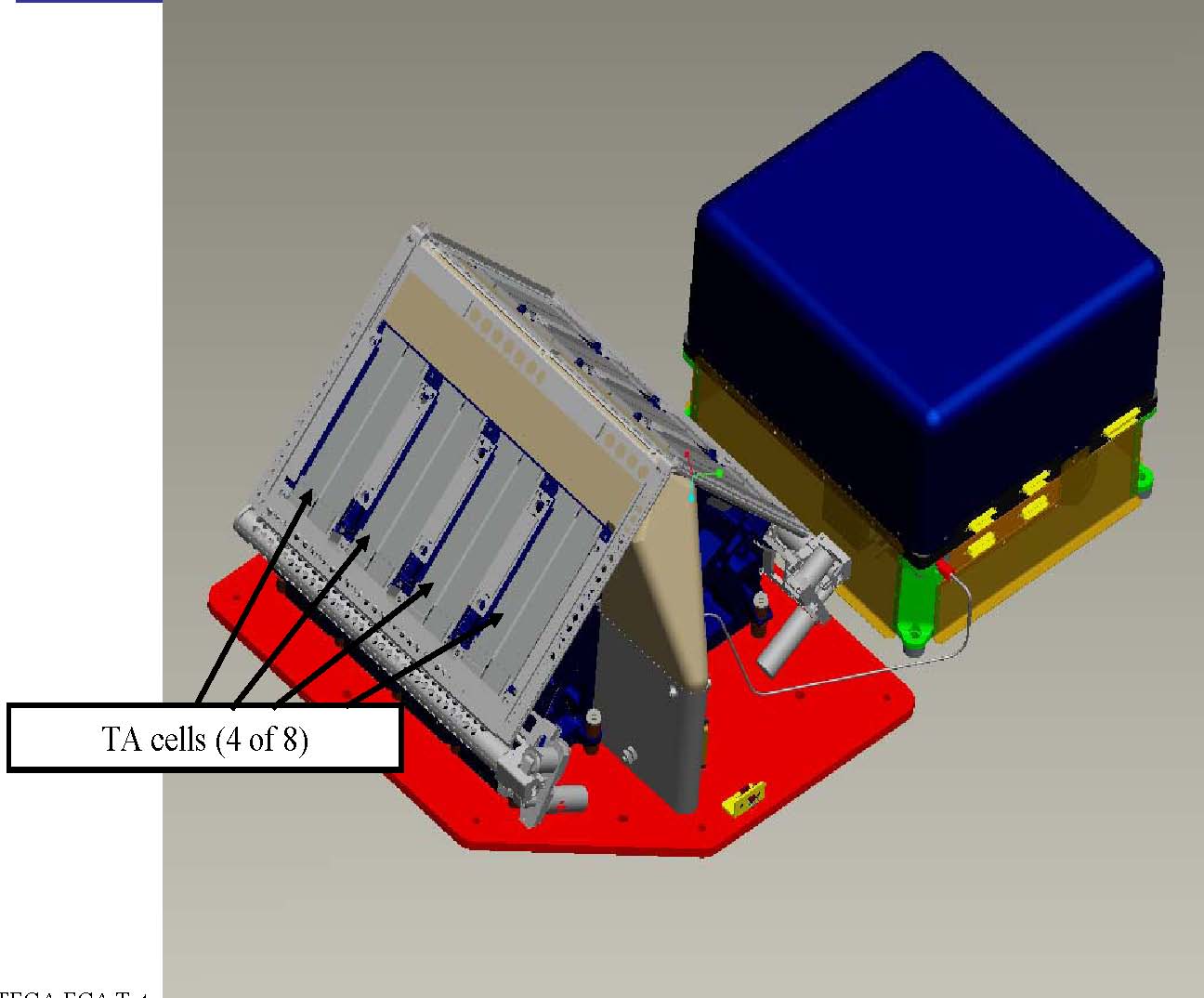
TEGA: Thermal Analyzer and Evolved-Gas Analyzer
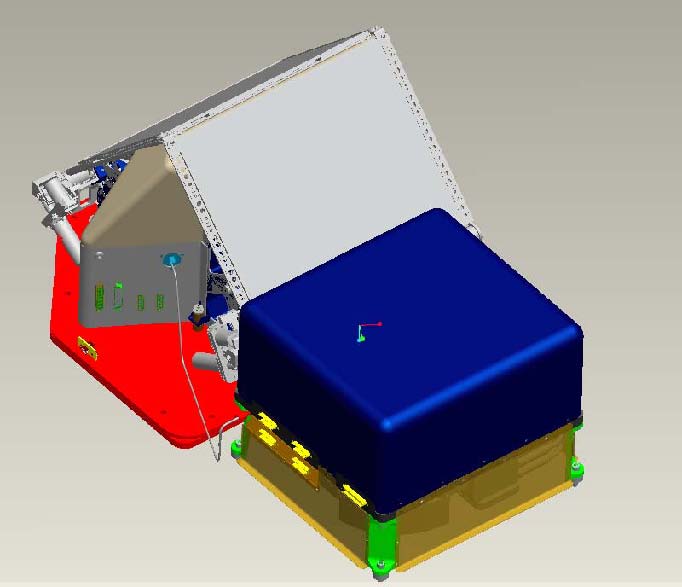
TEGA (with covers deployed)
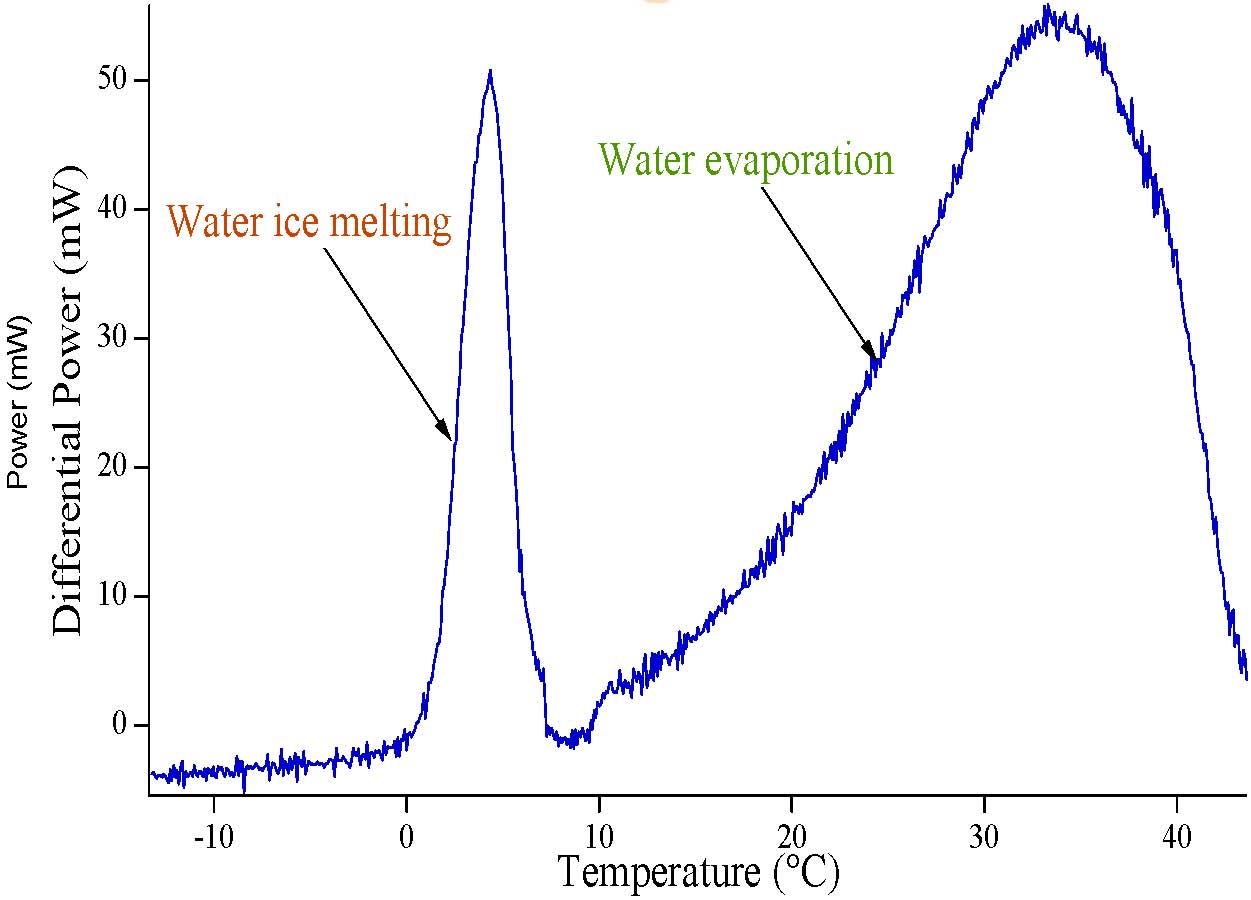
Calorimeter trace of melting and vaporization of H2O
Drawing of TA cell (one of eight)
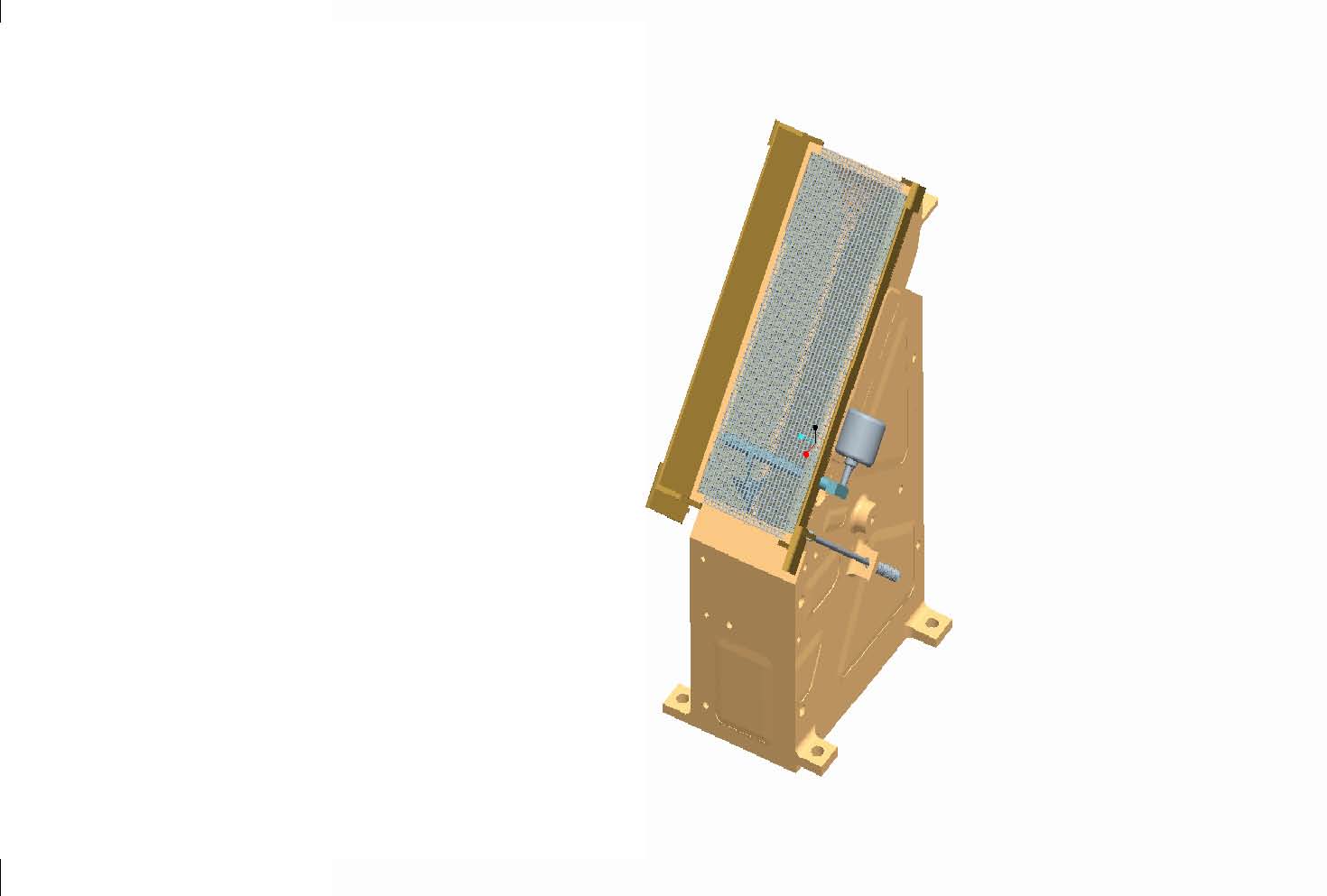
Ovens & heated shields
Gas handling system
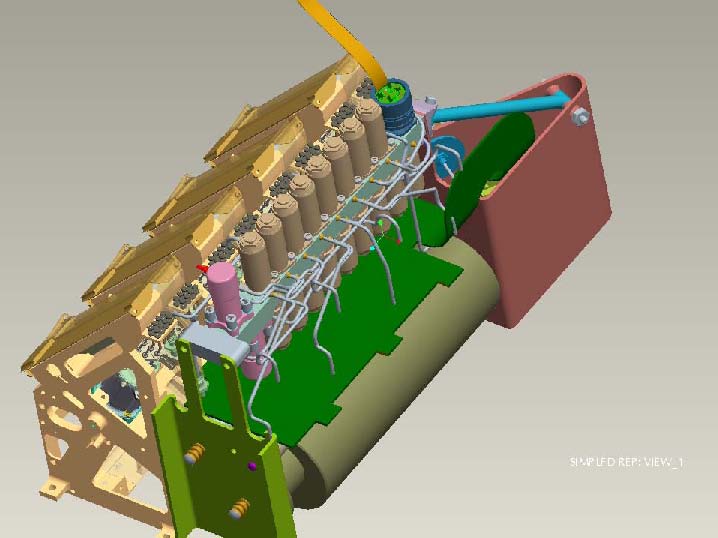
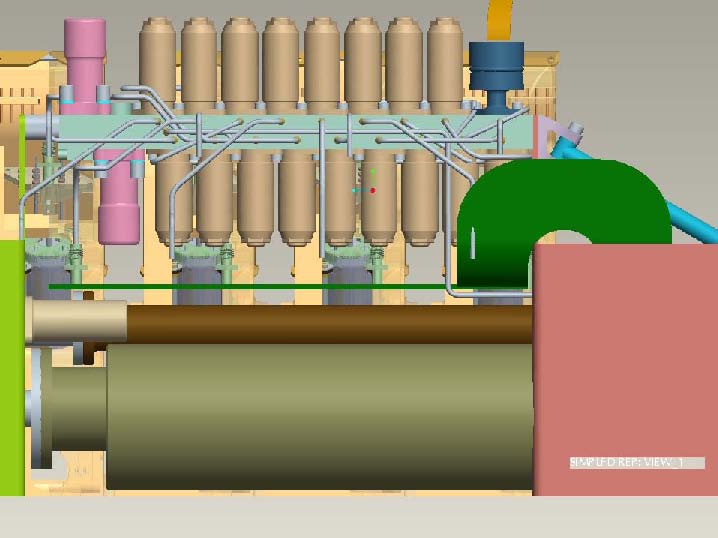
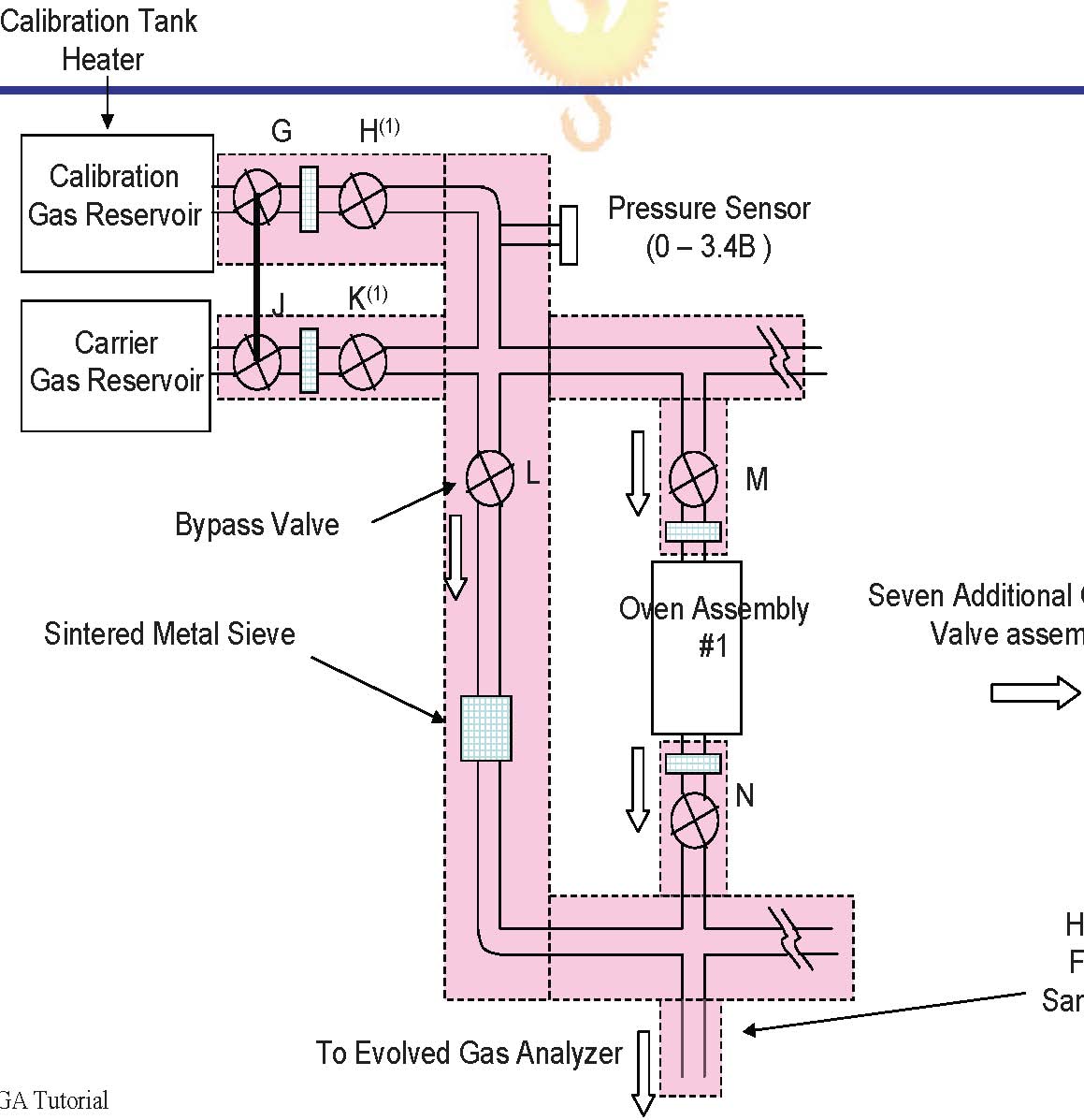
•TEGA has 21 valves for control of gas flow.
•Plumbing has to be heated to avoid condensation of water vapor.
•We supply carrier gas (pure N2) and calibration gas via two tanks
–Calibration gas is N2(60%), CO2(40%) and minor O2and 86Kr
–The calibration tank also contains water (or ice)
•We control H2O vapor by tank temperature (more later)
–We control gas flow rate via cycling tank valve based on pressure
–Carrier gas tank is oversized by factor of 10.
•It was based on design for TEGA on MPL, which needed more gas

TEGA TA Manifold Schematic

M

N

Seven Additional Oven and

Valve assemblies

Heated Gas

Flow During

Sample Analysis

Bypass Valve

Pressure Sensor

(0 –3.4B )

Sintered Metal Sieve
Overview of EGA

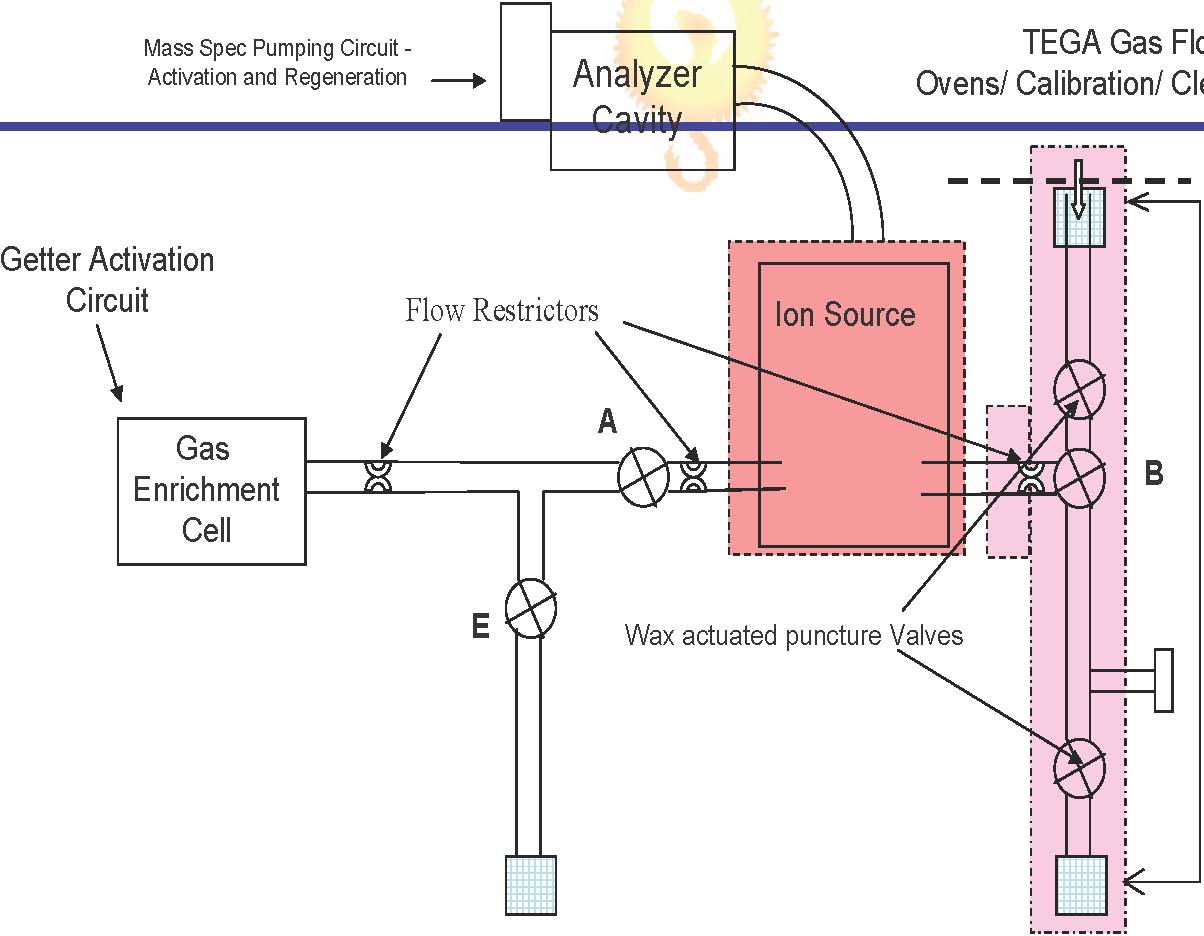
•EGA is a mass spectrometer (MS) with a manifold, three valves tocontrol gas flow, and a gas-enrichment cell (GEC).
•One valve (TA sample) lets calibration gas and gas evolved from ovens to be admitted into the MS.
•Two others add atmospheric gas to GEC and/or into the MS
•Inlet to MS is via valves into a Calibrated Micro Leak (CML)
–Small volume between valve and CML traps gas
–This gas leaks out slowly (hours for Atmosphere; days for TA)
•Mass Spectrometer is magnetic sector type
–Good for isotopic ratios
–Ion are accelerated through a slit into a magnetic field
–Magnetic field bends trajectory of ions (lighter ones bend more)
–Four detectors, channel electron multipliers (CEMs) collect ions
•Four are used for different mass ranges
•Multiplier voltage is adjusted for maximum sensitivity
–We look for a plateau in counts vs. voltage

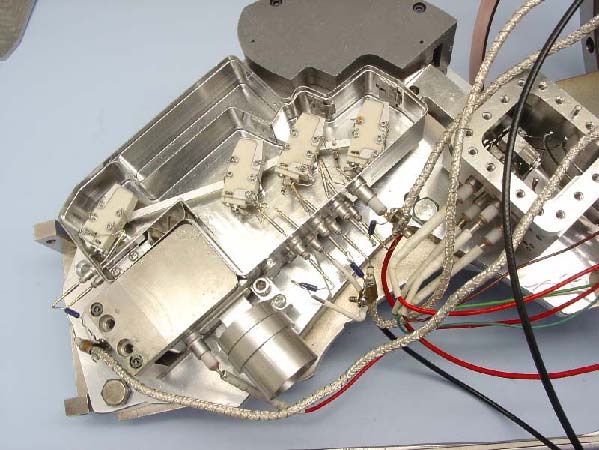
Mass Spectrometer Before Lid is Welded On
Dust Filter

TEGA Gas Flow from

Ovens/ Calibration/ Clean Carrier Gas

Moderate Restriction

Sintered Metal Sieve

Mass Spec Pumping Circuit -

Activation and Regeneration

B

E

(A, B) are Aker Low leak-rate valves

Pressure

Sensor( 0-300mB)

BakeoutZone

Heated during TA run

EGA Manifold
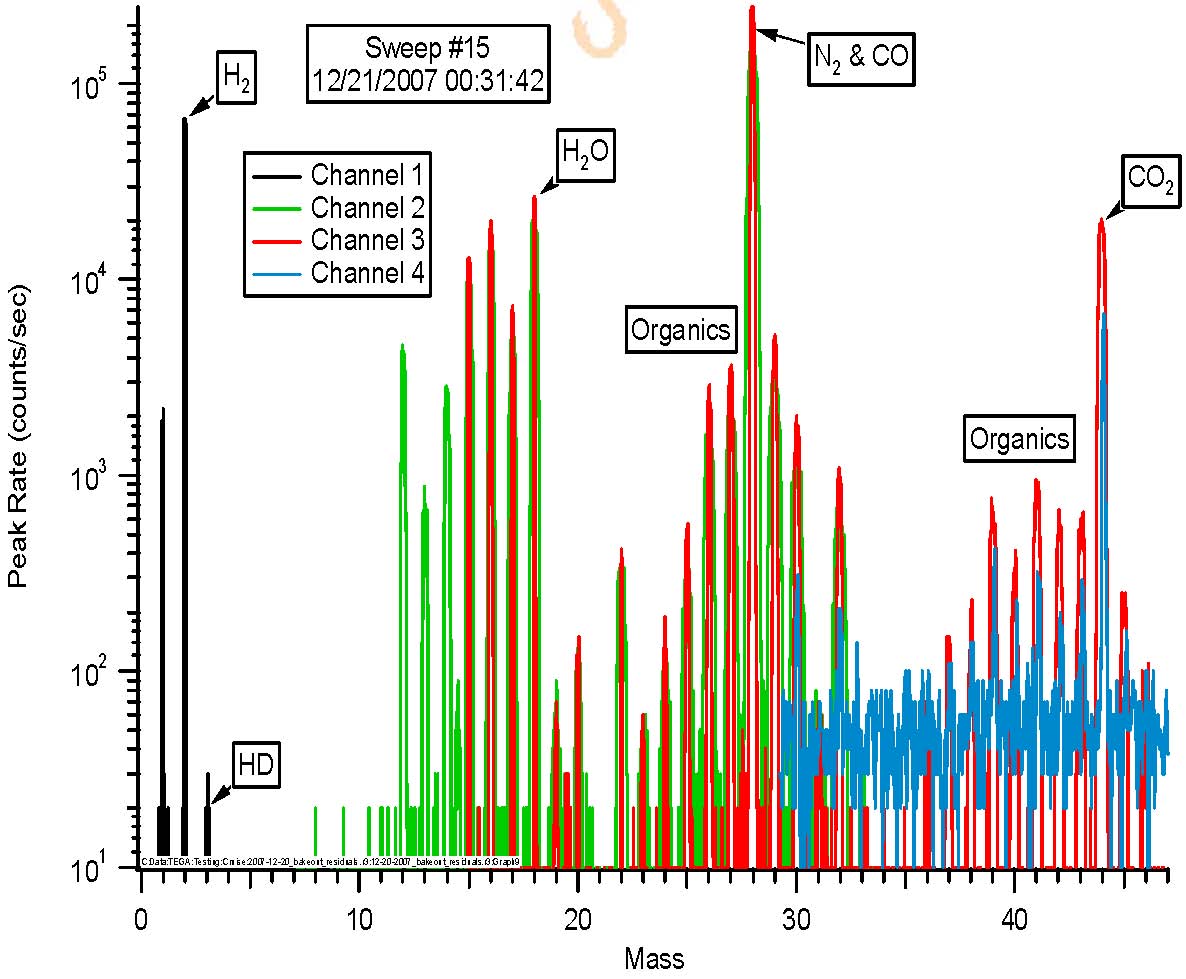
Sweep-mode Data (Residual Gas in Cruise)
Sweeps are inefficient use of time
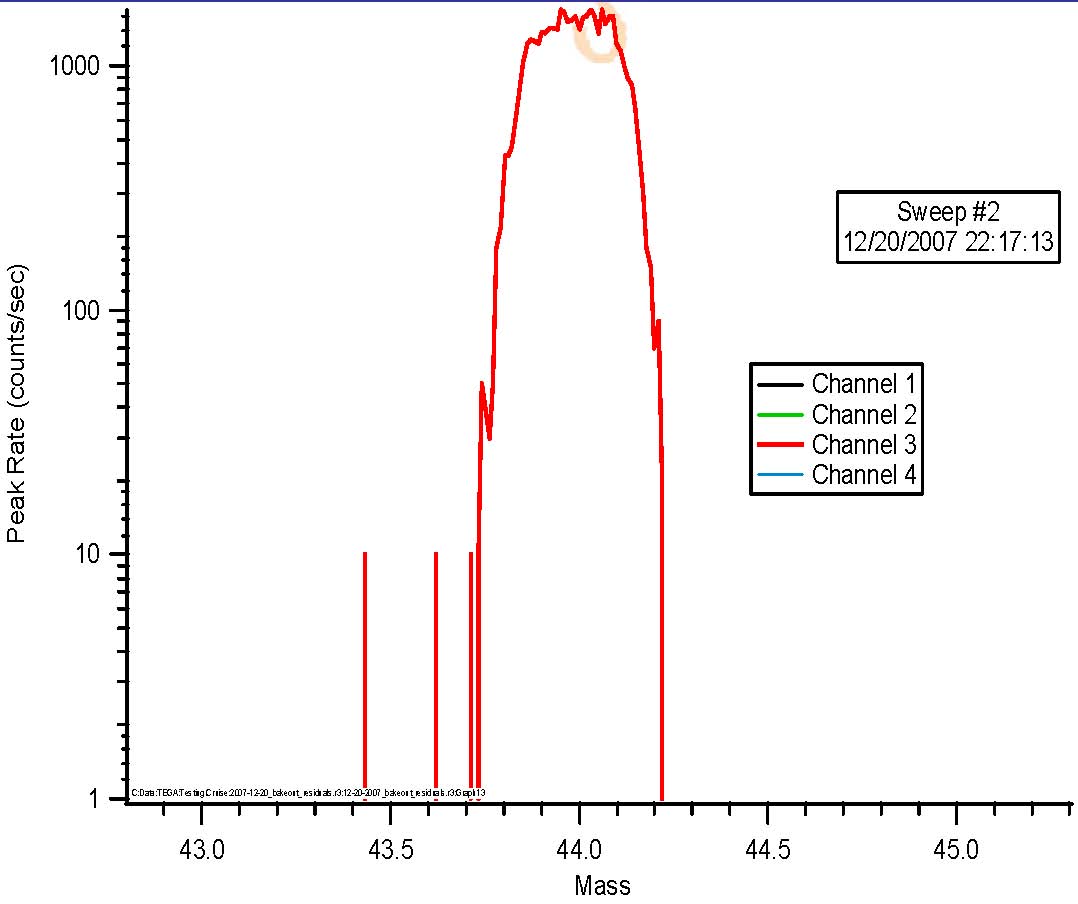
•Sweeps take a lot of time, much time is spent sampling mass range of no interest
•We sample peaks more efficiently with the hop modes

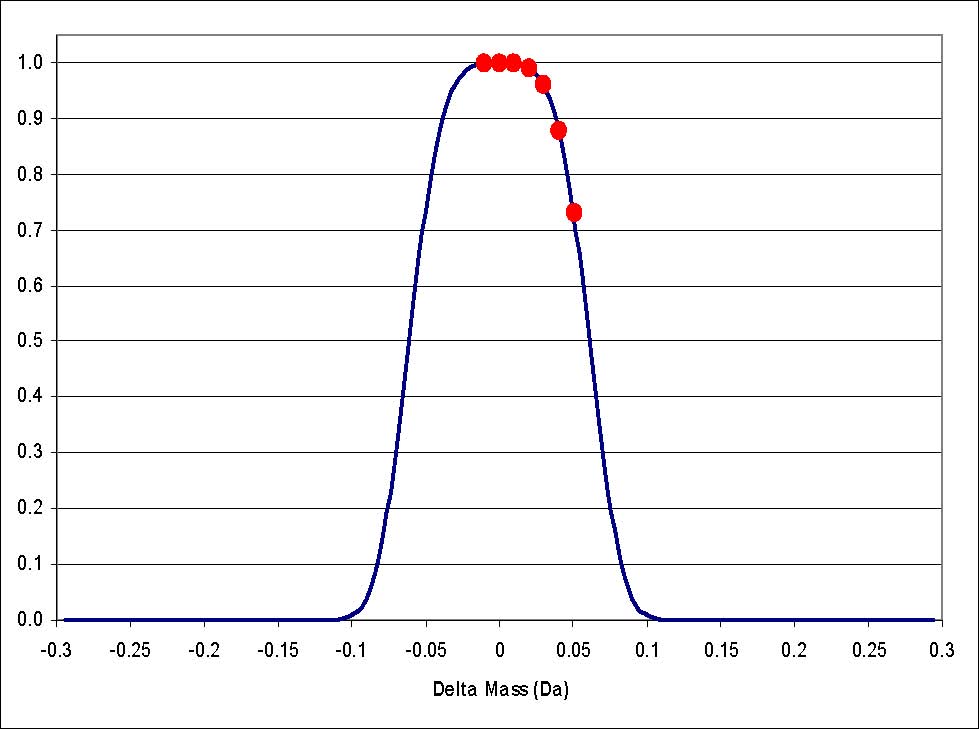
We model the peak shape well with a simple function
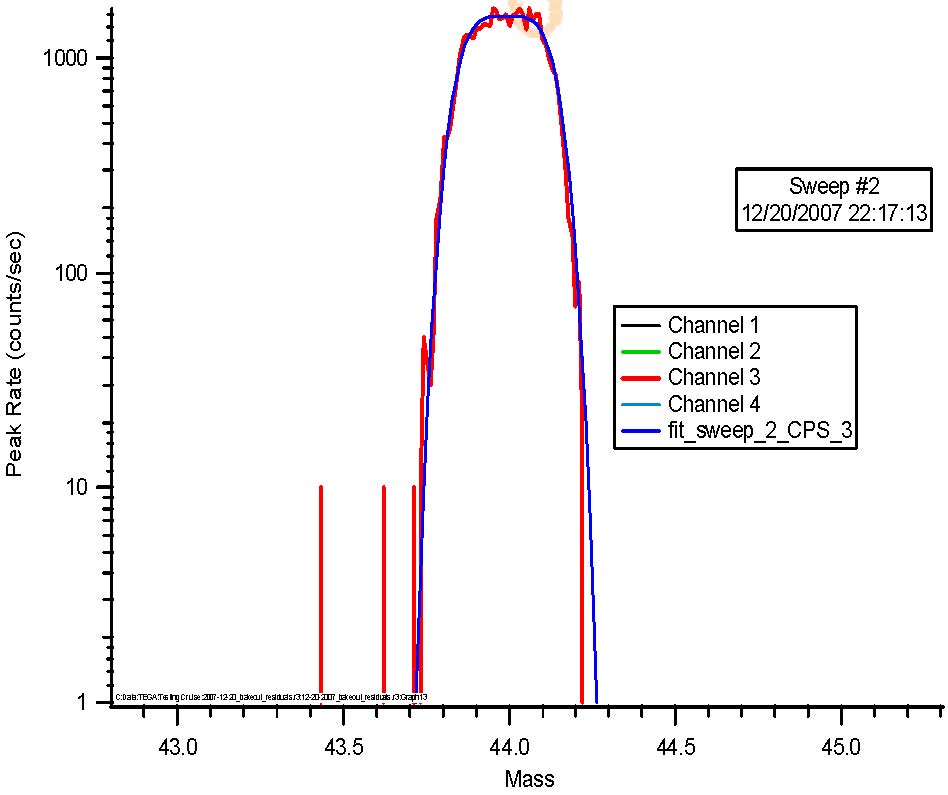
•Function is similar to Gaussian, except exponent, n, can be 2, 4, or 6.
•f(x) = A0* exp(-((x-x0)/2σ)n); n = 2 (chan4), 4 (chan2 and 3), 6 (chan1)

In hop mode, we sample the peak at 5 or 7 points
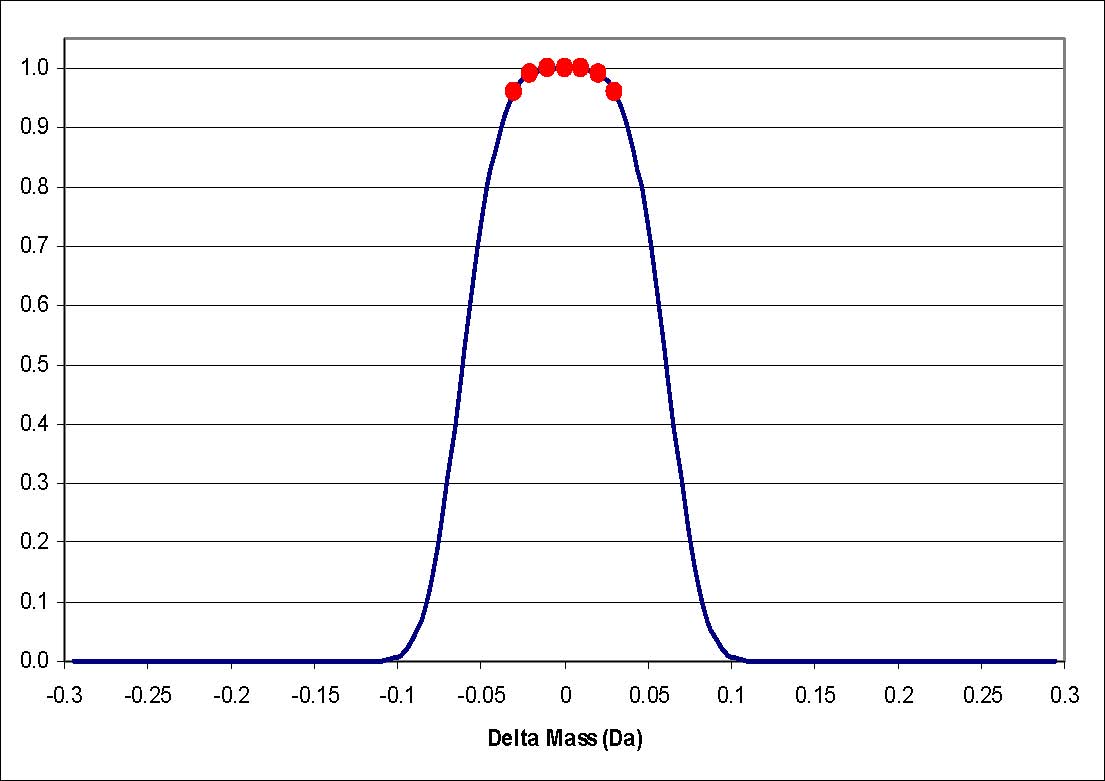
•Solid curve is mathematical expression of peak shape
•Points are where we plan to sample the peak during an analysis run.
•In data reduction, we do a least-squares fit of height (only) to peak-shape function

Voltage-to-mass conversion can drift
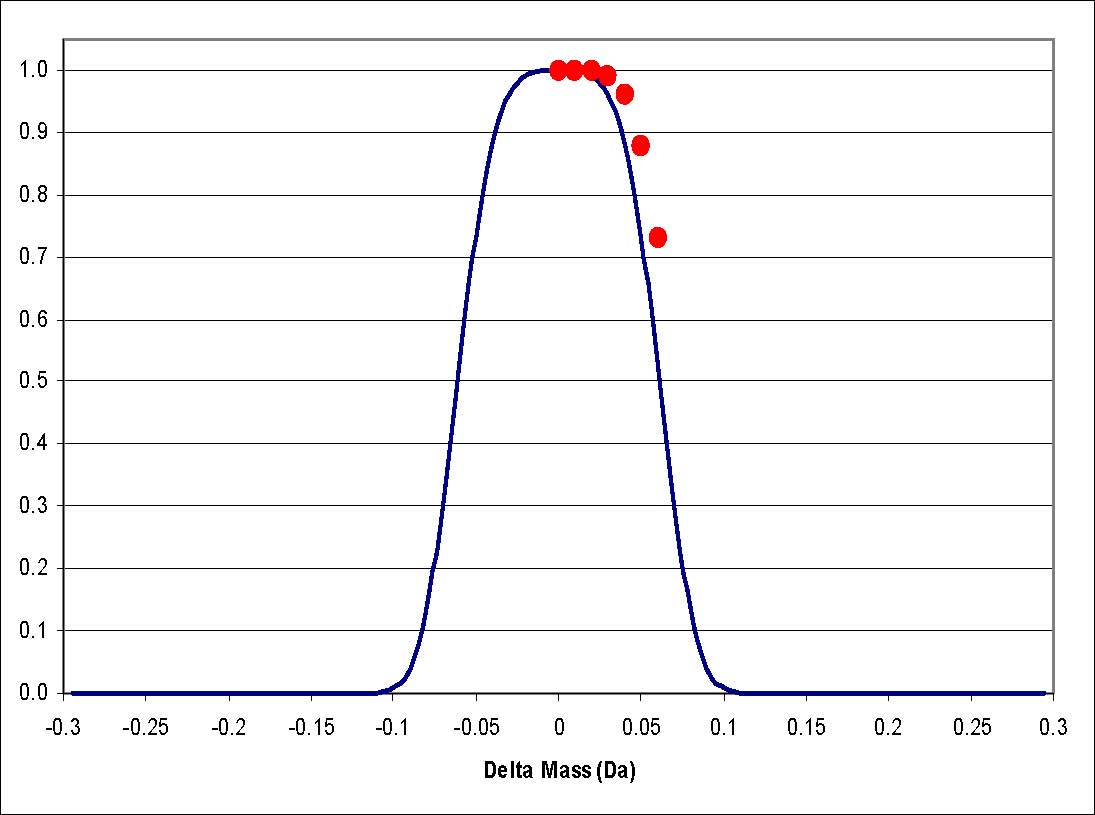
•The instrument in flight is programmed to sample the peak via voltages.
•The voltage-to-mass relationship changes with temperature (and other factors)
–We correct pretty well for temperature, but it is not perfect
•Our sampling points can then be offset from the true peak centroid.
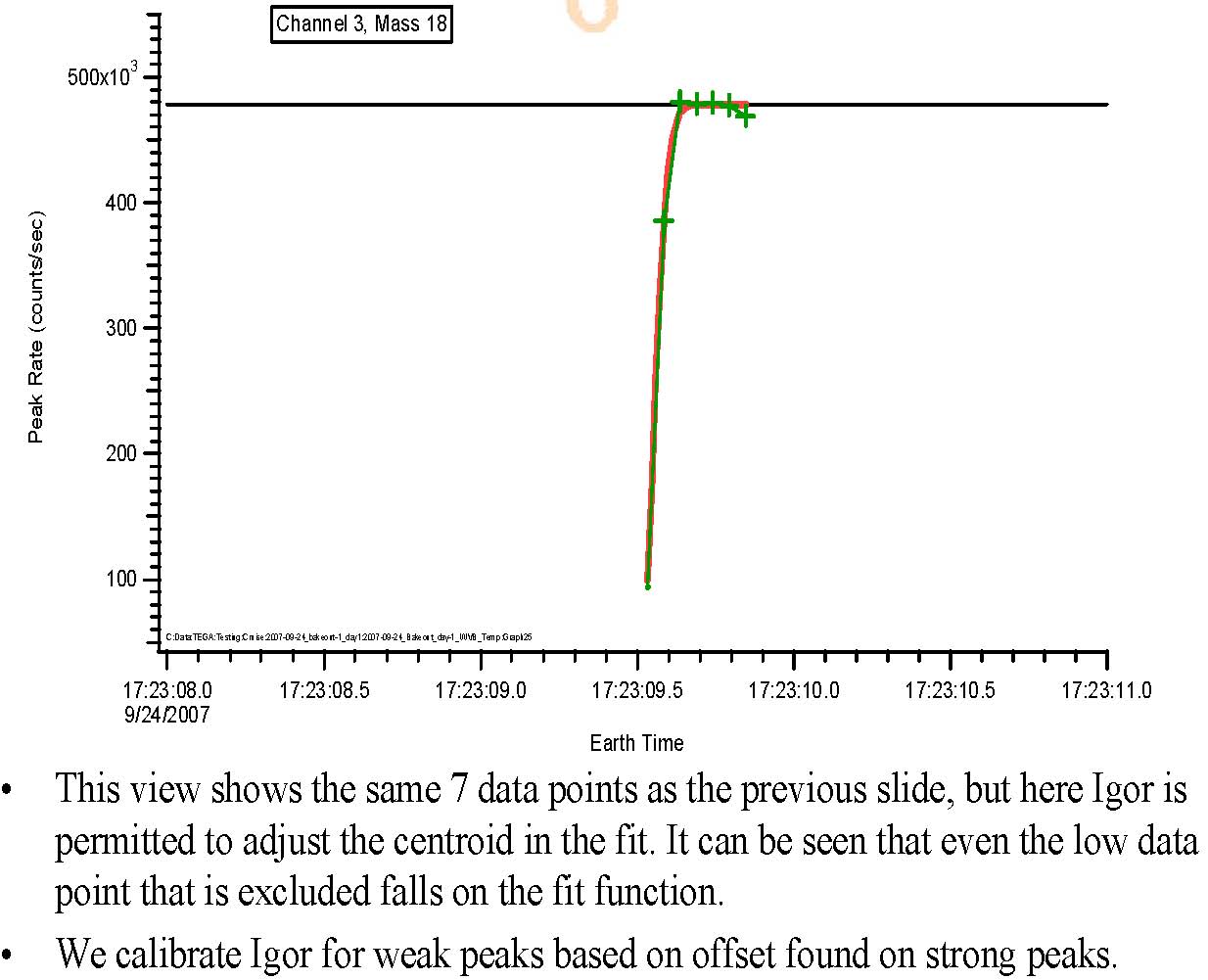
•If peak position is misaligned on surface, Igor can compensate.
•We can fit both height andcentroidin peak-shape equation.
•The ability to fit both parameters only works for peaks with good statistics

Problems when voltage-to-mass calibration is off
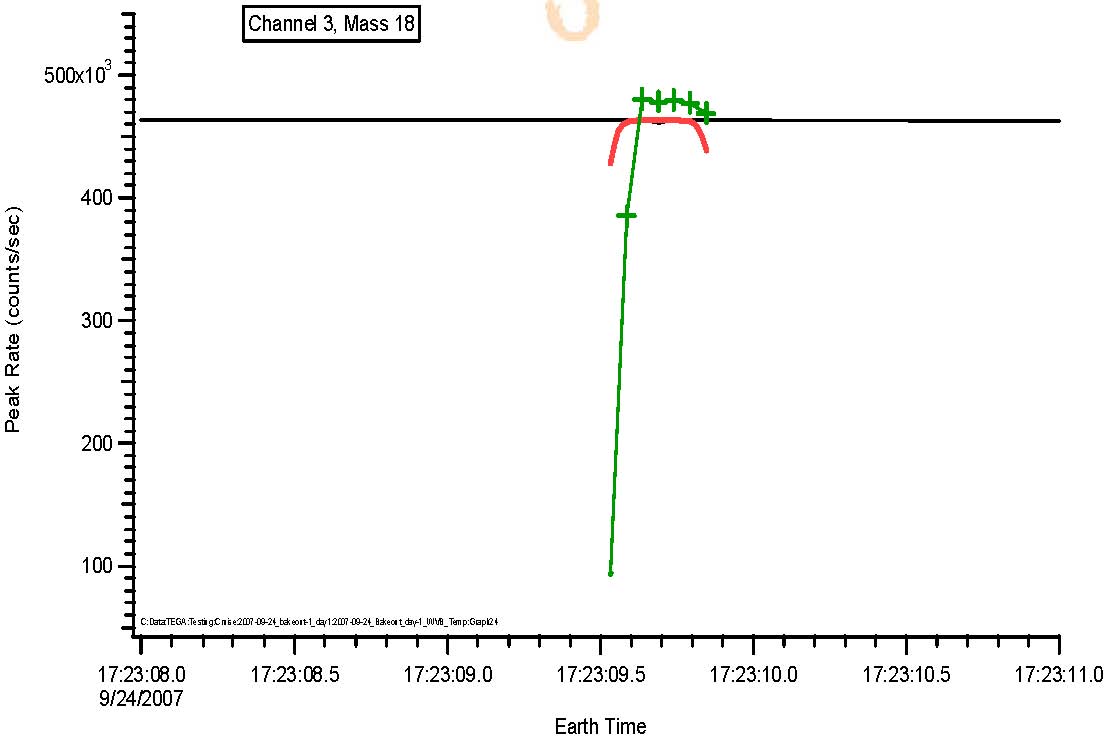
•This view shows a blow up of just one hop measurement (real flight data). The green points are the 7 measured samples of the mass-18 peak. Only the green points with + marker are used in the fit. (We can exclude pointsthat fall more than TBD % below the maximum value.) Because the fit minimizes the square of the difference, the one low point to the left dominates the fit.

We can determine calibration offset in Igor
Mass sweep shows noisy nature of peaks
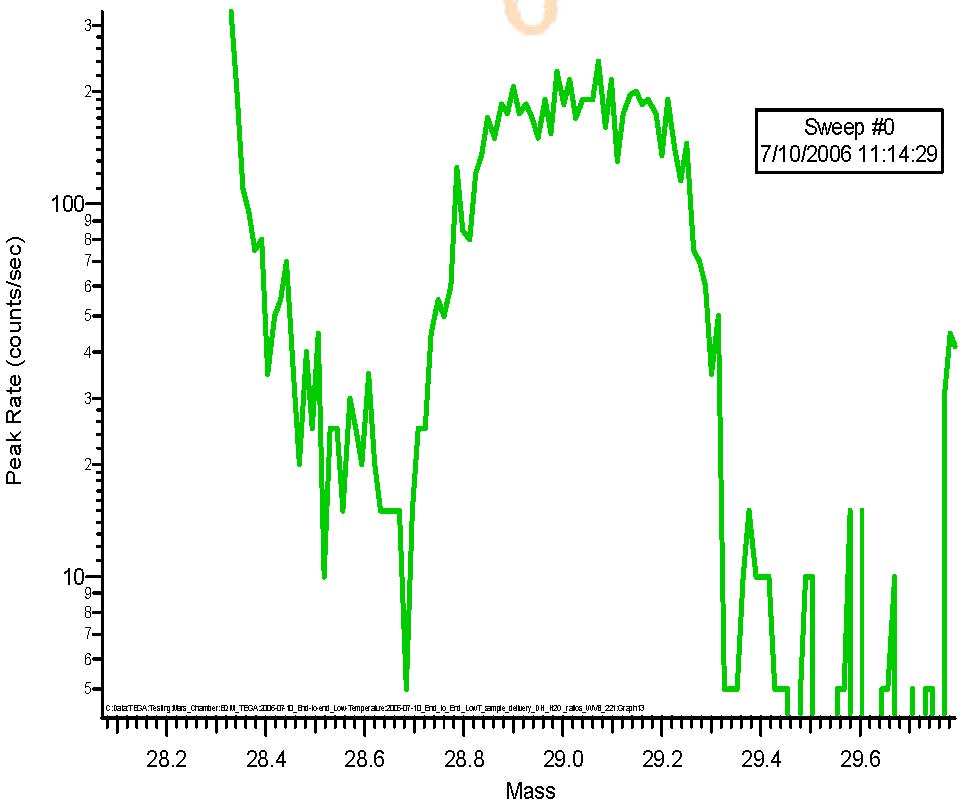
•Peaks of minor isotopes are generally noisy.
•Mass 29 is either 15N14C or 13C16O.
•Noise can be reduced with a longer dwell time on each point.

Operational Details

TEGA is a very difficult instrument to operate
–Many options are available to control the instrument
•Ramp rate (2 to 20 K/min probably most useful)
•EGA modes (more on this in a bit)
•EGA ionization energies (select one of four)
•EGA emission current (sensitivity) (select one of two)
•EGA filaments (select one of two)
–Optimization of TEGA operation will depend on what we find in our first sample at Mars
•We need to determine when to measure isotopes, when to measure abundances of different molecules, when to calibrate the mass-to-voltage algorithm
•We need to determine the optimum ionization energy and sensitivity

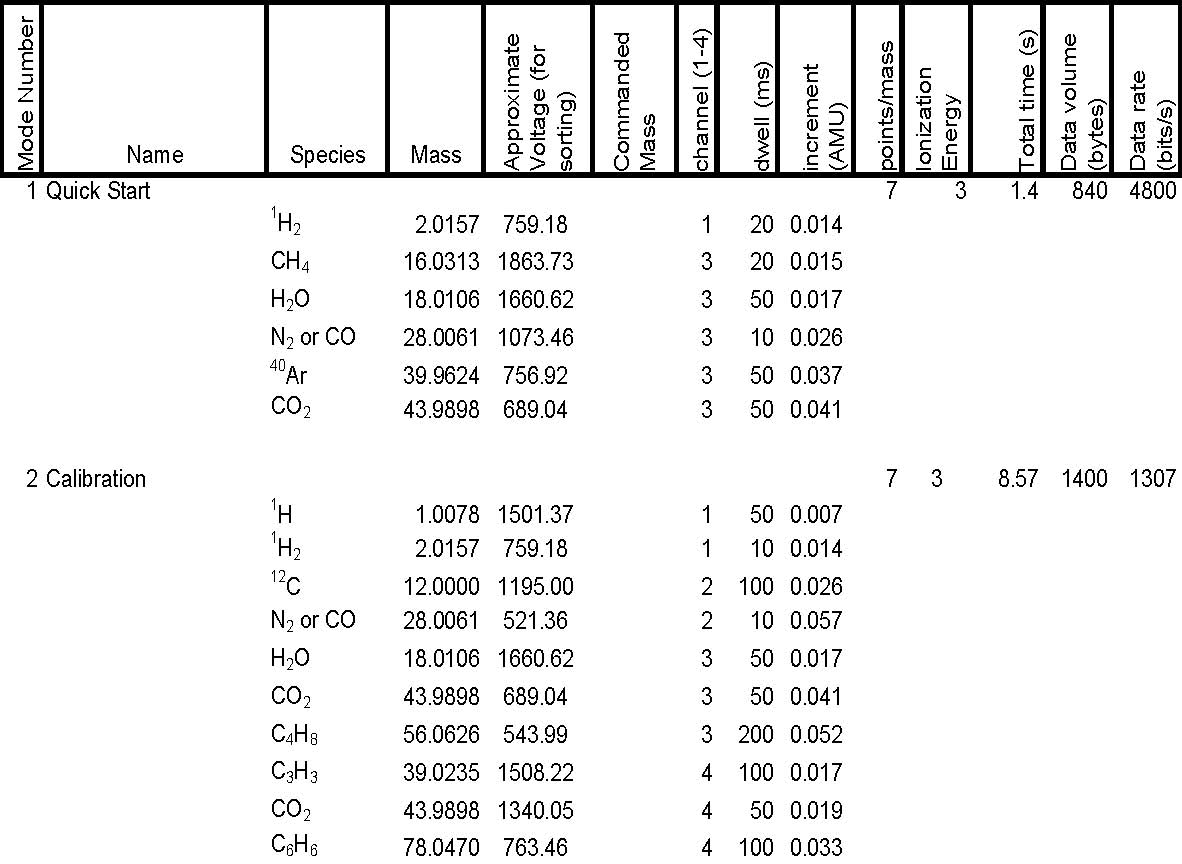
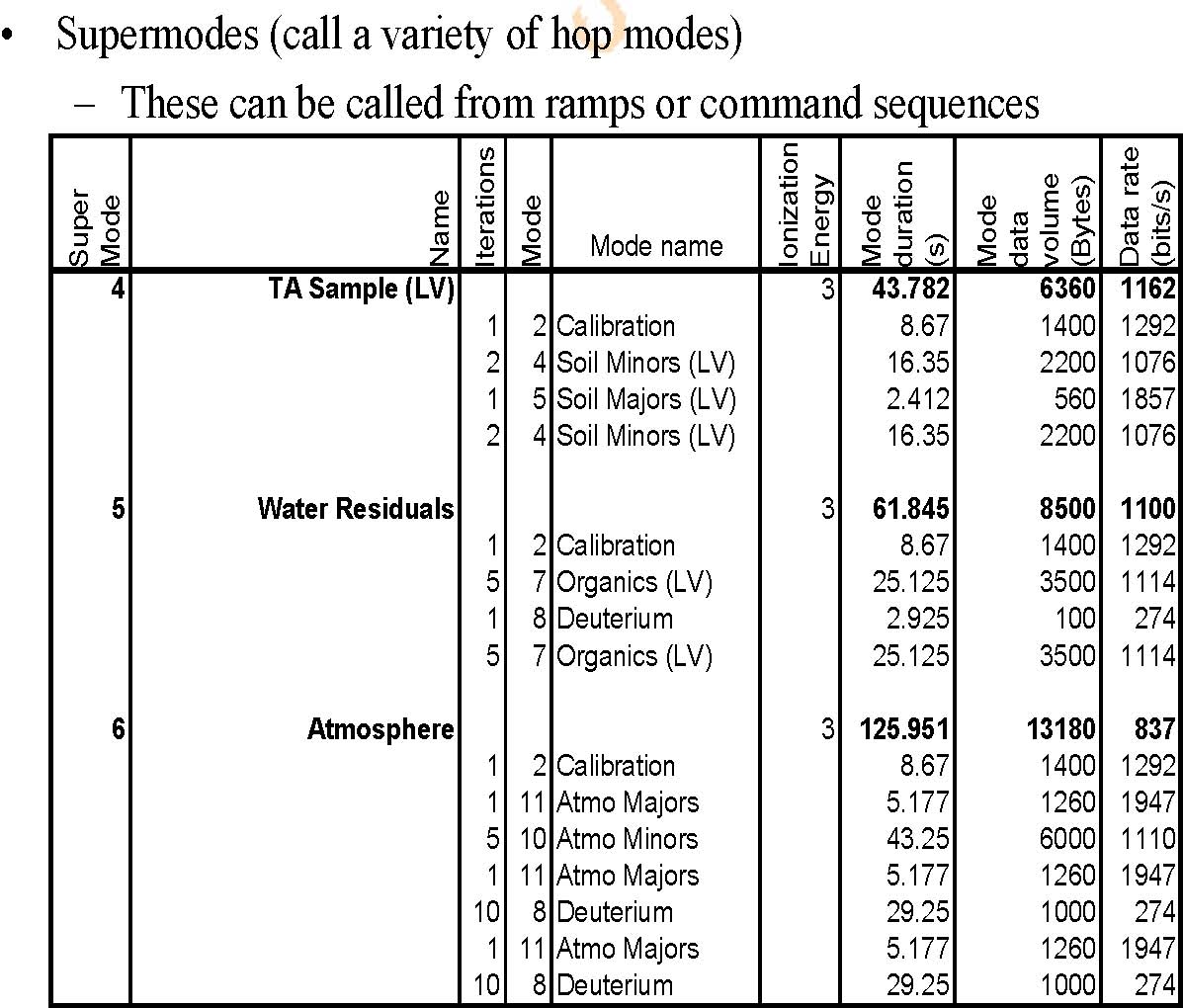
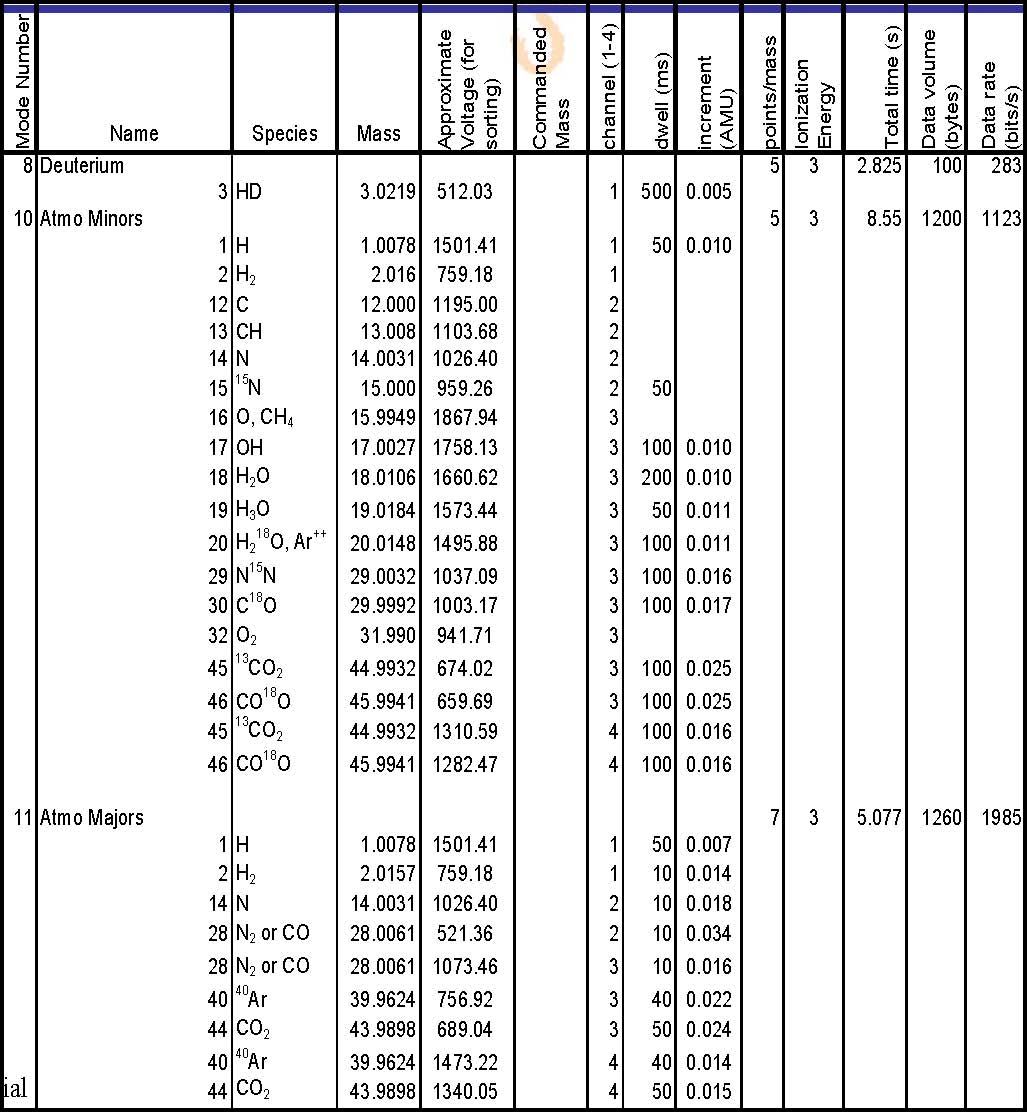
EGA Modes

•Hop modes (our most-commonly-used set of modes)
–Selects masses, channel, dwell-time, ionization energy, # of points

EGA Modes (cont’d.)

Atmosphere modes
EGA Modes (cont’d)

•Sweep modes
–Starting mass, Ending mass, Masses to skip, Step size (Da), Dwell time per step (ms)
–Examples
•Background sweep
•Calibration-gas sweep
•Atmosphere sweep
•TA sample sweep (during a hold)
–We can take a sample of the evolved gas at any point in time and hold it for hours to get good data on just that sample.
–Sweep modes take a lot of time, but they allow one to look at all masses, not just the expected ones.

Ramp segments

•Ramp segments define the operation of TEGA
–They are uploaded at least the day before the beginning of a run
•Ramp segments define:
–Ramp rate (K/min)
•Positive, negative, or zero
–If zero ramp rate, we also give a hold duration
•Separate inputs for oven, shield, and tee (heated plumbing fitting)
–Starting and ending temperature
–Valve states
•open, closed, or regulating
–Pressure of manifold if regulating
–EGA supermode
•A ramp segment operates until it reaches its end temperature or time then the next one is executed

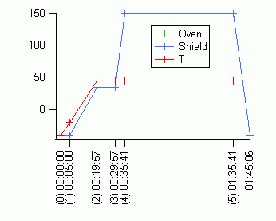
Example of ramp (mid temp)

•T is a plumbing connection between the oven outlet and the TA manifold.
–We heat it at a rate similar to that of the oven so we don’t add heat to the oven. (We keep it a little warmer so we don’t condense water vapor)

Ramp generator demo here.

Igor data reduction package

•Igor is a commercial data manipulation environment
–Somewhat like IDL but much more powerful and user friendly
–Dave Hamarahas programmed MANY functions to manipulate data
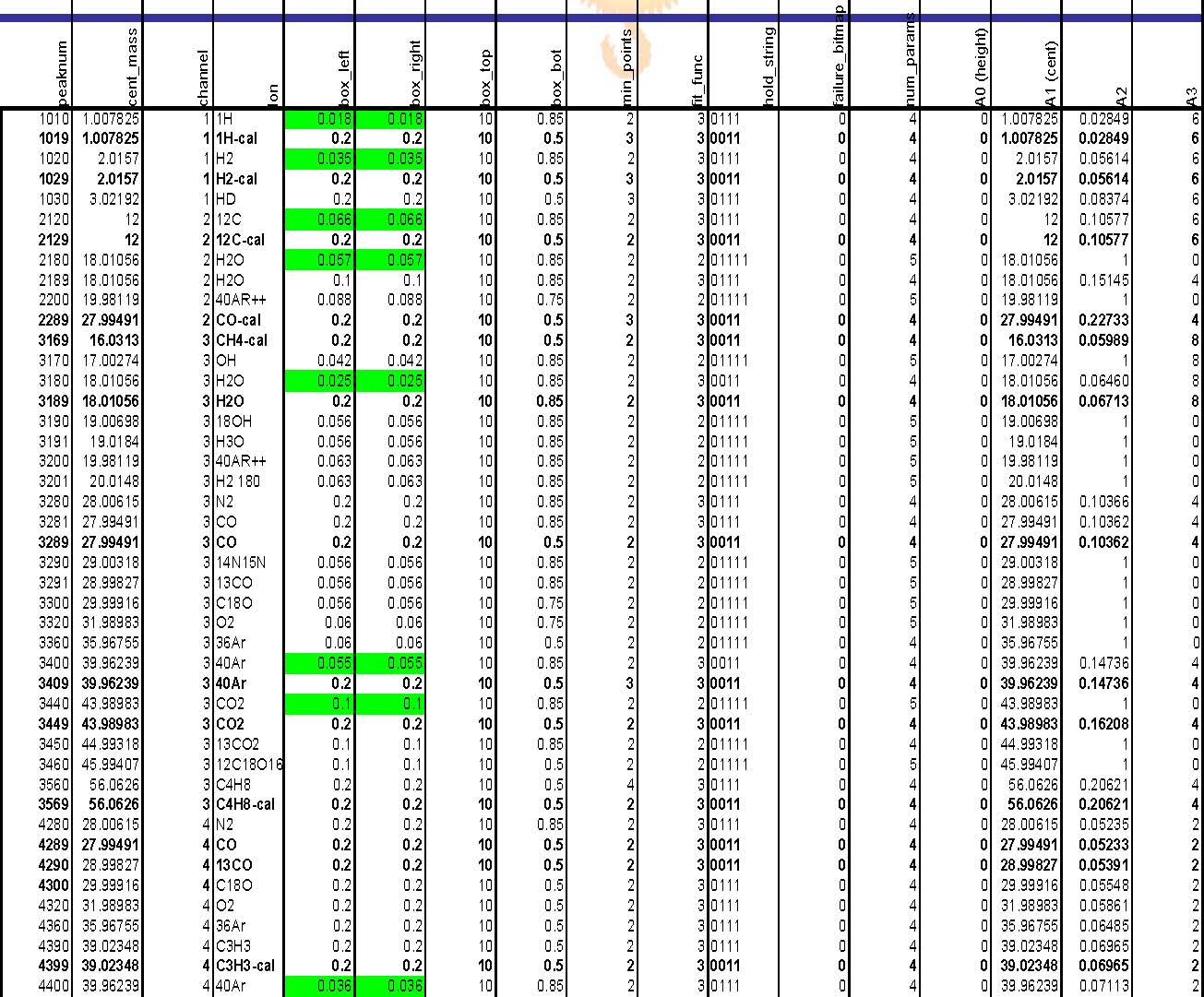
•Peak to be processed need to be defined
–Numbering (cMMn) or (MMMn)
•c = channel number
•MM = integer mass (MMM for masses over 99)
•n = 0 to 9 to specify different ways to process same peak
–Example 3180 is mass 18 on channel 3, 3189 is same peak where we allow the centroidas a free parameter.
•Peaks file (defines the details for Igor on how to process the peaks)
–Fitting function, parameters to be free in fit, lots more stuff
•Modes file (defines which peaks to process associated with whichhop mode)

Peaks file

Modes file

•First column is the hop-mode number
•Columns 3 to end are designations of peaks to be found in that hop mode.

Igor demo goes here (one hopes)

Canonical sols for TEGA (8-day cycle)

•TEGA atmosphere and open door
•TEGA sample delivery and low-temp ramp
•------
•TEGA mid-temp ramp
•TEGA high-temp ramp
•------
•TEGA high-temp ramp (day-2)
–With optional bake
•TEGA pump and/or bake for next atmosphere run

Atmosphere Analysis

•Turn TEGA ON
•Initialize heater control of the instrument
–TA manifold heater to regulate +65 C
–Plumbing heaters to regulate at +35 C
–Transfer-tube heater to regulate at +75 C
–EGA manifold heater to regulate at +35C
–Transfer heater from TA to EGA (TBD)
•Open GEC valve (inlet to atmosphere manifold)
•EGA Warmup
–Turn on ion pump, multiplier voltage and emission (filament)
–Collects data in peak hopping mode immediately
•Quick-Start supermodefor gain test
–Gain test of channel electron multipliers (CEMs)
•Count rate vs. voltage to find plateau
–Default multiplier voltage = 2800V here.

Atmosphere Analysis (cont’d.)

•Calibrate mass to sweep-voltage conversion.
–We program in mass, but instrument controls via volts
–We sweep two large peaks of known mass on each channel
•Change CEM voltage to 3200 volts
–Better sensitivity for mass 3 (HD) and mass-18 (H2O)
•Change to atmosphere supermode
•Wait for EGA to warm up
–It takes about 45 minutes for the mass-18 count rate to max out.
•Measure residual gas count rates
–Here is where we measure the background to be subtracted from atmosphere data.
–Background should be low and changing slow enough we can extrapolate it into the future when the atmosphere data will be taken.
–This will take about an hour (or more depending on desired precision)
–Run a full mass-range sweep.

Atmosphere Analysis (cont’d.)

•Measure atmosphere
–Open atmosphere inlet valve
–Collect atmosphere supermodedata for 1 to 2 hours
–Run a full mass-range sweep.
•Close atmosphere inlet valve
•Shut down instrument or optionally run calibration gas
–See next page about calibration gas

Calibration gas with atmosphere run?

•Cal gas is about 60% N2and 40% CO2 (minor O2, H2O and Kr).
•Cal gas is admitted to mass spectrometer via TA inlet valve
–This valve has a CML (calibrated micro leak) that is about 50x more restrictive than the one on the atmosphere inlet.
•Remember that once an inlet valve is closed, the gas trapped in the CML volume leaks out slowly over hours (atmosphere inlet) or days (TA inlet)
–If we run cal gas after an atmosphere run, the CO2in the cal gas will be small compared to the trapped in the CML volume.
–If we run cal gas before an atmosphere run, the N2in the cal gas will dominate over N2in the atmosphere.
–Solution is to run it before sometimes and after some other times
•H2O in cal gas is set by tank temperature
–Next slide

H2O in calibration gas

•The tank that holds the cal gas has 1-2 ml of ice.
•The tank is pressurized to about 3 bar.
•The H2O in the gas phase is determined by the temperature of the tank.
–Vapor pressure of ice at -20 C is 1.03 mbar.
–Vapor pressure of water at + 20 C is 24.2 mbar
•If tank is heated to +20 C, the H2O content is 0.0242/3 = 0.8%
•If tank is heated to -20 C, the H2O content is 0.00103/3 = 0.034%
–This latter value is around the “typical”Mars value.
–We expect to see more H2O than this at the Phoenix site
•We can get any H2O content we want by controlling the tank temperature (within limits, of course).

Sample transfer and low-temp ramp day

•TEGA low-temp ramp involves three PSI activities:
–TEGA Prep for Soil Transfer
–TEGA Acquire Sample (LT Day)
–Low Temp Ramp

TEGA prep for soil transfer

•Turn TEGA on
•Set up and warm up EGA as for atmosphere test
–During warm up add the following:
•Set cal tank heater to desired temperature (20 C)
•Regulate cal gas to 36 mbar in TA manifold
•Use TA Sample supermodeinstead of atmosphere supermode.
•At end of warm up, open bypass valve to flow cal gas to EGA.
•Measure residuals for 10 minutes.
–We don’t need a long a time here, as TA evolved gas will be much higher than residuals (not true for organics, though).
•Open TA sample valve and measure cal gas for 12 minutes (TBR)
•Stop regulation of cal gas and begin regulation of carrier gas
–This will flush cal gas from CML volume and EGA manifold.
•It will take on the order of 20 minutes for the gas to be flushed.
•At this point, TEGA is ready to receive a sample

TEGA acquire sample

•Wait for signal from RA that it is ready to dump sample.
•Select which TA is to be used (#0 through #7)
•Start TA vibrator
•Wait for oven full signal to go true (global variable)
–If we don’t get it within 15 minutes, TEGA aborts the run.
–Ground assessment follows.
•With oven-full signal, oven closes.
•Wait for oven-close signal
–If we don’t get it within 25 minutes, TEGA aborts the run.
–Ground assessment follows.

TEGA low-temp ramp

•Purpose is to look for absorbed gases and ice, and to remove ice.
•Ramp segments are burned into EEPromfor the ramp segments on a prior day and validated.
•Flow carrier gas through oven before ramping temperature
–This flushes atmosphere gas from oven and plumbing
•Ramp from ambient to -10 C (TBR) at 5 K/min.
–If ice is present, we should already get H2O in gas stream.
–Oven pressure is about 15 mbar; vapor pressure of ice is 2.6 mbar
–H2O content of effluent gas is 2.6/15 = 17%
•Close TA sample valve to trap this gas in CML volume.
–We can trigger this based on temperature or pressure
•With significant H2O release, the EGA manifold pressure will rise, e.g., by nearly 17% in above example.
•Close oven inlet valve but leave outlet valve open
•Turn off flow of carrier gas.

TEGA low-temp ramp (cont’d)

•Continue to ramp to +35 C (TBR) to let water evaporate
–Vapor pressure of water here is greater than Mars ambient.
•Hold at +35 C for 3 hours (TBR) for water to evaporate
–We can hold for less time if we assumewe have little ice.
–During this time, we can run a full mass-range sweep, and/or we can concentrate on measuring D/H ratio
–We will otherwise continue to run our normal hop supermode
•Ramp down oven at -5 K/min
•Switch to carrier gas to flush EGA manifold
•Open TA sample valve to flush it with pure N2.
•Collect data for 20 minutes to ensure EGA manifold is flushed.
•Close TA sample valve.
•Shut down.

Medium temp ramp

•The purpose is to be sure sample is very dry and to decompose any soil oxidant (or at least try to).
•Turn TEGA on
•Set up and warm up EGA as for prep for soil transfer.
–Do all on that page as before.
•Run mid-temp ramp
–Heat to +35 C at 5 K/min.
–Hold here for 5 minutes
–Heat to + 150 C (TBR) at 20 K/min
–Hold here for 2 hours
–Ramp down at 20 K/min
•Finish up as for low-temp ramp on previous slide

High temp ramp (day-1)

•Emphasis today is on altered minerals (hydrates, carbonate, sulfates)
•Turn on and warm up as before
•Run high-temp ramp
–Ramp ambient to 1000 C and 20 K/min
–Hold for 5 minutes
–Ramp down to ambient at -20 K/min
•At some point oven cannot cool this rapidly and controller shuts off heat
•The oven then cools on its own from that point on down.
•EGA during ramp (see next page)

High temp ramp (day-1) EGA part

•During ramp up we can get very significant pressure releases of CO2or H2O
•We can program the instrument to close the TA sample valve (inlet to mass spec.) when EGA manifold pressure exceeds a preset value
–This action keeps us from saturating the detectors
–We can then take more time analyzing the composition of the gas at the time of valve closing
•Remember, closing the inlet valve just seals in the CML gas.
•The valve will autonomously open when the pressure drops back.
•The ramp continues, however, through this time.
•For future samples we can chose to close the valve at a preset time and leave it closed to spend a long time analyzing the same gas.
–We can do this, for example, if we suspect a release of organics.
–Possibly to get isotopes for S?

High temp ramp (day-2)

•Purpose of this day is to get calorimetrytrace of oven after altered minerals have decomposed
•We then subtract the calorimetryfrom day-2 from that of day-1
–This is how we do “differential”scanning calorimetry.
•The first part of this day is run identically to the first part of day-1 except that we do not bother turning on the EGA
–We mayturn on the EGA for other purposes, e.g. for baking.
•We need to start day-2 at the same time of day that day-1 began so the environmental temperatures are close to being the same.
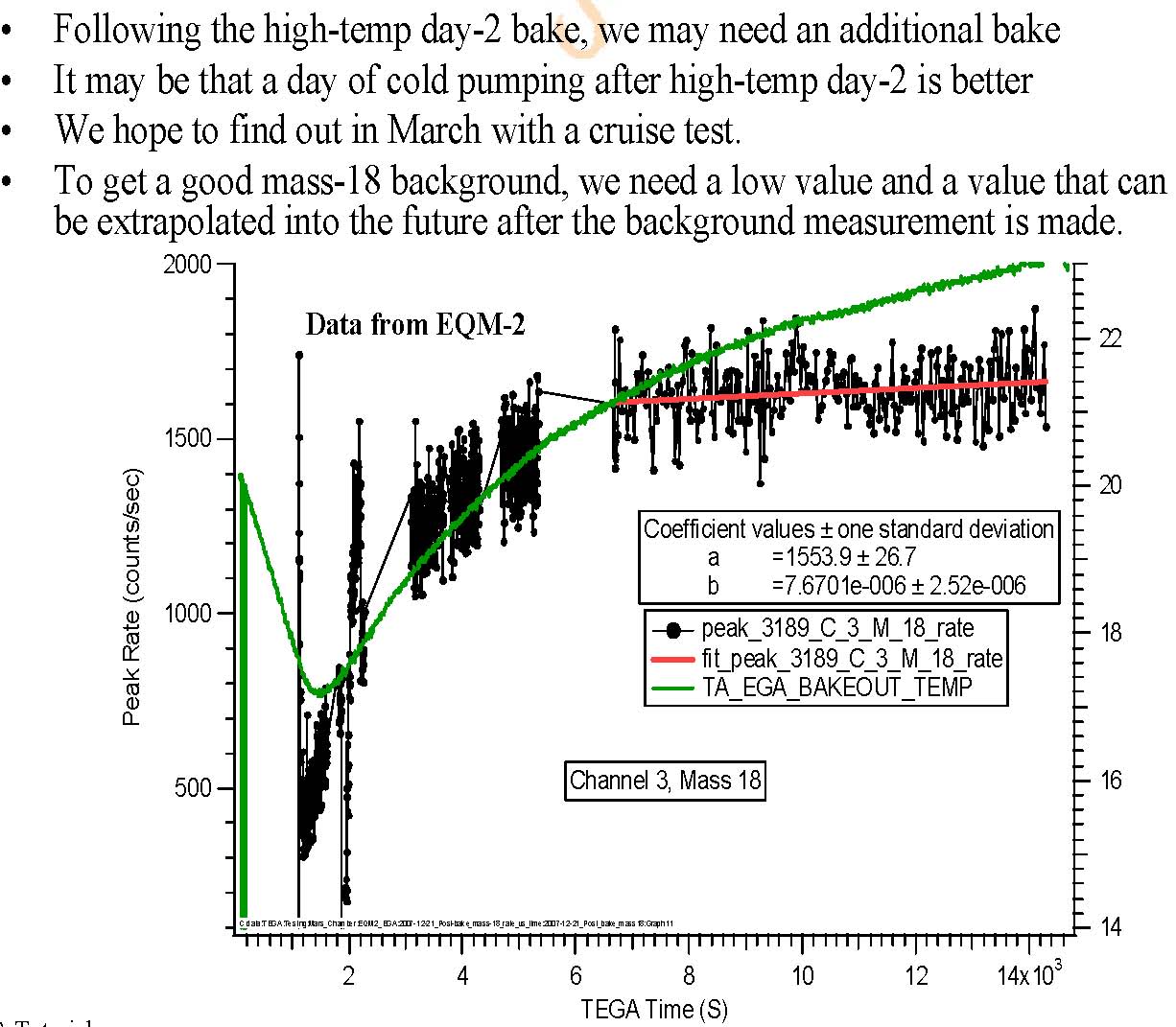
•It is likely we will bake out the EGA on this day too. If so, wecannot bake while we are running the ramp up portion (too big a load onelectronics)

Bake Day

Operations (changing blocks)

•There are a few things we can change easily and quickly (tweaks)
•Some things are very complicated and require much testing and validation before it is ready to upload to Phoenix.
–We need a new ramp file each day, since ovens are not perfectly matched. Even if we re-run an identical ramp on another oven, it has to be a different command load.
•Heather will talk about our procedures for validation.